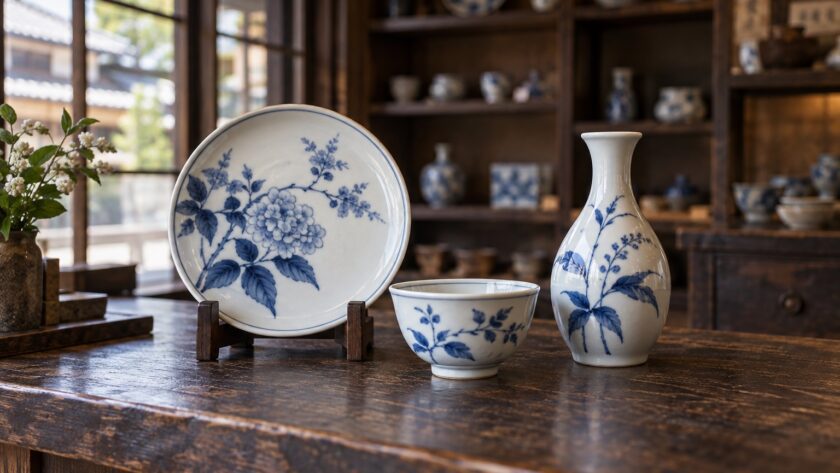
Saga rewards travelers who enjoy looking closely. A painted porcelain bowl, the texture of a tea cup, a bathhouse gate, or a reconstructed ancient storehouse can become the center of a memorable afternoon. Between Fukuoka and Nagasaki in northwestern Kyushu, this prefecture brings together pottery towns, hot springs, archaeological sites and two very different coastal landscapes. Its attractions are varied enough for several days, but scattered enough that choosing a sensible route matters.
For a first visit, organize the journey around a few places rather than trying to collect every famous sight. Arita and Imari suit anyone interested in ceramics and design. Takeo and Ureshino offer comfortable pauses between outings. Karatsu and Yobuko bring the northern coast into the picture, while Saga City, Yoshinogari and Kashima add different layers of history. Three days provide an introduction; five or six allow you to connect these areas without spending the entire trip in transit.
Plan the route before choosing a single base
Saga City is useful for the castle museum and eastern prefecture, but it is not automatically the best base for every destination. Karatsu works well for the northern coastline. Takeo suits a journey combining rail travel, pottery and an onsen stay. Ureshino makes sense when the accommodation and bathing experience are part of the reason for traveling, rather than simply somewhere to sleep after sightseeing.
Rail routes require a little care. The Nishi Kyushu Shinkansen links Takeo-Onsen with Nagasaki, including Ureshino-Onsen. Journeys from Hakata toward Nagasaki involve a transfer at Takeo-Onsen between conventional limited-express trains and the shinkansen. Refer to JR Kyushu’s published timetable for current services, and check the validity dates before using any downloaded copy. Do not assume an older article describing a direct Kamome train still reflects today’s arrangement.
Karatsu is reached on a different corridor, with Chikuhi Line connections toward Fukuoka, while Arita and Imari are connected by the Matsuura Railway. The JNTO overview of the pottery towns helps establish their relationship. For any rural outing, plan the last useful bus back before planning the first stop. A rental car can simplify scattered coastal or kiln visits, but a focused rail itinerary works well if you accept fewer destinations each day.
Pack with the shape of the trip in mind. If ceramics are a priority, leave protected space in your luggage before the shopping day. If you will change hotels, ask whether bags can be stored while you explore, and avoid carrying fragile purchases around a large archaeological park. Keep the names of stations, inns and workshops saved in Japanese as well as English. This is particularly useful when showing a taxi driver a destination or confirming that a bus serves the correct stop. A little preparation protects the relaxed pace that makes these smaller towns enjoyable.
Arita: learn to read the pottery town
Arita is a strong place to begin because the objects sold in its shops have a story beyond decoration. Porcelain production developed here in the early seventeenth century, drawing on skills and technologies connected with the Asian continent. The Kyushu Ceramic Museum’s historical introduction explains the relationship between regional stoneware traditions, early porcelain and later technical development. That context makes differences in glaze, form and painted design much easier to notice.
Start with a museum visit, then leave time for a walk and a few shops. The Kyushu Ceramic Museum covers historic and contemporary work, including Arita, Karatsu and Nabeshima traditions. Its collections also show how export porcelain connected this part of Japan with overseas markets. This is a better foundation for shopping than deciding that everything blue and white belongs to one identical style.
Check the museum’s visitor information before assigning it to a particular day. Regular closures and special exhibitions can affect the visit, and the approach from the station includes a hill. Around town, allow enough time to enter a shop without immediately needing to catch another train. If you visit Sueyama Shrine, also known as Tozan Shrine, look for porcelain elements that connect the religious site with the industry surrounding it.
Buying ceramics without rushing the decision
A useful souvenir does not have to be the most elaborate piece in the shop. Start with an object you will actually use: a small bowl, tea cup or side plate. Ask permission before handling fragile displays, then consider weight, the shape of the rim and how the piece rests in your hand. Different workshops may interpret the same broad tradition very differently, which is part of the interest.
Before buying, ask about care instructions rather than assuming a decorated piece is dishwasher- or microwave-safe. Confirm how it will be packed and whether shipping is available to your destination. If you join a painting or making experience, establish when the finished object will be ready; firing and delivery may continue well beyond your stay. A photograph of the maker’s card or receipt can help you remember where the piece came from.
Arita’s major spring ceramics fair is associated with Golden Week, but ordinary days offer a different kind of visit. The crowds, temporary stalls and traffic of a fair should not be your model for a quiet weekday. Choose the atmosphere you prefer, verify the current event dates, and reserve accommodation early if the fair itself is the purpose of the trip.
Imari and Okawachiyama: give the village its own time
Okawachiyama sits outside central Imari, enclosed by steep surrounding terrain. Its association with the Nabeshima clan’s controlled porcelain production gives the village a different identity from a general shopping district. JNTO’s Okawachiyama introduction describes the official kilns and the efforts once made to protect production techniques. Today, ceramic details, kilns and shops make the walk rewarding even before you choose anything to buy.
Do not confuse arriving at Imari Station with arriving in the village. You need an onward connection, and a limited bus schedule can shape the entire outing. Verify the current departure and return options, or budget for a taxi. Combining Arita and Okawachiyama is possible, but it is most enjoyable when you select a few priorities. A long museum visit, several workshops and unhurried shopping in both places deserve more than one compressed day.
Takeo: a bathhouse town beyond the transfer platform
Takeo-Onsen is more than a place to change trains. The hot-spring district’s distinctive tower gate was designed by Kingo Tatsuno, whose work also includes Tokyo Station. The Takeo Onsen guide introduces its bathing traditions and the choice of public and private facilities. Even if you are not staying overnight, a planned bathing stop can make a pottery day feel less dominated by shopping and transport.
Choose the bath according to your needs rather than simply entering the first building. Ask about day-use hours, towels, tattoo policies and any private-bath reservation requirements. Wash before entering a shared bath and keep towels out of the water. If privacy or assistance matters, discuss the actual room and route with the facility beforehand; the word private does not by itself establish step-free access.
For a garden outing, Mifuneyama Rakuen offers seasonal planting beneath a dramatic rocky backdrop. Spring flowers and autumn color provide different reasons to visit, while evening programs may have separate arrangements. Consult the date-specific information instead of assuming a photograph represents the current season. The grounds include slopes, so choose footwear and a route that suit your group, particularly after rain.
Ureshino: build a day around bathing and tea
Ureshino is most rewarding when you leave space for the town’s slower pleasures. Spend an afternoon with tea, a bath and a meal rather than arriving only at bedtime. The Ureshino Onsen introduction describes its alkaline hot springs and the range of bathing facilities. Promotional descriptions often emphasize the feel of the water; treat the visit as relaxation, without expecting a promised health result.
Book an overnight inn according to what is actually included. Dinner and breakfast, private bathing, room type and station pickup can vary between plans at the same property. Confirm the arrival deadline if dinner is part of your booking. Ureshino-Onsen Station and the accommodation you choose are separate points on the map, so arrange the final local connection rather than assuming a train arrival completes the journey.
Tea deserves its own stop. The Ureshino tourism association’s guidance points visitors toward tea shops and the town’s onsen yudofu specialty. This tofu dish is associated with cooking water that gives it a particularly soft texture. Ask about the complete meal if you avoid fish or meat, since sauces, stock and accompanying dishes matter too. A tea tasting followed by a modest lunch can be as satisfying as another elaborate dinner.
Karatsu: sea views and another ceramic tradition
Karatsu changes the mood with a coastal setting and a pottery tradition distinct from Arita’s porcelain. Begin with the city and bay rather than immediately heading farther north. The castle viewpoint and the pine-lined coastal landscape offer a natural framework for a day, with time for a gallery or a meal between walks. The official Karatsu area guide is useful for identifying the principal sights, though individual transport and venue details should be checked separately.
If ceramics are a theme of your trip, compare Karatsu ware with pieces seen in Arita. Look at the surface, color and relationship between decoration and the underlying clay rather than searching only for bright designs. JNTO’s Saga prefecture introduction also highlights Karatsu ware, Ureshino tea and Saga beef as regional specialties. A meal served in local ceramics can make these connections tangible without requiring another museum visit.
Keep part of the afternoon unscheduled. Coastal weather may encourage a longer walk or send you indoors sooner than expected. If the Karatsu Kunchi festival is your main interest, consult that year’s arrangements before booking: a major festival visit has different accommodation and transport demands from an ordinary city break.
Yobuko and Nanatsugama: check the sea before committing
Yobuko makes a worthwhile extension when you can start early and allow time for the onward journey from Karatsu. Its morning market and seafood restaurants attract visitors, especially those interested in squid dishes. Check restaurant opening and availability rather than assuming every advertised specialty will be offered on demand. If you prefer cooked seafood, read the menu carefully and choose accordingly before sitting down.
The Nanatsugama sea caves bring geology into the itinerary. Boat operator Marinepal describes the cliffs as columnar basalt on its Ikamaru cruise page. The forms were shaped by the sea and are best approached as a weather-dependent outing. Do not build a tight onward connection around a guaranteed departure or assume that a ticket promises exactly the same cave approach in every condition.
Read the operator’s practical guidance and current operating information before traveling. Rough seas can stop sailings even when your inland starting point seems pleasant. Boarding also has limitations for wheelchairs and strollers that should be discussed directly. Keep lunch and a shore-based visit available as alternatives, so a canceled cruise does not turn the whole northern excursion into a wasted day.
Saga City: understand the palace behind the castle name
At the Saga Castle History Museum, expect reconstructed palace spaces rather than a surviving tower to climb. The building recreates part of the honmaru residence, where governance and daily life took place. Broad tatami rooms and long corridors help visitors imagine how the complex functioned, while exhibitions introduce Saga’s role during the transition from the late Edo period toward modern Japan.
This is a useful visit before or after the pottery towns, because it provides political and regional context. Read a few displays carefully instead of treating the large rooms purely as photographic backdrops. The museum’s current announcements cover exhibitions, temporary changes and archaeological work around the site. Check those notices when deciding how much outdoor exploration to add, and leave time to return to the station without rushing through the final galleries.
Yoshinogari: walk through an interpreted ancient settlement
Yoshinogari Historical Park presents reconstructions associated with a major Yayoi-period settlement, including distinct residential, ceremonial and burial areas. The visible buildings are interpretations based on archaeological investigation, not wooden structures that have survived intact from antiquity. That distinction makes the visit more interesting: consider what excavations reveal, and how the park translates evidence into spaces visitors can walk through.
Give the park several hours, especially if you enjoy reading or are visiting with children. Consult its access information and choose the entrance that fits your arrival station and intended route. This is a broad outdoor site, so the walk from the train is only the beginning. Bring weather-appropriate clothing, water and a realistic plan for breaks rather than trying to see every zone equally thoroughly.
The park’s interactive workshops can add a practical dimension through activities such as fire-making or working on a small craft. Availability and application arrangements vary, and some programs depend on weather. Ask about the day’s options on arrival. If a workshop matters to your group, let it shape the walking route instead of discovering it just before its final admission time.
Kashima and Yutoku Inari Shrine
Yutoku Inari Shrine makes a distinct southern outing, with colorful buildings and a hillside setting. Use the shrine’s precinct guide to distinguish the principal worship area, garden and the route toward Okunoin. Choose how far to climb according to conditions and your energy. A visit to the lower precinct is worthwhile in its own right and need not become a test of endurance.
Access notices are especially important here. In an announcement dated October 10, 2026, the shrine stated that the Okunoin approach reopened that afternoon after work to clear trees brought down by heavy rain. That is a dated update, not a permanent guarantee. Recheck notices before visiting, follow local barriers, and avoid interrupting worship when taking photographs.
Seasonal events and a workable five-day itinerary
The Saga International Balloon Fiesta can be a reason to choose your travel dates, but a balloon event is never independent of weather. The organizer lists October 30 to November 3 for the 2026 event. Consult the live program and operating announcements close to the day, reserve accommodation early, and keep a museum or town visit available if a session changes. These dates apply to 2026, not automatically to later years.
For a balanced five-day journey, spend day one in Saga City and day two at Yoshinogari, adjusting the order for your arrival. On day three, explore Arita and stay in Takeo or Ureshino. Day four can focus on Okawachiyama or Kashima, choosing one according to your interests and connections. Finish with Karatsu, adding Yobuko only if the onward journey and sea conditions leave enough time.
With six days, separate Karatsu and Yobuko or reserve a full day for tea and bathing. With only three, choose either the pottery-and-onsen west or the city-and-coast combination. Before confirming hotels, map the actual transfers and allow room for a missed bus, a long conversation in a shop or an unexpected exhibition. Saga’s most satisfying moments often come when an object, landscape or local meal receives more attention than the next departure time.
Editorial note: Official sources were checked on October 11, 2026. Recheck transport, event dates, venue access and operating notices before travel. The featured image is an AI-generated illustration inspired by Saga’s porcelain traditions; it is not a photograph of a real shop or a named artisan’s work.