Hiroshima Peace Memorial Park deserves time that is not measured only in photographs or monuments visited. Its lawns and riverbanks occupy a place where people once lived, worked, shopped and met friends. The museum introduces individual lives interrupted by the atomic bombing, while the surrounding streets belong to a city that continues to live. A thoughtful visit makes room for both: concentrated attention to history, and an unhurried afternoon beside the river and around the neighborhood.
This guide is designed for an independent traveler spending a full day around the park without a car. It explains how to arrange the museum, which memorials to connect on foot, where the former neighborhood becomes visible, and how to continue toward lunch and Hondori. You can shorten the route to half a day, but resist attaching a rigid sequence of reservations to every hour. The most useful thing to bring is enough flexibility to stay, pause or finish early.
Understand the place before planning the route
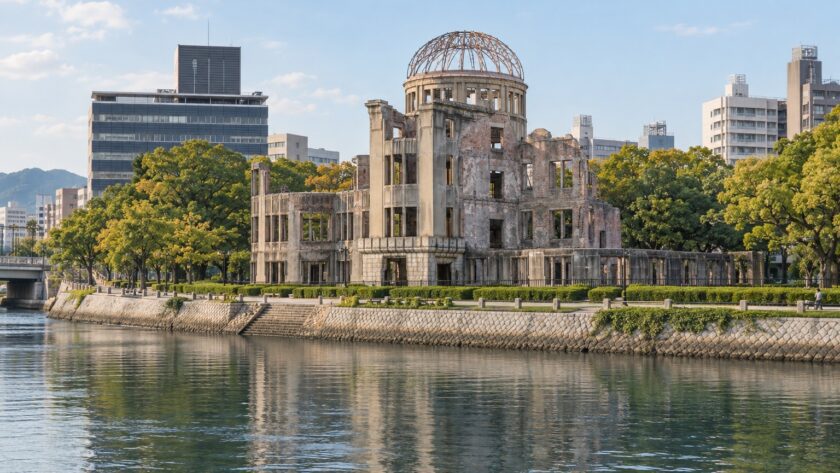
On August 6, 1945, the United States dropped an atomic bomb on Hiroshima. The surviving ruin now called the Atomic Bomb Dome was formerly the Hiroshima Prefectural Industrial Promotion Hall. It stands near the hypocenter and became a UNESCO World Heritage Site in 1996. The UNESCO description explains its preservation and significance as a reminder of nuclear destruction and a call for peace. View it from outside the perimeter; the ruin is not a building visitors enter.
The Dome, park and museum serve different purposes. The Dome is a surviving structure. The park brings together memorials and spaces for remembrance. The museum uses objects, photographs and testimony to explain the bombing and its human consequences. Visiting all three gives context that a brief stop beside the Dome cannot provide. You do not need extensive historical knowledge beforehand, but arrive prepared to read about people as well as dates, military events and buildings.
Keep another distinction in mind: the Hiroshima National Peace Memorial Hall for the Atomic Bomb Victims is separate from the Peace Memorial Museum. Their names are easy to confuse when saving locations on a phone. Pin both if you intend to visit them, and identify the museum entrance before your admission time. The memorial hall can add personal testimony and space for reflection, but it should be an intentional part of the day rather than another compulsory stop.
Choose a workable amount of time
For a full visit, set aside a morning for the museum and principal memorials, followed by lunch and a flexible afternoon. As an editorial planning allowance, reserve roughly two hours for the museum and another hour or more for the park. These are not official visit durations or a promise about queues. Some readers will spend much longer with the exhibits; others will need to step away sooner. Add time for the Rest House or memorial hall instead of squeezing them into a spare five minutes.
A half-day version should focus on the museum, Cenotaph, Children’s Peace Monument and Dome, with a genuine break between them. Drop the tower and shopping detour first. For travelers interested in deeper historical interpretation, replace part of the afternoon with a guided walk. Hiroshima’s official Peace Tourism routes offer ways to explore surviving buildings, cultural sites and the modern city. Choose a theme instead of trying to collect every place marked on a map.
Book the museum around your travel day
The museum’s opening schedule and ticket arrangements need attention before you arrive. At the October 11, 2026 check, regular seasonal opening was 7:30 a.m.–7 p.m. in March–July and September–November, 7:30 a.m.–8 p.m. in August, and 7:30 a.m.–6 p.m. in December–February. August 5 and 6 have longer hours. Last admission is thirty minutes before closing, which is far too late for the relaxed visit recommended here. Use the official hours and admission page when choosing your date.
Online advance reservation is required for the early entry period, 7:30–8:30 a.m., and the evening entry periods. The evening reservation requirement begins at 5:30 p.m. in March–July and September–November, 6:30 p.m. in August, and 4:30 p.m. in December–February. Book through the links provided on the museum’s English website. The museum recommends web tickets even during other hours and warns that an advance ticket does not guarantee immediate entry when galleries are crowded.
Individual admission was ¥200 for adults, ¥100 for high school students, and free for junior high school students and younger at our check. Routine closures include December 30–31 and a period in mid-February. The official site specifically announces an exhibition-change closure for February 15–20, 2027. Recheck before booking transport. An early museum visit suits travelers already staying in Hiroshima; if arriving by intercity train that morning, allow for luggage storage, station navigation and local transport before selecting an entry time.
Arrive with less luggage and a clear destination
From Hiroshima Station, the streetcar is a practical option. Hiroden’s current sightseeing map shows routes 2 and 6 to Genbaku Dome-mae, near the Dome, and route 1 to Hondori, followed by a walk toward the park. The operator’s English map gives about fifteen minutes for these rides, but that excludes finding the platform, waiting and walking onward. Use the Hiroden English site for current fares, boarding guidance and route information.
Choose the stop for your first appointment, not simply the most recognizable landmark. Genbaku Dome-mae is useful for a Dome-first walk; Hondori can work for approaching the museum from the east. Save the actual museum entrance rather than a generic park pin. If arriving tired or carrying equipment, compare a taxi with the effort of transferring and walking. For this compact day, a rental car adds little convenience, and the museum advises that there is no public parking inside the park.
Leave your main suitcase at your hotel or arrange station storage before starting. The museum does not permit large bags in its galleries; lockers are available, but relying on an unspecified locker being large enough or vacant is a weak plan. Carry a small day bag, water for outdoor breaks and a charged phone. If you have a train booked afterward, keep a separate margin for retrieving luggage: finishing at Hondori does not mean you are already at the railway station.
Visit the museum at your own pace
The museum is the most demanding part of this itinerary. Personal possessions and testimony make the consequences of the bombing specific, and some photographs and accounts are distressing. Read enough to understand whose story accompanies an object. Moving slowly through a few accounts can be more meaningful than attempting to absorb every panel while watching the clock. Discuss an exit or meeting plan with companions beforehand so nobody feels obliged to continue through every display at the same speed.
For families, consider the child’s interests and response to difficult material rather than assuming a particular age guarantees readiness. Explain in simple terms what the museum contains before entering, answer questions honestly, and allow a shorter visit. Adults can take turns if necessary. A walk outside is a reasonable choice when someone has had enough. Do not make the afternoon depend on everyone emerging with the same feelings or being ready to discuss the experience immediately.
English guide options can help you follow the exhibits. Consult the museum’s guide services page for audio guides and Hiroshima Peace Volunteers, checking language and availability in advance. A guided program should replace some independent touring time, not be added on top of an already full morning. If hearing testimony is your priority, confirm the exact program: survivor testimony, recorded testimony and talks by trained legacy successors are different experiences.
Follow the displayed photography rules and keep other visitors’ space in mind. The museum permits personal photography without flash, but prohibits tripods and selfie sticks; photography intended for publication requires advance application. Put the camera away whenever taking a picture would interrupt someone reading, praying or listening. Food and drink belong in designated areas. The practical aim is simple: give yourself and others the conditions to concentrate, rather than trying to record every object you encounter.
Walk the memorials as connected stories
After the museum, begin with the Cenotaph for the A-bomb Victims. Designed by Kenzo Tange, its sheltering form covers a stone chest containing registers of victims’ names, regardless of nationality. The official memorial explanation helps interpret the design and inscription. Pause without blocking the approach, particularly when people are paying their respects. A photograph taken from farther back usually gives everyone more room than remaining directly in front of the monument.
Continue toward the Flame of Peace and Children’s Peace Monument. The Flame of Peace was lit in 1964 and expresses the hope for the abolition of nuclear weapons. At the Children’s Peace Monument, learn about Sadako Sasaki, who survived the bombing as a young child and later died of leukemia. Her classmates’ efforts helped create a memorial to the children who died from the bombing. Read the explanation before treating the paper cranes simply as a colorful display.
If time and energy allow, include the Monument in Memory of the Korean Victims of the A-bomb. It adds essential context about Korean victims, including people brought to Japan under colonial rule and wartime forced labor. The park’s memorials reflect different communities and experiences; they are not interchangeable markers. You need not visit every one, but choosing a few with attention helps prevent the history from becoming a single anonymous narrative.
Finish this part of the walk near the Dome, across the river from the park. Compare the close view of its damaged walls with the wider view from the opposite bank. The surrounding city helps establish scale and continuity without reducing the ruin to scenery. Follow barriers and conservation signs. If a ceremony, school group or act of remembrance is taking place, leave space and adjust your route rather than expecting unrestricted access to a particular photo position.
Find the neighborhood beneath the park
The Rest House is a particularly valuable stop because it connects the memorial landscape with the district that existed before it. Built in 1929 as the Taishoya kimono store, the building survived the bombing and now contains visitor facilities and historical displays. The city’s Rest House history explains its changing roles. Seeing a former shop here helps you picture a neighborhood of errands, work and ordinary encounters where today’s open spaces now stand.
Allow time for the displays about the former Nakajima district rather than using the building only as a convenient break. The Rest House facility guide lists tourist information, a cafe and exhibition spaces, including the basement. Ask staff about current access to individual floors if stairs, lifts or opening arrangements matter to your visit. The historical rooms and the cafe have different purposes; eating or taking a break should not spill into exhibition areas.
This stop changes how you read the park afterward. A broad path can be understood as part of a much older urban landscape, and a preserved building becomes evidence of lives beyond the day of destruction. Look for maps and photographs that help you locate former streets and businesses. You do not have to reconstruct every detail. One clearly understood connection between a historic image and the place outside can make the surrounding landscape easier to comprehend.
Make room for the National Peace Memorial Hall
The Hiroshima National Peace Memorial Hall for the Atomic Bomb Victims preserves names, photographs, memoirs and survivor testimony. Admission is free. It offers another way to encounter individual experiences, and its spaces for remembrance deserve an unhurried visit. Check its own opening schedule, which differs from the museum’s. Include it before lunch if you still want to engage deeply, or choose it as the afternoon’s principal stop instead of returning to every other attraction.
A useful approach is to give one account your full attention. Consider what it says about the person’s family, work, losses and later life, rather than searching only for the most dramatic detail. If you want a reading session or a particular language, check the program before traveling. The hall is a place of remembrance in its own right; it should not be treated as a substitute waiting area when another building has a queue.
Pause beside the Motoyasu River
Before moving on to food or shopping, take an actual break. Sit where permitted, find shade in warm weather, and decide together how much afternoon activity feels appropriate. The river gives the itinerary breathing room without requiring another transfer. A slow walk along the park-side paths also lets you see how the bridges connect the memorial area with everyday city streets. There is no requirement to have a profound conversation, or to explain your reaction, before continuing.
For travelers who want an elevated city view, Orizuru Tower near the Dome is an optional addition. Its observation area helps reveal the rivers and surrounding urban layout. At our check, standard adult admission was ¥2,200, so it is a distinct budget decision rather than a necessary part of the memorial visit. Check the official ticket conditions and weather before buying; visibility varies, and the observation deck may close in hazardous conditions. Confirm individual activities separately rather than assuming every experience is operating.
Continue toward Hondori and a local lunch
Cross toward the city center and continue to Hondori Shopping Street, whose western end connects with the Peace Park area. This is a straightforward way to shift from memorial visits into the contemporary city. You can browse briefly, choose a cafe or continue toward Shintenchi for food. Keep the detour optional: someone who wants a quiet lunch nearby should not have to complete the shopping street before sitting down.
Hiroshima okonomiyaki is a satisfying meal to build the afternoon around. The local style layers ingredients on a hot griddle, usually combining a thin batter base, vegetables, noodles, pork and egg. Watching the cooking can be part of the pleasure when counter seating is available. The prefecture’s okonomiyaki introduction explains the layered method. Start with the standard combination if it suits your diet, then choose extras deliberately rather than ordering every topping because the menu is unfamiliar.
Okonomi-mura in Shintenchi brings multiple independent okonomiyaki restaurants together. Its roots lie in postwar food stalls, adding a connection to the city’s recovery. It is a useful option, not the only worthwhile place to eat. Read each shop’s menu and opening information, and look at the queue before committing. A restaurant that fits your appetite, seating needs and available time is a better choice than an hour of waiting solely for a familiar name.
Ask staff about the basic order, noodle choice and whether the dish will be served on a plate or kept on the griddle. Let the cook handle preparation unless invited otherwise. Vegetarians should check the whole recipe, including stock, sauces, toppings and cooking surfaces; removing pork alone does not establish suitability. For allergies, show a clear translated explanation before ordering. An earlier or later lunch can help with flexibility, but check for breaks between services rather than assuming every kitchen stays open all afternoon.
Choose your base and spend where it helps
When comparing accommodation, decide whether easy rail access or an easy start at the park matters more. A hotel near Hiroshima Station can simplify arrival and onward travel, while a base around the central shopping and park area can reduce morning transfers. Check the actual walking route from the hotel entrance, not only a map’s straight-line distance. If booking an early museum slot, confirm breakfast timing too. A hotel breakfast that starts after you need to leave may be less useful than a room rate suggests.
The day can be modest in cost: you can walk through the outdoor park without an admission ticket, and the memorial hall is free. Budget separately for museum admission, local transport, food and any paid viewpoint or guided experience. Treat the tower as an optional purchase, especially for families multiplying admission across several people. If funds are limited, spending on an appropriate meal, convenient transport or interpretation that matches your interests may improve the day more than another attraction ticket. Keep some cash available without assuming every small restaurant accepts your preferred payment method.
August 6 needs a different approach from an ordinary sightseeing day. The annual Peace Memorial Ceremony brings commemorative activities and special arrangements to the area. Consult the city’s 2026 ceremony information for an example, then look for the announcement for your actual travel year. Do not reuse an earlier year’s traffic or entry rules. If attending is your purpose, plan around the ceremony itself. If you want a quieter independent museum and neighborhood visit, consider another date rather than expecting this itinerary to run normally.
Put the day together without rushing
A practical full-day sequence is museum first, followed by the Cenotaph, Flame of Peace and Children’s Peace Monument, with the Rest House, Dome and a riverside pause before lunch. Fit the memorial hall in by shortening another part, or return after eating if its hours allow. Then choose Hondori, Orizuru Tower or simply a longer cafe break. This is a suggested sequence, not a timed tour; your ticket, weather and interests should determine the final order.
On a rainy day, prioritize indoor time and shorten exposed riverside walking. In hot weather, move outdoor sections earlier or later and schedule shaded or indoor breaks. For limited mobility, consult the museum’s accessibility information and ask about the specific facilities you need. Nearby landmarks can still involve substantial standing, crossings and detours. Choose a few stops, use transport for the approach, and avoid assuming that a compact area automatically makes every route easy.
Keep Miyajima for another day if your schedule permits. Combining both destinations is possible, but museum time, local transfers, ferries and island sightseeing compete for the same hours. This guide deliberately leaves space for Hiroshima itself. For onward planning, use our Hiroshima prefecture travel guide. Before leaving, check the next day’s arrangements, then put the timetable away. A visit that gives history proper attention and still leaves room for lunch, conversation and the living city is a day well spent.
Planning information checked October 11, 2026. Opening hours, admission policies, transport and facility access can change; consult the official links before visiting. Suggested visit durations and route choices are editorial recommendations. The featured image is an AI-generated illustration inspired by the Atomic Bomb Dome and Motoyasu River, not a documentary photograph or an exact architectural record.