Sapporo works best when you give it time to be a city, rather than treating it only as the airport gateway to Hokkaido. Three days allow you to walk its central streets, eat several very different local meals, explore a wooded shrine neighborhood, and understand something of the island beyond its familiar snow scenes. You can do this without renting a car.
This guide assumes three full sightseeing days, with arrival and departure fitted around them. It offers a practical sequence, but the mountain view and outdoor walks should move when the weather changes. For a longer journey through the island, pair this city itinerary with our Hokkaido travel guide. Keep distant landscapes for that wider trip: a good Sapporo stay does not need a different excursion every morning.
Where to Stay: Choose Your Evening, Then Your Hotel
For this itinerary, start your accommodation search around Sapporo Station, Odori, or Susukino. Each makes a workable base, but the right choice depends on how you want to finish your day. Compare the actual entrance and nearest useful exit, rather than accepting a booking site’s broad neighborhood label.
Sapporo Station suits travelers arriving with luggage, leaving early, or continuing by JR train. The tradeoff is that an evening meal around Susukino still involves a walk or subway trip. If your flight is early, prioritize a straightforward route to the JR platforms over a room with a more fashionable address.
Odori is my suggested starting point for a first visit: it places the central sightseeing circuit and several transport choices within a manageable area. Susukino makes sense if dinners, bars, and late desserts are a major part of your plans. Light sleepers should ask about the room’s position and street noise.
In winter, an underground connection can matter more than a short distance on a map. The Chi-Ka-Ho passage connects the Sapporo and Odori subway areas and joins a wider underground network. A nearby entrance does not necessarily provide step-free access, and passages have opening hours. Travelers with strollers or heavy cases should check elevators and the final outdoor stretch before booking.
Arriving from New Chitose Airport
The airport railway is an easy starting point for a car-free visit. JR Hokkaido’s Airport services link New Chitose Airport and Sapporo; the fastest Special Rapid takes 33 minutes, while other stopping patterns take longer. That is train time, not the time from aircraft door to hotel reception. Allow for baggage collection, station navigation, and the final transfer.
Most seats do not require reservations. A reserved seat needs the appropriate additional ticket, while an ordinary ticket or compatible IC card does not guarantee a seat. If sitting together matters, compare the reservation option before boarding. Read the train’s destination and departure display rather than assuming every airport service continues to your eventual stop.
On departure day, check current railway operation and leave a generous margin, especially during winter weather. A restaurant reservation in the city should never depend on catching the last possible airport connection. Keep your airline’s check-in deadline separate from your estimated station arrival.
Getting Around Without Buying the Wrong Pass
Walking and the subway cover much of this trip. Use the tram selectively for the Moiwa approach, and treat suburban museum travel as a separate journey. An IC card is useful for flexibility, but it is a payment method, not an unlimited sightseeing pass.
At the time of checking, the city’s adult subway one-day ticket costs ¥830. The Donichika Ticket costs ¥520 on Saturdays, Sundays, national holidays, and December 29–January 3. These cover the subway, not JR trains, streetcars, or buses. Purchase of these paper tickets is cash-only under the current rules; an IC balance cannot pay for them.
Choose a pass after sketching that day’s journeys. A largely walking-based central day may need very little paid transport, while a day crossing the city several times can justify a subway ticket. Compare the fares for your actual route instead of buying three passes automatically. Keep a small cash reserve even if you normally pay digitally.
Download a station map and save the hotel name in Japanese. Underground navigation becomes easier when you follow a specific exit number, but verify the surface location before climbing stairs. In snow, an extra subway stop can be more useful than forcing an ambitious walking total.
Day One: Read the City Through Its Center
Begin at the Clock Tower, then walk toward Odori Park and the TV Tower end of the park. This introduces the relationship between the north–south station corridor and the central east–west streets. It is also a useful first morning for discovering how quickly, or slowly, your group actually moves.
The Clock Tower was built in 1878 as a drill hall for Sapporo Agricultural College; its clock followed in 1881. The interior gives a small landmark more meaning than a quick photograph outside. Standard adult admission is currently ¥350. Normal visiting hours are 8:45 a.m.–5:10 p.m., with entry ending at 5 p.m.; check closure notices before visiting.
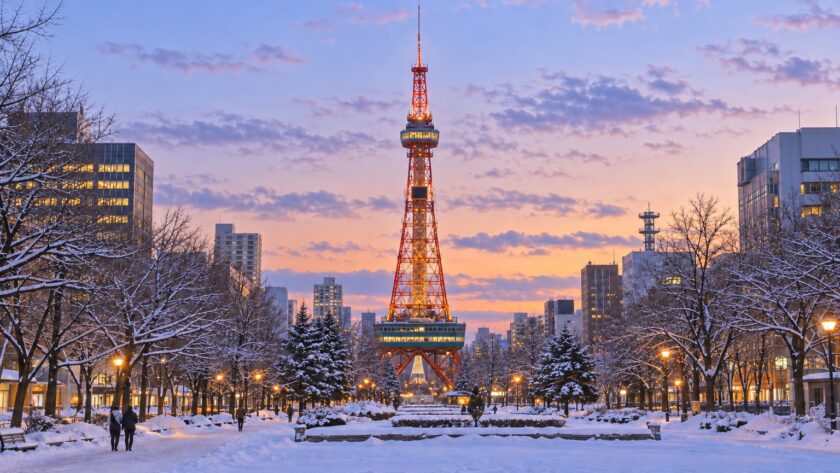
Continue through part of Odori rather than feeling obliged to walk its full length. The TV Tower provides an obvious orientation point. Choose a bench break in comfortable weather, or a café stop when the conditions make lingering unpleasant. A photograph that includes the surrounding streets often explains this urban park better than an isolated close-up.
Head toward Nijo Fish Market for a seafood lunch or an exploratory look. Restaurants offer dishes such as seafood bowls, sushi, and grilled fish. Compare menus before joining a queue: a display of premium crab is not evidence that every meal is inexpensive. Confirm what a set includes and whether the displayed price is per portion.
Finish the afternoon around Tanukikoji’s covered shopping arcade, then continue toward Susukino for dinner. Browse with a purpose—perhaps a snack, a practical purchase, and one souvenir—so the afternoon does not disappear into repetitive shops. Save a second major meal for another day rather than arriving at dinner already full.
Day Two: Maruyama and Hokkaido Shrine
Make the second morning slower. Travel toward Maruyama-koen on the Tozai subway line, then continue on foot to the park and Hokkaido Shrine area. The city’s official neighborhood itinerary provides a useful reference for this combination. Leave room for the approach: the shrine is not immediately outside the station gates.
This part of the visit works particularly well as a change of pace after the central streets. Walk through the trees, spend time at the shrine, and have lunch in the wider neighborhood. You do not need to add a demanding hike to justify coming here. Snow and ice can change an easy-looking path into a much slower walk.
Remember that a shrine is an active place of worship. Follow posted guidance, avoid blocking people approaching to pray, and observe photography restrictions where shown. Give ceremonies space. Travelers who prefer not to participate can still appreciate the grounds respectfully.
Keep the early afternoon flexible. Return to your hotel for a rest, find a café, or explore a little more if the weather is comfortable. This spare time has a purpose: it makes a possible evening on Mount Moiwa enjoyable rather than the final obligation in an already exhausting day.
Mount Moiwa: Make the View Conditional
Check the Mount Moiwa operator’s live information and webcam before setting out. Low cloud, strong wind, or suspended transport can change the value of the excursion. Leave two possible evenings available and choose the clearer one. A prepaid dinner that forces you uphill at a particular time removes that flexibility.
The full summit journey uses a ropeway followed by a mini cable car. The current adult return fare for both sections is ¥2,100. The operator lists annual maintenance closure for March 29–April 28, 2027, as well as closure on December 31 and January 1. Check the calendar for your dates rather than relying on a general evening closing time.
If approaching by tram, use Ropeway Iriguchi and consult the official shuttle instructions. The free shuttle does not run all day on weekdays: the currently published weekday service begins at 5:17 p.m. The alternative walk toward the lower station includes an uphill stretch. Do not plan around an imaginary morning shuttle.
Allow time for both uphill and downhill queues, and confirm the final descent arrangements before lingering. In cold weather, waiting is part of the outdoor exposure. If the view is poor, spend the evening on a relaxed dinner instead. The trip succeeds because the choices suit the day, not because every viewpoint is completed.
Day Three: Choose the History You Want to Understand
Use your last full day for one substantial indoor visit. The Sapporo Beer Museum and Hokkaido Museum offer very different perspectives. Choose the one that interests you most rather than trying to combine two separated sites merely because both have “museum” in their names.
The Sapporo Beer Museum suits travelers interested in brewing history and the development of a familiar Japanese brand. Its current self-guided admission is ¥1,000 for adults; older descriptions of free admission are no longer reliable. English audio guidance is available through a smartphone, so bring headphones. The self-guided visit does not require a reservation.
The premium guided tour costs ¥2,000 and lasts about 55 minutes, including tasting. It is conducted in Japanese, as explained in the tour conditions. Tours generally do not operate on Mondays, with holiday adjustments; that does not mean the entire museum closes every Monday. Self-guided visitors pay separately for tasting. Check the current calendar and booking rules before choosing between formats.
For broader context, choose Hokkaido Museum. Its exhibitions connect the island’s natural environment, Ainu culture, and social history. This helps prevent a visit from reducing Hokkaido’s story to modern urban development. Ainu culture is part of a living Indigenous society, not simply a historical preface to the city you see today.
Main-exhibition adult admission is currently ¥800; special exhibitions may cost extra. The museum normally closes on Mondays, with holiday exceptions, and over the year-end period. Opening hours shorten in the colder part of the year. Consult the calendar before allocating your final day to it.
For public transport, the museum’s access page describes bus Shin 22 from Shin-Sapporo’s north bus terminal, stop 10, toward the Historical Village; get off at Hokkaido Museum. The bus ride is about 15 minutes. Include the preceding rail or subway journey, waiting, and return connection in your plan. Reserve a half-day block rather than treating the museum as a brief downtown stop.
Eating Well: Spread Sapporo’s Specialties Across the Stay
Choose different styles of meal across your three days. The city’s food guide highlights miso ramen, soup curry, jingisukan, seafood, and the late-night parfait tradition. You can build a satisfying food trip around those categories without chasing one famous restaurant at every sitting.
Try miso ramen for a straightforward lunch or early dinner. Look at the base bowl before adding several toppings, and decide whether you really want a side dish. When a shop has a line, agree on a waiting limit with your companions before joining it. A nearby alternative is a useful part of the plan, not a failed meal.
Soup curry combines a lighter, spice-rich broth with substantial vegetables and other ingredients. Many restaurants let you choose heat, rice quantity, and toppings. Heat scales differ, so ask which level is mild rather than transferring your usual number from another restaurant. A vegetable-heavy bowl is not necessarily vegetarian: confirm the broth as well as the visible ingredients.
Jingisukan centers on grilled lamb or mutton and makes a good dedicated dinner. Before ordering, check whether the restaurant offers individual plates, sets, or a timed package. Confirm what drinks cost and how additional meat is ordered. If you are unfamiliar with the grill, ask staff to explain its use instead of guessing from another table.
Seafood is worth a meal of its own, but it does not have to mean the largest possible bowl. Choose the fish or shellfish you most want to try and compare portions. For travelers who prefer cooked food, look for grilled options rather than assuming a market visit must involve raw fish.
A shime parfait can turn dessert into an evening destination. Plan it after a lighter dinner, and check the individual café’s hours. You do not need to drink alcohol to enjoy this part of the city. Families can adapt the idea to an earlier sweet stop instead of keeping children out late.
Save two realistic restaurants near your hotel before arrival, including one with a menu that suits everyone’s needs. If ingredients matter, bring a clear Japanese explanation and confirm directly with staff. A translated dish name alone does not describe sauces, stocks, or preparation. Reserve a particular dinner when it matters to the trip; keep other meals flexible.
How the Same Itinerary Changes with the Season
In winter, reduce outdoor distances and add warm indoor breaks. Sapporo’s official winter clothing guidance emphasizes suitable footwear and layered clothing. Grip matters as much as warmth. Walk carefully on compacted snow and ice, keep your hands available for balance, and avoid hurrying across a crossing because a navigation app says you are late.
Do not assume the shortest route is the easiest route with a suitcase. Snowbanks, slippery pavement, and the wrong station exit can make a few blocks surprisingly awkward. A hotel rest before dinner is especially useful when you have spent the morning outside. Build the trip around daylight activities and warm evening destinations.
In the warmer months, extend the park and neighborhood portions if conditions are pleasant. Carry water and leave room to change plans on a hot or wet day. In spring and autumn, pack layers instead of expecting one outfit to suit a full day and evening. Actual weather should determine how much walking you attempt.
Seasonal events can become the main reason for a visit, but their dates and locations need a separate check. Do not assume a snow sculpture, illumination, or festival market will be present throughout an entire season. When attending an event, remove another major activity from that day rather than simply extending an already full schedule.
A Realistic Three-Day Rhythm
On day one, begin with the Clock Tower and Odori, eat around Nijo, then explore Tanukikoji before dinner near Susukino. This is the orientation day. Avoid committing to a distant timed attraction immediately after arrival if your “first day” actually begins with a flight.
On day two, give Maruyama and Hokkaido Shrine the morning, follow with lunch and a rest, and use the evening for Moiwa only if conditions justify it. If day one has clearly better weather, move Moiwa there and keep day two’s evening relaxed.
On day three, select one museum and use the remaining time for an unhurried meal, shopping, or a place you wanted to revisit. If a museum’s closure conflicts with this order, exchange whole days. The central walking circuit is easier to move than a reserved tour.
For a persistently wet or snowy day, shorten the park walks and combine an open museum with underground movement, covered shopping, and planned meals. This is a fallback pattern, not a claim that every attraction is connected indoors. Check the final stretch to each entrance.
Small Planning Checks That Save a Day
Before your first morning, create a short offline note with your hotel address, one transport map, and the opening information for your chosen museum. Save the Japanese names of destinations alongside their English names. If your phone battery runs low, this is more useful than a long collection of unsorted restaurant screenshots.
Traveling with children or someone who tires easily changes the order, not the value, of the trip. Put the most important attraction first, choose a nearby lunch, and make the afternoon optional. Before relying on an elevator, check the station’s accessible route. A map’s nearest entrance may lead only to stairs, and a detour matters when a person or a stroller cannot use them.
Handle luggage before sightseeing. Ask your accommodation whether it can hold bags before check-in or after checkout, and confirm any conditions. Do not assume a station locker of the right size will be available when you arrive. On the final day, plan the bag collection route together with the airport journey, rather than discovering that your luggage is on the opposite side of town.
Finally, keep one unscheduled hour each day. It can absorb a restaurant queue, a missed connection, or simply a place you want to enjoy longer. That hour is part of a well-planned trip, not unused space that needs another attraction.
Budget for the Decisions That Matter
Separate your budget into accommodation, food, local transport, admissions, and airport transfers. A walking day and a museum-plus-mountain day have different costs. The admission figures above are useful anchors, but they do not include every bus ride, tasting, special exhibition, or optional purchase.
Spend deliberately on the experiences you care about. A food-focused traveler might prioritize one reserved dinner and skip a paid viewpoint during poor visibility. Someone interested in history might choose a museum and a simple lunch. Keep hotel comparisons tied to the same dates and room conditions: a nightly figure without that context can mislead.
Before paying for an activity, check the included sections and cancellation terms. For daily planning, leave a little unallocated money for an unexpected transport change or a warm break. That flexibility is more useful than making the itinerary depend on the cheapest possible version of every journey.
Adding Otaru or Jozankei Without Rushing Sapporo
If you have a fourth day, consider an excursion rather than compressing this city itinerary. Otaru offers a different setting and can be reached by JR, but confirm that your chosen train reaches Otaru rather than ending earlier. Keep time for the return journey and avoid attaching the outing to a tightly timed flight.
Jozankei suits travelers seeking a hot-spring extension. Use the tourist association’s transport guidance and check reservations for the relevant service. Confirm day-use bathing arrangements directly with your chosen property; access to the district does not guarantee admission to a particular bath. An overnight stay can make more sense than racing back for another city dinner.
Leave Sapporo with a few memorable meals and a clear sense of its neighborhoods. Three thoughtful days provide a stronger introduction than an overloaded checklist—and leave good reasons to return in another season.
Practical information checked on October 11, 2026, against the official sources linked above. Fares, opening times, reservations, closures, and transport conditions may change; recheck your travel dates. Featured image: AI-generated illustration inspired by a snowy Odori Park and Sapporo TV Tower at dusk. It is not a documentary photograph, and architectural or surrounding details may differ from the real location.