Osaka rewards travelers who leave room between the big attractions. A castle morning can lead to an afternoon beside the river, followed by a dinner that begins with a small tray of takoyaki and develops into something more substantial. Beyond the city, the prefecture offers Sakai’s ancient burial mounds and craft traditions, plus the wooded paths of Minoh. These places add depth to a destination too often reduced to neon signs and a single evening of eating.
For a first visit, allow three full days, or four if Universal Studios Japan is a priority. This guide groups sights geographically so that meals and neighborhood walks fit naturally around the main stops. The suggested pace favors one substantial daytime anchor and a flexible evening, leaving space for queues, weather changes, and the surprisingly long walks inside major stations.
Understand Osaka’s geography before booking
Start with two useful city centers: Kita, around Osaka Station and Umeda, and Minami, around Namba and Shinsaibashi. The former is convenient for northern excursions and major rail connections; the latter places you near Dotonbori and many evening dining options. Tennoji provides another practical base farther south. The official Osaka tourism guide is a useful starting point for comparing the wider prefecture’s districts.
Choose accommodation by the station entrance you will actually use, rather than the nearest station name on a booking map. A room described as being near Namba may still require a considerable walk from your airport train. Save the hotel’s Japanese address, identify an elevator exit if needed, and test the route against your arrival service before deciding that two similarly priced hotels are equally convenient.
Arrive smoothly and keep local travel simple
Kansai International Airport has rail connections operated by JR West and Nankai. Compare the destination station with your accommodation using the airport’s official train access page. Nankai connects the airport with Namba; its service information distinguishes the Airport Express from the Rapi:t limited express, which requires an additional limited express ticket. A headline journey time should not be your entire airport transfer allowance.
For city sightseeing, use the Osaka Metro station guide to identify the correct line and interchange. Shin-Osaka, where shinkansen services arrive, is distinct from Osaka Station. Decide your actual sightseeing route before buying any transport pass: a relaxed day in one neighborhood may involve very few paid journeys. Photograph the hotel entrance and save a return route while you have reliable connectivity.
Dotonbori and Minami: give the evening room to unfold
Dotonbori is a good introduction to Osaka’s appetite for spectacle. The canal, bridges, restaurant signs, and busy surrounding streets make a compact evening destination close to Namba; see the tourism bureau’s Dotonbori overview. Arrive before dinner, walk a short stretch in daylight, then return after eating to see how the atmosphere changes when the lights dominate the water.
Do not turn this into a contest to visit the largest number of famous counters. Choose one food you particularly want, then select a second stop according to appetite and waiting time. Step away from bridge bottlenecks before taking photographs, keep luggage out of pedestrian traffic, and use the shop’s designated eating space when available. A clear meeting point helps groups reconnect without trying to locate one another among moving crowds.
Eat beyond the checklist
Three approachable starting points are takoyaki, round batter snacks containing octopus; okonomiyaki, a savory griddled dish built around batter and cabbage; and kushikatsu, breaded fried skewers. Osaka also has pressed sushi, udon, and a much broader dining culture than these familiar favorites suggest. The official local cuisine guide provides a useful introduction without requiring you to commit to a particular restaurant before arrival.
Spread richer dishes across your stay. Order a small portion first, let hot fillings cool, and leave room for a proper seated meal. For kushikatsu, follow the establishment’s sauce instructions rather than assuming every restaurant uses the same system. Travelers with dietary restrictions should confirm ingredients in batter, stock, sauces, and toppings. Carry a clearly translated explanation of your needs; an English dish name alone cannot establish whether a meal is suitable.
Osaka Castle: separate the landscape from the museum
The castle’s layered roofs and broad surrounding grounds create an obvious first-day anchor. The present main tower is a 1931 reconstruction, a distinction that makes its role clearer: this is a museum and a symbol of the modern city’s relationship with its past, rather than an untouched surviving keep. Consult the official Osaka Castle museum website for current exhibitions and admission arrangements.
Choose in advance whether your priority is the museum interior or an outdoor walk around the stone walls and moats. Doing both requires more time than a quick photograph suggests. Carry water, allow for the approach from your chosen station, and resist adding another distant attraction immediately afterward. A bench break and lunch nearby can make the afternoon more enjoyable than rushing straight into another admission queue.
Nakanoshima: art and a different urban rhythm
Place Nakanoshima on a day when you want a quieter counterpoint to Minami. The Nakanoshima Museum of Art, Osaka publishes its current and forthcoming exhibition calendar, so choose a show that interests you instead of assuming any particular collection will always be on display. Its substantial building also gives this part of the itinerary a clear destination in uncertain weather.
Leave time around the museum for a riverside walk and an unhurried drink. This is a useful afternoon to shorten if someone in the group needs rest, or lengthen if an exhibition proves especially absorbing. Check the museum’s calendar before assigning it to a Monday, and make the evening flexible. An art visit tends to work better with one nearby meal than with an elaborate cross-city dining reservation afterward.
Umeda and the city from above
Umeda works well for shopping, station-area meals, and a broad city view. The Umeda Sky Building’s official observatory website provides current visitor information for Kuchu Teien Observatory. If you want an elevated view, choose the time according to visibility and your evening plans, not simply the assumption that sunset must be the best option on every date.
A clear daytime visit helps you understand the city’s scale; an evening visit emphasizes the illuminated urban landscape. Choose one observation attraction rather than paying for several similar experiences unless architecture or photography is a main interest. Keep the final approach to the building in your schedule, and download its current walking directions. A large station complex can make a short distance feel unexpectedly complicated on a first visit.
Shinsekai and Sumiyoshi Taisha
Shinsekai offers another flavor of Osaka’s entertainment streets, with Tsutenkaku as a recognizable landmark and kushikatsu among its familiar foods. The tourism bureau’s Shinsekai introduction explains the district’s setting. Treat it as a neighborhood walk with a meal rather than merely a tower photograph. Compare menus before sitting down, and keep the next part of the afternoon open if lunch becomes the main event.
For a distinct cultural stop farther south, visit Sumiyoshi Taisha, a shrine deeply associated with maritime protection. Its arched Sorihashi bridge and four main sanctuaries make it architecturally memorable. The shrine’s ancient founding tradition should not be confused with the age of today’s buildings. Visit respectfully around worshippers, follow photography signs, and check the official visiting hours before treating it as an evening extension.
Osaka Bay: choose a substantial aquarium visit
Kaiyukan is a useful choice for travelers who prefer an indoor attraction, especially families. Check the aquarium’s official website for current tickets, admission arrangements, and operational notices before going to the bay. Buy through an official channel and keep the entry details available offline. Avoid relying on an old itinerary that assumes every neighboring restaurant or leisure facility remains unchanged.
Give the aquarium room in the day rather than positioning it between two rigid reservations. Allow time for children to pause, for crowded viewing areas, and for lunch before or afterward. If the weather is pleasant, a short waterfront break can round out the outing. If it is unpleasant, finish early and return to the hotel instead of forcing an additional outdoor stop simply because it is nearby.
Universal Studios Japan needs its own day
If Universal Studios Japan is important to your trip, allocate a separate day and organize the visit before filling the rest of your schedule. Park admission, optional queue-related products, and entry arrangements for particular areas are separate planning questions. Read the official Area Timed Entry Ticket instructions; entry to a desired area should never be assumed solely because you have a general park ticket.
The official app can manage eligible area entry arrangements, with availability and procedures subject to the park’s rules. Prepare your party’s tickets together, charge your phone, and decide which experiences matter most before arriving. Do not promise children that every named attraction will be possible. A short priority list, realistic meal breaks, and a flexible departure time make a stronger plan than attempting every ride and a late city dinner afterward.
Sakai: ancient monuments and living craftsmanship
Sakai gives the prefecture a historical dimension beyond the central city. The UNESCO inscription of the Mozu-Furuichi Kofun Group recognizes a remarkable collection of ancient burial mounds. Use the Sakai tourism guide to Nintoku-Tenno-Ryo Tumulus to orient your visit. Expect an encounter with a monumental landscape; photographs taken from above create different expectations from the experience at ground level.
Plan around designated public viewing areas and nearby interpretation rather than expecting to enter the burial mound. A museum or visitor information stop helps give meaning to the moats and wooded forms. Leave generous time for walking, particularly in warm weather, and select a manageable area rather than trying to trace every monument in the wider World Heritage property during one afternoon.
For another side of Sakai, the Sakai Traditional Crafts Museum, SAKAI DENSHOKAN introduces local products including knives, textiles, and incense. Check demonstration or workshop arrangements separately from ordinary admission. If buying a knife, ask about its intended use, maintenance, and packing. Choose one meaningful purchase after learning about the craft rather than treating the museum simply as another souvenir shop.
Minoh: a green half-day north of the city
Minoh is a useful change of pace when you want a wooded walk instead of another shopping street. The tourism bureau describes the waterfall trail from Hankyu Minoh Station, leading toward a waterfall with a 33-meter drop. The station matters: Hankyu Minoh and Minoh-Kayano are different places, so check the route to your intended trail entrance before boarding.
Allow a half-day for the outing, including trains, the return walk, and pauses. Check current path conditions and weather, especially after heavy rain, and wear footwear with dependable grip. Do not assume a paved riverside route is effortless for every traveler. Start early enough to turn back comfortably, carry drinking water, and choose a shorter walk if heat, crowds, or mobility needs make the full route unattractive.
A balanced three-day itinerary
On day one, begin with Osaka Castle and lunch, then decide between a restful hotel break and a short afternoon walk. Reserve Minami for the evening: arrive near Namba before you are hungry, explore Dotonbori, and choose dinner according to the queues you actually find. This keeps your first day legible and avoids putting an important timed booking immediately after an unfamiliar station transfer.
On day two, choose Nakanoshima and Umeda for art, shopping, and a possible city view. Alternatively, make Kaiyukan the main attraction and keep the evening near your accommodation. On day three, choose Sakai for history and craft or Minoh for greenery. Add Sumiyoshi Taisha or Shinsekai only if the route and your energy make sense. These are options, not instructions to combine every place into one exhausting circuit.
With a fourth day, give Universal Studios Japan the space it needs, or split Sakai and Minoh across separate outings. If you have only one full day, stay with the castle and Minami, adding a single indoor stop if weather requires it. Travelers arriving after a long flight should protect their first evening from expensive reservations with strict cancellation terms and demanding cross-city transfers.
Make the small decisions before leaving the hotel
Each morning, identify the day’s first destination, its closing day, and the latest sensible departure from your accommodation. Then save one nearby alternative. For example, a museum reservation and a restaurant in the same area create a coherent rainy-day plan, while an outdoor walk can move to the following morning. Keep the alternative genuinely nearby; replacing a canceled activity with a distant attraction often consumes the time you were trying to save.
For meals, distinguish a must-visit restaurant from a must-try dish. A particular reservation may deserve a fixed place in the itinerary, but takoyaki or okonomiyaki does not require every traveler to join the same famous queue. Check whether the menu price covers a portion, a set, or a per-person order. Groups sharing food should ask what the restaurant permits, and solo diners can look for counter seating rather than waiting for a large table.
On departure day, work backward from the airport’s recommended arrival time and your airline’s requirements. Include the journey from the hotel door, retrieving stored luggage, finding the correct platform, and any terminal transfer. Do not schedule a final attraction simply because its map pin appears close to the railway. A modest lunch near your departure station often makes a better last memory than a hurried dash with shopping bags and an almost-empty phone battery.
Finally, agree on a daily stopping point with your travel companions. Someone interested in design may want more time in a museum shop; someone else may prefer a second food stop or a hotel break. Splitting up briefly with a clear meeting place can work better than dragging the entire group through every preference. Keep the accommodation details accessible to everyone, and select a meeting point outside the busiest ticket gates or restaurant entrances.
Seasons, costs, and accessible planning
Choose the season according to how you intend to spend your days. Mild weather makes park walks and Minoh more appealing, while hot, humid periods call for shorter outdoor sessions and longer indoor breaks. Blossom and autumn foliage trips need flexible expectations because natural timing varies. For travel during storms or other disruption, follow current operator notices rather than assuming a saved timetable remains usable.
Build your budget from the actual experiences you want: accommodation, transport, everyday meals, and any major ticketed attraction. Compare pass coverage with that list and leave a margin for lockers, snacks, and an occasional easier transfer. A free neighborhood walk and a carefully chosen lunch can be a satisfying day; a theme park or several observation attractions create a very different spending pattern.
For step-free travel, check individual station exits and attraction access information, not only whether a train line appears convenient. Large interchanges may involve lengthy corridors even when elevators are available. Keep one lighter afternoon in the plan, especially with children or older relatives. Osaka is most rewarding when there is time to notice a small counter, follow a new appetite, or linger beside the river without worrying about the next reservation.
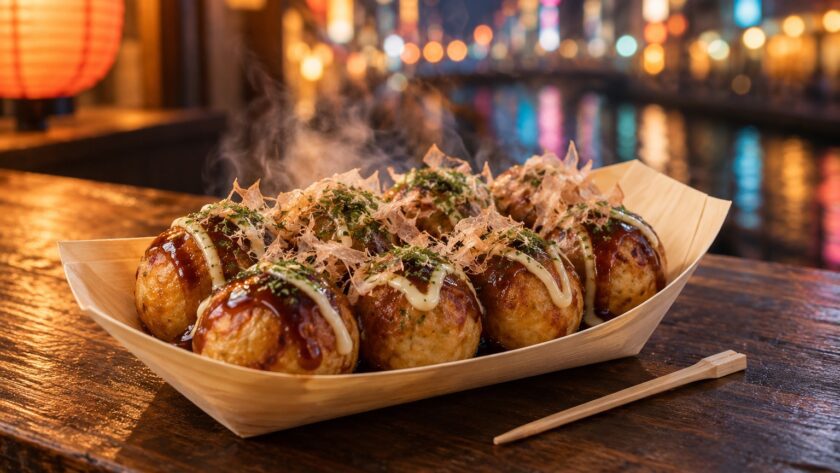
Editorial note: Official sources and visitor information were checked on October 10, 2026. Confirm current opening hours, access conditions, tickets, and transport before travel. The featured image is an AI-generated, photo-style illustration of Osaka-style takoyaki, not a photograph of a specific restaurant or location.