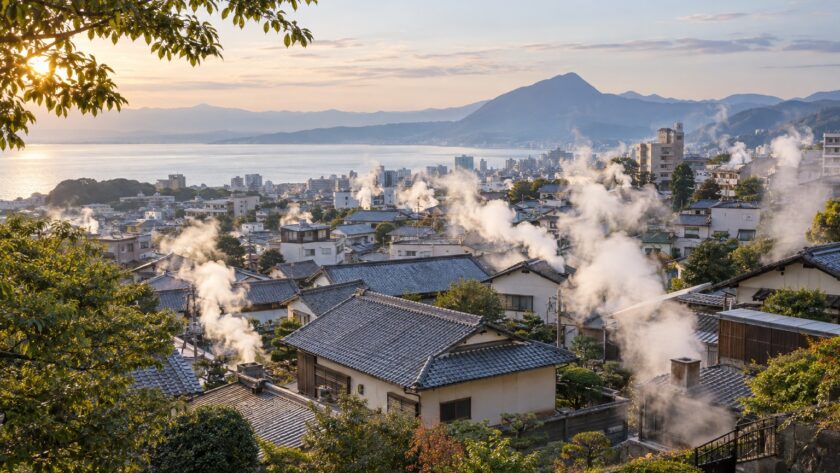
Oita rewards travelers who leave room between destinations. Steam curls through Beppu’s streets, mountain scenery frames Yufuin, and centuries of religious art survive in the stone carvings and temple landscapes beyond the familiar hot spring towns. On Kyushu’s eastern side, this prefecture offers enough variety for a substantial holiday without requiring a new hotel every night.
The most satisfying first visit combines two different experiences: time to enjoy an onsen properly, and a day devoted to either history or countryside. Start with Beppu and Yufuin, then choose Usuki, the Kunisaki Peninsula, Hita, or the Kuju mountains according to your interests and transport. This guide explains how to make those choices, with practical advice for a relaxed three to five days.
Plan Around Regions, Not a Long Checklist
Use Beppu as your introduction to bathing culture and geothermal scenery. Yufuin suits a slower stay built around walking, meals, and a ryokan. Oita City works as a transport base when your route includes the southeastern coast. These places can fit together, but their station locations and accommodation districts matter more than the apparent distance between names on a map.
For an extension, choose one direction. Usuki offers Buddhist carvings and historic streets southeast of Oita City. Kunisaki is a northern peninsula journey through temple country. Hita makes more sense on the western approach from Fukuoka. The Kuju area is a separate mountain outing. Trying to add all four to a short hot spring break creates more transfers than discoveries.
Three nights give you room for Beppu, Yufuin, and one additional experience without treating every afternoon as departure time. Five nights allow a more substantial regional loop. With only one night, concentrate on one hot spring town and enjoy dinner there; the pleasure of staying is precisely what disappears when both towns become brief shopping stops.
Getting to Oita and Moving Between Towns
From Fukuoka, JR Kyushu’s Sonic services connect Hakata or Kokura with Beppu and Oita. This coastal rail approach is useful for a Beppu first night or an onward journey toward Usuki. Check your actual departure date and train, and distinguish the train ticket from any seat reservation when comparing booking options.
For Yufuin, the Yufuin no Mori sightseeing train can make the journey part of the holiday. It uses reserved seating, and operating dates and destinations vary. Some services continue beyond Yufuin toward Oita and Beppu. Reserve before designing your day around a particular departure, and look at ordinary alternatives if your preferred train is unavailable.
Travelers flying into Oita should consult the airport’s access information for the connection appropriate to their destination. Leave time for arrival formalities, luggage, and the onward transfer. A flight arriving in the prefecture does not mean you have arrived at your ryokan; confirm its dinner deadline before choosing a late flight.
A car is most helpful when linking rural temples or mountain locations, rather than simply moving between station areas. Compare the complete day: parking, walking, the return journey, and any one-way rental arrangements. Without a car, build each excursion around its return connection first. A taxi for one awkward segment can sometimes simplify a day more than changing your entire accommodation plan.
Beppu: Understand the Hells Before You Visit
Beppu’s jigoku, usually translated as “hells,” are geothermal attractions for viewing. They are not a collection of bathing pools. The official Beppu Jigoku guide groups seven sites into a circuit, with several around Kannawa and two farther away. Plan the geography before buying a combination ticket, particularly if you only want to see a few.
Contrasting colors and textures make the circuit interesting: the blue water of Umi Jigoku and the red-toned pool at Chinoike Jigoku offer very different impressions. The Beppu tourism introduction to the hells helps you select sites. Choose two or three that appeal to you, or allow a fuller outing if completing the circuit matters.
Keep sightseeing and bathing as separate appointments. A morning of geothermal viewing followed by lunch and a proper bath is easier to enjoy than repeatedly changing clothes between attractions. Follow the marked paths around steaming water and vents, and leave room for other visitors at popular viewpoints. Steam and weather change how these places look throughout the day.
Kannawa: Steam as Part of Everyday Life
In Kannawa, the atmosphere comes from a neighborhood shaped by hot springs, rather than a single landmark. Beppu City’s Kannawa cultural guide describes the area’s long-stay bathing traditions and accommodation associated with self-catering. Walk slowly, look for the relationship between lodgings and steam, and remember that these lanes also serve residents and local businesses.
Jigoku-mushi cooking uses geothermal steam to prepare food. The Japan National Tourism Organization’s Oita introduction highlights this local cooking method. Choose a facility where staff explain the equipment and ingredients rather than assuming any visible steaming installation is available to visitors. Check whether you purchase ingredients there or may bring your own before planning lunch.
Another distinctive experience is Kannawa Mushiyu, a municipal steam bath using an herb-covered heated floor. Its clothing arrangements differ from an ordinary communal soak. Read the current instructions when booking or arriving. For a short visit, choose either this experience or a conventional bath and leave enough time to settle into it.
Enjoying an Onsen Comfortably
Beppu’s official bathing guide emphasizes consideration for regular local users: greet others, rinse before entering, keep towels and long hair out of the water, and ask before adjusting the temperature. Some small community baths have few amenities, so confirm what is provided. Bring a small towel and avoid assuming every bath works like a hotel spa.
Ask about tattoo policies, private bathing, step-free access, and changing facilities directly with the venue. A private bath may be the most comfortable choice for travelers who want more time or privacy, but reservation rules differ. Never photograph a shared changing or bathing area. If you are uncertain about a procedure, ask staff before entering.
Near central Beppu, Takegawara is an architectural landmark as well as a bathing destination; JR Kyushu’s destination notes identify both regular bathing and geothermal sand bathing there. These are different experiences, so check the relevant reception arrangements. A sand bath is worth planning deliberately rather than squeezing into the last few minutes before your train.
Yufuin: Walk, Pause, and Stay Overnight
Yufuin’s appeal is the combination of mountain scenery and an unhurried town visit. The Yufu City visitor guide maps the station, Yunotsubo streets, and Lake Kinrin. Use that layout to make a walking route with a lunch stop, rather than assuming the station exit immediately places you beside the lake.
Yunotsubo Kaido is a lively stretch for shops, snacks, and cafés. If a particular shop has a queue, decide whether it deserves your limited time; there is no obligation to turn every popular snack into a scheduled stop. Keep purchased food out of crowded doorways, and use quieter public paths for a change of pace while respecting private gardens and lanes.
Lake Kinrin receives both spring water and hot spring inflows. On cold mornings, mist can rise above its surface, though the effect depends on conditions. Visit early if atmosphere matters more than shopping, and treat mist as a possibility rather than a promise. The lake is a compact walking destination, not a full wilderness excursion.
An overnight stay creates time for the town before or after its busiest visiting hours. Choose your ryokan by the actual room, meals, bathing arrangements, and distance from transport. Ask whether a shuttle needs advance booking. If dinner is included, a late afternoon snack circuit can work against the meal you have already paid to enjoy.
Usuki: Stone Buddhas and Historic Streets
The Usuki Stone Buddhas offer a striking change from hot spring sightseeing. The site includes 61 carvings designated National Treasures. These are figures carved into rock, encountered across several groups rather than in one museum hall. Allow time to look at individual faces and forms instead of treating the visit as a single photograph.
Usuki’s official pilgrimage information notes the uncertainty surrounding their origins and associates the carvings with the late Heian through Kamakura periods. That uncertainty is part of their interest. Read the interpretation on site, follow photography instructions, and avoid touching the carvings or stepping beyond permitted routes.
The carving site and the historic town are separate stops. The Usuki tourism guide introduces Nioza’s lanes and temple scenery, giving you a second focus for the day. Arrange the connecting transport before setting out. A leisurely lunch between the two makes a more coherent excursion than rushing from the carvings straight back to the station.
Kunisaki: Choose a Few Temples and Go Slowly
The Kunisaki Peninsula brings wooded temple settings and religious traditions that connect Buddhist practice with local mountain worship and Shinto. The regional temple and shrine guide is a useful starting point, with places such as Futagoji and Monjusenji. Their appeal lies in the approach, surrounding landscape, and individual histories, not simply collecting names.
Pick one main temple and perhaps a second nearby stop after checking access. Rural routes and steep approaches can make a short distance on a map surprisingly demanding. If you want a walking itinerary, arrange guidance suited to your ability rather than improvising a mountain route between temples. Confirm steps and surfaces directly when mobility is a concern.
Keep this as a dedicated day or overnight extension. Combining a northern temple circuit, Yufuin shopping, and an airport departure leaves little margin for delays. At active religious sites, lower your voice, check where photographs are allowed, and give worshippers space. The quieter pace that makes Kunisaki attractive also deserves to shape the way you visit.
Kuju Mountains or Hita: Two Different Extensions
For open scenery, start with the Chojabaru Visitor Center in Aso-Kuju National Park. Its displays explain the landscape, and nearby Tadewara provides a wetland walking option. A boardwalk visit and a mountain summit are very different outings; choose consciously rather than letting an appealing mountain photograph determine your day’s difficulty.
The visitor center’s own information describes walking options and advice for hikers. Ask about conditions before choosing a route. Allow for wind, rain, and lower temperatures than in town, and keep footwear appropriate to the surface. With limited time, a short walk and a long view can be more rewarding than an ambitious climb.
Hita is the alternative for travelers who prefer streets and shops to mountain trails. Mameda-machi preserves a historic townscape with cafés, shops, museums, and sake-related heritage. Set aside a few hours and choose places that are actually open that day. It fits naturally into a western approach to Oita, rather than requiring a hurried return trip from the coast.
What to Eat in Oita
Toriten is chicken prepared in tempura-style batter, commonly accompanied by a dipping sauce and mustard. It is an approachable first regional lunch, especially if you want a cooked dish between sightseeing stops. Compare it with other chicken preparations on a menu instead of assuming every plate of fried chicken is the same specialty.
Ryukyu uses sliced fish with a seasoned sauce, often involving soy sauce, sesame, and ginger. Fish and presentation vary, and rice-bowl versions make a convenient meal. Despite the name, this is an Oita specialty. Ask what fish is being served and check ingredients if you have dietary restrictions.
For something warming, look for dango-jiru, a regional soup featuring flour dumplings. It offers a useful contrast to seafood and elaborate ryokan dinners. Vegetarian-looking soups and sauces may contain fish stock, so explain requirements clearly. Plan at least one simple local lunch; every meal need not be a tasting menu to be memorable.
A Flexible Four-Day Oita Itinerary
Before following this route, decide where your luggage will spend each day. Confirm storage with your accommodation, especially when moving from Beppu to Yufuin, and carry only what you need for the intervening visit. Do not assume a small station or rural attraction can store a large suitcase. A light day bag leaves you freer to use buses, walk narrow streets, and take a short detour without turning it into a handling exercise.
Day one: arrive in Beppu, leave luggage with your accommodation if permitted, and explore central streets before bathing. Choose an easy dinner plan and keep the evening free. This is a good day to learn the bathing routine, ask about tomorrow’s transport, and recover from the journey without a fixed sightseeing deadline.
Day two: spend the morning around Kannawa, selecting geothermal sights that interest you. Have a steam-cooked lunch if you have arranged a suitable venue, then make time for a bath or a neighborhood walk. Transfer to Yufuin only if the connection and your accommodation’s check-in arrangements leave comfortable space before dinner.
Day three: enjoy Yufuin on foot, with Lake Kinrin, shopping, and a proper lunch. Keep the afternoon flexible for your accommodation or an additional local stop. Travelers who dislike changing hotels can instead retain Beppu as a base, provided they check both directions of the Yufuin connection and accept a longer travel day.
Day four: choose Usuki for religious art and historic streets, Kunisaki for a dedicated temple excursion, or Kuju for a landscape day. These are alternatives, not consecutive stops. If traveling back toward Fukuoka, Hita may fit your departure route better. Add an extra night when an extension would otherwise depend on a tight final connection.
When to Go and What to Reserve
For accommodation, compare total cost rather than the first room price displayed. A ryokan plan may include breakfast and dinner, while a station hotel quote may cover only the room. Check whether pricing is per person or per room, whether the bath you want is shared or private, and whether separate fees apply. A modest hotel combined with a carefully chosen day bath can be a sensible option when your priority is exploring several towns.
Location also changes the experience. A station-area stay is convenient when you have an early departure or several rail excursions; a Kannawa stay puts neighborhood wandering at the center of the visit. In Yufuin, a lodging outside the main walking area may offer the quiet you want but require a transfer for meals or luggage. Save the accommodation’s address and arrival instructions offline, and make any shuttle arrangement before you reach the station.
Choose your season around the activity you value most. Cool weather makes bathing and steaming landscapes especially appealing, while countryside walking needs a suitable forecast regardless of month. Oita’s official seasonal guide introduces changing foods and events. Confirm festival dates separately; a seasonal recommendation does not establish the schedule for your travel year.
Book a desired ryokan room and dinner plan first, then the train or transfer that gets you there comfortably. Leave the least weather-dependent activities as substitutes for a poor mountain day. Before departure, recheck opening notices, transport, and any meal requirements. Oita becomes easier to enjoy when the essential arrangements are settled and the spaces between them remain open.
Information checked October 11, 2026. Official sources are linked throughout; services, opening arrangements, and reservations can change. The featured image is an AI-generated illustration inspired by Kannawa in Beppu, Oita, not a documentary photograph of a specific viewpoint.