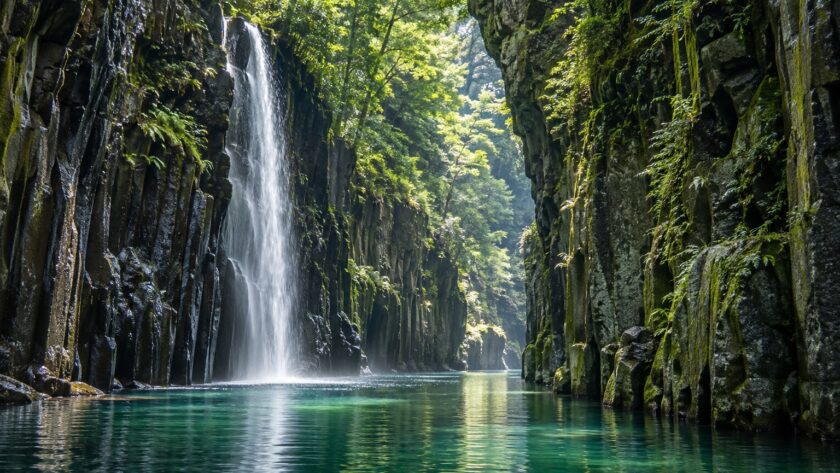
Miyazaki brings together two very different landscapes: a Pacific coast of surf, palms, and seaside shrines, and an inland world of wooded valleys, waterfalls, and traditions connected with Japanese mythology. A visit can move from the open horizon at Aoshima to the enclosed scenery of Takachiho Gorge, with castle-town walks and memorable local meals between them.
The key is to give those landscapes enough space. Miyazaki is a substantial prefecture, and its best-known attractions do not all sit around the capital. This guide helps you build a trip around the coast, the northern mountains, or a carefully paced combination, with official sources for reservations, transport, and visitor information.
First Decide: Coast, Mountains, or Both?
For a first visit, think in three areas. Miyazaki City and Aoshima form an accessible central base. The Nichinan coast stretches south toward Udo Shrine, Obi, and eventually Cape Toi. Takachiho lies inland in the north, while Hyuga provides a coastal stop farther north of the capital. The JNTO prefecture overview is a useful starting point for understanding this variety.
Two or three nights work well for Miyazaki City, Aoshima, and a selective Nichinan excursion. Adding Takachiho calls for more time, ideally including a night there. Five days can combine both areas if you keep optional stops under control. Treat Cape Toi or a longer surfing stay as an extension, not something that automatically fits into spare time.
Choose one experience that determines the shape of the holiday. That might be a Takachiho boat reservation, an evening kagura performance, a surf lesson, or a quiet coastal stay. Place it on the calendar first, then arrange transport and accommodation around it. This makes a stronger itinerary than giving equal weight to every attractive photograph.
Getting Here and Choosing Transport
Miyazaki Airport has a railway connection, and the airport’s official train page provides departures toward Miyazaki and destinations farther north. Check the actual service and any transfer before boarding. For an arrival day, plan the journey to your hotel as well as the flight; a coastal property may require another local connection after reaching the city.
The JR Nichinan Line serves Aoshima and Obi. If you enjoy scenic rail travel, consider Umisachi Yamasachi, JR Kyushu’s sightseeing train between Miyazaki and Nango. Its cedar interiors and changing coastal and inland views make it an experience in itself. Consult the operating calendar and seating arrangements rather than treating it as an all-day shuttle.
For Takachiho, the Miyazaki Kotsu Nobeoka–Takachiho information helps establish the bus connection from the railway corridor. The operator also lists the Takachiho highway bus between Nobeoka and Kumamoto, with reservation rules that depend on the segment. Use the timetable valid for your travel date; an operator notice currently distinguishes schedules before and after November 1, 2026.
A rental car is useful for connecting coastal viewpoints or reaching rural accommodation, but it does not remove the distance between regions. Without one, reduce the number of stops and reserve time for transfers. In either case, work backward from the last return service or dinner deadline. A beautiful outward journey is less enjoyable when the return has been left to chance.
Aoshima: A Small Island with a Big Coastal Setting
Aoshima is a good introduction to Miyazaki’s seaside character. The small island is connected to the shore by a bridge, with a shrine amid dense subtropical vegetation. The surrounding beach town offers places to pause before or after your visit. Arriving by train leaves you a walk from Aoshima Station, so carry what you need for the weather.
Allow time for both the shrine approach and the shoreline. The rock formations known as the Devil’s Washboard create a distinctive layered edge around the island. Their appearance changes with water levels and light. Enjoy them from permitted paths, and avoid stepping onto wet rock simply because a photograph makes it look like an easy place to stand.
The Aoshima Shrine visitor information provides context for the religious site. Remember that the shrine is more than a scenic backdrop. Keep the approach clear, observe signs around sacred areas, and give worshippers time and space. An early visit can be followed by breakfast or a longer beach walk, rather than immediately driving to the next landmark.
Make Surfing a Proper Activity, Not a Spare Hour
Aoshima is also a surfing destination, with lessons and equipment rental available in the area. A first lesson works best as a main activity for the day. Ask the provider about instruction language, equipment, changing facilities, ability requirements, and what happens if conditions are unsuitable. Leave time afterward to shower, eat, and return any hired equipment.
Keep swimming plans separate from a surfing booking. A beach suitable for an experienced surfer is not automatically suitable for casual swimming, and conditions can vary considerably. Follow current local advice and designated areas. Travelers who prefer dry land can still enjoy the coast through a walk, a café stop, or simply watching the changing sea from shore.
If surfing is the reason for your visit, spend consecutive nights in the same area. That gives you more flexibility to work with conditions and reduces the time lost carrying wet equipment between hotels. If it is only an introduction, one organized session leaves room for Miyazaki’s cultural sights without turning the entire trip into a sports schedule.
Udo Shrine and the Nichinan Coast
South of Aoshima, Udo-jingu places a shrine within a coastal cave overlooking the ocean. The approach, sea views, and descent toward the sanctuary are all part of the visit. It is an especially good reason to travel slowly along the Nichinan coast, with enough time to explore rather than make a brief photographic stop.
The Miyazaki City tourism guide explains its association with Toyotama-hime and prayers connected with family life. It also describes undama, small clay balls used in a local wish-making custom. Follow the instructions given at the shrine if participating, and understand these stories as religious traditions rather than historical claims or promises of an outcome.
Check the walking approach carefully if steps are difficult for anyone in your party. A parking location or bus stop does not necessarily indicate a level route to the sanctuary. Wear shoes that handle damp surfaces, and avoid rushing on stairs. On a wet or windy day, give the coastline more time or reduce your stops instead of keeping an inflexible timetable.
For a fuller coastal journey, JNTO’s Nichinan introduction provides regional context. Plan a few deliberate stops rather than continually pulling over for every view. A shrine visit, a proper lunch, and one historic district can fill a day comfortably. Check your route’s return options before adding a distant southern destination.
Obi: Give the Castle Town Time on Foot
Obi provides a change of pace from the ocean. Its castle-town streets, stone walls, and traditional buildings invite a walking visit rather than a drive-through. The local tourism material links the town with the Ito clan, who governed here for centuries. Start with the castle area and then explore the surrounding streets, choosing any interiors according to their current opening arrangements.
Pick up a local map and ask about the day’s accessible buildings and participating shops. Food is part of the experience: Obi-ten is a seasoned fried fish cake, while atsuyaki-tamago offers a distinctive egg specialty. These details, introduced in the city’s Udo and Obi guide, make a useful lunch or snack plan without requiring you to follow a rigid tasting circuit.
Arriving by rail is possible, but allow for the walk from Obi Station and the return departure. If you combine Obi with Udo by public transport, check the connecting journey rather than assuming the railway directly serves the shrine. With limited time, a satisfying afternoon in Obi may be a better choice than briefly touching both places and spending the rest of the day transferring.
Takachiho Gorge: Book Carefully and Keep an Alternative
Takachiho combines dramatic gorge scenery with shrines and performing traditions. The gorge’s sheer, column-like rock walls and falling water are the most familiar image, but they are only one part of the area. Give yourself enough time to enjoy the surroundings even if a boat ride does not work out.
The official boat rental page is the essential source for booking. At the time of checking, advance reservations open two weeks before the ride and close two days before it, with specific release times listed online. Some dates operate on an advance-reservation basis, and same-day availability is not guaranteed. Do not travel expecting an unreserved boat to be waiting.
Boat operation can be suspended because of river conditions or inspections. A booking does not override a closure, and recent sunshine does not necessarily mean the river has returned to suitable conditions after rain. Recheck the tourism association’s operating updates on the day. Plan a walking visit or another local activity, subject to its own access notices, as your alternative.
Budget time for parking or the approach from your accommodation before the booked check-in. Keep large luggage out of the outing and follow staff instructions for boarding, life jackets, and rowing. The gorge is not a place to improvise swimming or scramble down to the water. The point is to enjoy the enclosed landscape, not to reproduce a photograph at any cost.
Amanoiwato and an Evening of Kagura
Amanoiwato Shrine is associated with the story of the sun goddess Amaterasu withdrawing into a cave. The shrine’s account of the legend explains how the other deities sought her return. Reading a little beforehand gives the place meaning beyond its wooded setting and helps connect it with the region’s performance traditions.
Treat Amanoiwato as a separate local excursion from the gorge. Confirm transport, opening arrangements, and any guided access with the shrine or tourist office. Follow instructions about photography and restricted areas. If your time is short, one attentive shrine visit is more rewarding than trying to cover every sacred place associated with the region’s mythology.
The Takachiho Kagura program at Takachiho Shrine presents selected dances from the larger tradition, normally in a one-hour evening performance. It differs from the full community night-kagura observances. Check the date and reservation page for exceptions and availability. An overnight stay makes the evening easier to enjoy without worrying about a long journey afterward.
Arrange dinner early enough to arrive comfortably. The official venue information notes floor seating and does not promise loan chairs, so contact the organizer about your needs in advance. Read the story outline, watch the gestures and masks, and follow the venue’s photography instructions. The performance deserves your attention even when you cannot understand every spoken explanation.
Hyuga, Saitobaru, or Cape Toi?
Choose an extension according to your route. Hyuga offers headland views at Umagase, the rock formation known as the Sea of the Cross, and the old port area of Mimitsu. These places suit a northern coastal day. Reaching Hyuga-shi Station is only the first step; arrange transport to the headland instead of assuming everything is beside the railway.
For archaeology and open countryside, consider the Saitobaru burial mounds. More than 300 ancient tombs spread across the area, with seasonal flowers adding another reason to walk. Choose a manageable section and use interpretation to understand the landscape. Flower displays depend on the season and conditions, so check local reports if blooms are your main reason for going.
At the southern end of the prefecture, Cape Toi is known for its free-ranging Misaki horses and ocean scenery. Observe the animals from a respectful distance, do not feed or approach them, and drive slowly where they may cross. This is a substantial southern extension; give it its own time rather than attaching it to an already full Takachiho itinerary.
What to Eat in Miyazaki
Chicken nanban is an essential regional introduction: fried chicken dressed with sweet vinegar, often accompanied by tartar sauce. Variations are part of the interest. Order it as a proper meal rather than one more snack on a crowded day, and ask about ingredients when egg, wheat, or other allergens are a concern.
The prefecture’s official regional food guide also introduces charcoal-grilled jidori chicken and hiyajiru, a cold soup involving fish stock, miso, tofu, and seasonings, served with rice. They offer very different eating experiences. A simple soup lunch can be particularly welcome between heavier restaurant meals, while grilled chicken suits an evening when you have time to sit and order gradually.
Do not assume vegetable-looking dishes are vegetarian: broth, sauces, and fish cakes can contain ingredients that are not obvious. Explain dietary requirements before ordering. When choosing a hotel outside a town center, decide whether to include dinner or reserve a nearby restaurant. Rural evenings are more relaxing when finding a meal does not become an unexpected transport problem.
A Practical Five-Day Miyazaki Route
Day one: arrive in Miyazaki, settle into your accommodation, and keep the afternoon light. Use the official city guide to choose a nearby cultural stop or a walk that fits your arrival time. Enjoy a local dinner, then confirm the next day’s transport. Avoid making a distant coast excursion depend on a flight arriving exactly on schedule.
Day two: devote the day to Aoshima. Combine the island and shrine with lunch and a beach walk, or make a booked surf lesson the main activity. Keep the evening flexible. Staying near the coast suits travelers who value an early morning by the sea; returning to the city may suit those prioritizing restaurant choice and onward connections.
Day three: head south for Udo and Obi, using a car or a carefully checked combination of public transport. If the connections are inconvenient, choose one as the main destination. Return north with enough time for dinner, or stay in the Nichinan area if you plan to continue toward Cape Toi. The cape requires extra time beyond this basic route.
Day four: travel toward Takachiho, allowing a substantial part of the day for the move. Add a local shrine visit only if arrival time permits, then have dinner before kagura. Do not attach several Hyuga sightseeing stops to the transfer unless you have checked the complete day’s timing. An overnight in Takachiho protects the evening from unnecessary travel pressure.
Day five: visit the gorge, with a boat ride only if booked and operating, and add Amanoiwato if it fits your departure. Travelers continuing toward Kumamoto should check the relevant bus or driving route before reserving activities. If flying from Miyazaki, consider another night closer to the airport rather than relying on a narrow connection after a mountain excursion.
When to Visit and Final Planning Details
Choose dates around the experience you want. Spring flowers, a summer coastal stay, autumn walks, and winter cultural visits lead to different itineraries. Mountain evenings can feel very different from the seaside, so bring layers even when your plans begin among palms. Rain, wind, and river conditions matter more than a generalized image of Miyazaki as permanently sunny.
Before leaving, confirm your key reservations, the last useful transport connection, and current access notices. Pack walking shoes for shrine approaches, a light waterproof layer, and a bag that is easy to carry between trains and buses. Keep one flexible block of time. Miyazaki is most rewarding when its coast, traditions, and inland scenery have room to become separate experiences.
Information checked October 11, 2026. Official sources are linked throughout; transport, opening arrangements, reservation windows, and operating conditions can change. The featured image is an AI-generated illustration inspired by Takachiho Gorge, Miyazaki, not a documentary photograph of a specific viewpoint.