Nagoya rewards travelers who want to understand how Japan makes things: a palace reconstructed through traditional craftsmanship, machinery that turns thread into cloth, and trains that changed the experience of distance. Between those encounters are covered shopping streets, a wooded shrine, and meals with a character quite different from the food most visitors associate with Tokyo or Kyoto. Two days give these experiences room to connect.
This guide is designed for a first visit without a car. It concentrates on a manageable city itinerary, with choices for different interests and practical advice about stations, museum closures, meals, and spending. For destinations beyond the city, including Inuyama, Tokoname, and Ghibli Park, use our broader Aichi travel guide. Keep those excursions for additional days rather than squeezing them into this stay.
Is Nagoya worth two days?
Give Nagoya two days if you enjoy understanding the process behind an object as much as looking at the finished result. The combination of architecture, industrial heritage, and distinctive cooking makes a coherent short trip. It also suits couples with different interests: one substantial museum visit can sit comfortably beside shopping, a shrine walk, and a carefully chosen dinner.
With only half a day, select one anchor and one meal. A castle visit followed by lunch is more satisfying than photographing three entrances before rushing back to the station. With one full day, combine the castle with Osu and an evening in Sakae. With two, add either the Toyota Commemorative Museum or the railway museum and allow an unhurried visit to Atsuta Jingu if your route permits.
The itinerary below assumes two usable sightseeing days. Arriving after lunch and leaving the following morning is a one-night stop, but it is not two days of sightseeing. Before booking a hotel, write down your actual arrival and departure times, then subtract luggage handling and station transfers. That simple calculation often matters more than the distance between cities.
Where to stay: Nagoya Station or Sakae?
Choose the Nagoya Station area when an early train, a late arrival, or several pieces of luggage dominate your plans. Being able to leave your bag at the hotel and return before departure can simplify the entire stay. However, a hotel described as being near the station may be convenient for one entrance and awkward for another. Check the walking route from your actual railway platform area.
Sakae is a useful alternative if your priority is an evening spent around restaurants and shops rather than immediately beside the intercity railway. Treat it as a base for enjoying the city after the daytime attractions close. Compare the complete hotel journey, including street crossings and the nearest accessible subway exit, rather than choosing solely by a straight-line map distance.
Travelers arriving through Chubu Centrair International Airport should consult the airport’s official transfer guide before selecting a train. Meitetsu, JR, and the subway are distinct systems, even where their stations share the Nagoya name. Save your hotel’s address in Japanese and English, and leave a transfer buffer instead of assuming every entrance leads directly to your platform.
Getting around without buying the wrong pass
The city transport bureau lists an adult Subway 24-Hour Ticket at ¥760 and a City Bus & Subway 1-Day Ticket at ¥870. The ¥620 Donichi Eco Kippu covers city buses and subways on Saturdays, Sundays, national holidays, and the eighth day of each month, with specified special-calendar exceptions. The official 2026 transport guide explains coverage and ticket use.
Choose a pass after choosing your route. A subway ticket does not turn a journey on Meitetsu or the Aonami Line into a covered subway ride. Likewise, a calendar-day product and a rolling 24-hour product solve different problems. Add up the ordinary fares for the journeys you will actually take; do not purchase unlimited travel simply because the name sounds convenient.
The Me~guru sightseeing bus links several major attractions and can simplify a museum-and-castle day. It normally does not operate on Mondays, with holiday-related changes, and has a year-end break. Compare its current timetable with your museum entrance time. A pass offers little value if waiting for the next departure consumes the time you hoped to spend inside.
For the central sightseeing day, use the subway map to connect Nagoya Station, Sakae, Nagoyajo, and the Osu area. Nagoya and Sakae sit on the Higashiyama Line; Sakae offers a connection to the Meijo Line for Nagoyajo. Osu can be approached through Osu Kannon or Kamimaezu, depending on the direction of your walk. Save both the station name and the destination entrance. They are different navigation decisions, especially when you want to finish at the opposite end of a shopping district.
Nagoya Castle: make the palace the main event
At the time of checking, the castle’s official website states that visitors cannot enter the main tower keep. Plan your visit around the grounds and Honmaru Palace rather than expecting to climb to a tower viewpoint. This distinction is especially important when comparing Nagoya with another castle elsewhere on your trip.
The reconstructed Honmaru Palace offers a close look at traditional building and decorative techniques, including cypress woodwork and painted interiors. Look slowly at thresholds, ceilings, and the way one room frames the next. Shoes must be removed; large bags go in entrance lockers, and touching exhibits, flash photography, and eating are prohibited. Carry socks and a compact day bag.
The current visitor information lists adult admission at ¥1,000 following the October 1, 2026 change. Normal opening is 9:00 a.m.–4:30 p.m., with admission ending at 4:00 p.m.; the palace also stops admitting visitors at 4:00 p.m. Reaching a castle gate just before that deadline leaves insufficient time to walk to the palace. Allow roughly two hours as an itinerary choice, not a promised minimum visit.
A useful way to engage with the palace is to choose one detail to follow: the treatment of wood, the decoration above eye level, or the changing scale of rooms. Then compare it with what you notice in the industrial museum the next day. This gives the trip a personal thread without requiring specialist knowledge of architectural history.
Atsuta Jingu: leave room for a different pace
Atsuta Jingu introduces a different side of Nagoya: an active shrine where the purpose of visiting extends beyond sightseeing. Approach it as a place of worship rather than a collection of photo opportunities. Keep conversations quiet around prayer areas, follow signs about photography, and avoid standing in the way of people approaching to pray.
The shrine connects its foundation with Kusanagi-no-tsurugi, the sacred sword associated with the Imperial regalia. Understanding that religious significance helps explain why this is more than an attractive green stop on a sightseeing circuit. Read the shrine’s own introduction before arriving, and let its role as a living religious place shape your behavior.
For itinerary planning, reserve about an hour to ninety minutes for a gentle visit, with extra time if you choose a separate exhibition. Do not equate the availability of shrine grounds with the opening hours of every building or service. Use the shrine’s visitor information for orientation; its English page retains the older Jingu-Nishi station name, shown as Atsuta Jingu Nishi on the current subway map. Verify individual exhibition opening notices separately.
This stop works particularly well after a concentrated museum morning. Instead of demanding another sequence of labels and exhibits, it offers time to walk and notice your surroundings. If the weather is unpleasant or your group is tired, shorten the visit without adding a replacement attraction. A relaxed return to the hotel can improve the evening more than completing every item on a list.
Osu: build a walk around curiosity
The area around Osu Kannon brings together a temple visit and shopping streets with independent interests, from clothing to electronics and food. The prefectural Osu shopping district guide provides orientation and access information. Shops keep their own hours, so an afternoon visit is a more useful planning choice than assuming everything will be open early in the morning.
Begin around the temple, then choose a loose direction through the shopping streets. Give each traveler one priority, whether that means browsing secondhand clothes, looking at hobby shops, or stopping for something small to eat. Agree on a meeting point before separating. With a group, this works better than trying to make everyone enjoy every shop together.
Keep purchases light until you know how much walking remains. For food, use the eating space provided by the vendor and ask where to return packaging. Osu is an enjoyable place to leave some decisions open: a ninety-minute gap without a reservation can become one of the most memorable parts of the trip.
Choose your museum: manufacturing or railways?
The Toyota Commemorative Museum of Industry and Technology is the strongest fit for readers interested in how things work. Its textile and automotive displays connect machinery, materials, and manufacturing processes. Give the textile section real attention rather than treating it as a corridor on the way to cars. Watching a mechanism operate can make an otherwise abstract explanation immediately understandable.
Budget two to three hours for your own visit, and check the day’s demonstration information on arrival. The museum lists opening hours of 9:30 a.m.–5:00 p.m., with final admission at 4:30 p.m.; Mondays are normally closed, shifting after a Monday holiday. Standard adult admission is ¥1,000. Its access page identifies Sako Station on the Meitetsu Nagoya Line and the Me~guru stop as useful approaches.
Choose SCMAGLEV and Railway Park instead if your enthusiasm centers on trains, railway interiors, or the technology of speed. This is a substantial alternative morning, not a quick extra attached to the Toyota visit. The Japan National Tourism Organization access guide describes the Aonami Line journey from Nagoya to Kinjofuto and the short walk from the station. Include platform access and waiting time in your schedule.
The railway museum’s official visitor page lists 10:00 a.m.–5:30 p.m. opening, last admission at 5:00 p.m., and adult entry at ¥1,200. Tuesdays are normally closed, with holiday exceptions. Simulators cost extra and operate on a first-come basis; admission does not guarantee participation. Treat a simulator as a bonus, especially when traveling with a child who might otherwise expect a reserved driving session.
Before choosing, ask what you want to remember afterward. If the answer is an explanation of a production process, choose Toyota and leave time to watch demonstrations. If it is the shape and interior of railway vehicles, choose the railway museum. Groups should make that decision together before traveling to the outskirts. Splitting into separate museum visits is possible, but it changes a shared day into two independent itineraries and deserves a clear meeting plan.
What to eat: plan meals, not a checklist
Nagoya’s food deserves deliberate space in the itinerary. The official Nagoya-meshi introduction is a useful starting point for the city’s specialties. Miso katsu pairs a pork cutlet with a rich miso sauce; miso nikomi udon is a substantial noodle dish; kishimen offers broad, flat noodles; and tebasaki makes chicken wings part of an evening meal. Choose across textures and portion sizes instead of ordering several heavy dishes simply to collect names.
A café breakfast can be an enjoyable start, especially where a morning-service offer includes food with a drink. Check the particular café’s menu and cutoff time: it is not a universal entitlement at every coffee shop. If you intend to have a large eel lunch, keep breakfast modest. If breakfast is your main café experience, choose a later, lighter lunch instead.
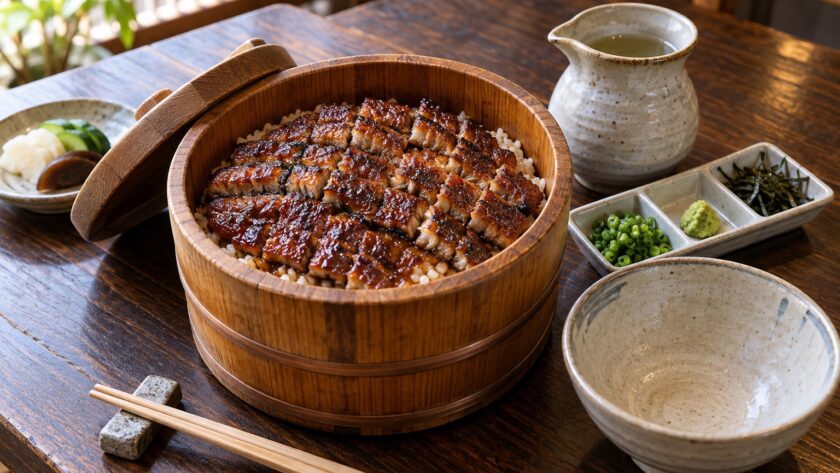
Hitsumabushi turns grilled eel and rice into a meal you can compare in stages. The local food association’s eating guide describes dividing it into portions: begin plain, add condiments to another portion, then try it with broth or tea as served. Finish in the style you prefer. Move small amounts into the serving bowl rather than pouring liquid over the entire tub immediately.
Allow a separate budget for that meal. As one concrete reference, Atsuta Houraiken’s main-restaurant menu lists standard hitsumabushi at ¥4,950 including tax when checked. That is an example from one establishment, not a citywide price or a promise of availability. Confirm the exact branch, service hours, and reservation conditions; different locations should not be treated as interchangeable.
For a practical two-day balance, choose one meal you are willing to organize around and keep the others flexible. A noodle lunch can fit between attractions; a leisurely eel meal may become the attraction itself. Search the official tourism restaurant directory by area, then verify details with the restaurant. Select a nearby backup before joining a queue, and decide how long you are willing to wait.
Travelers with dietary restrictions should inspect ingredients rather than relying on an English dish name. A broth, sauce, or topping can matter as much as the main ingredient. Show a clear written explanation of what you cannot eat and ask the restaurant directly. For mixed groups, choosing a place where everyone can order a complete meal is more useful than pursuing a famous dish that leaves someone without dinner.
Day one: palace craftsmanship, Osu, and Sakae
Start with breakfast and reach Nagoya Castle around opening time if your arrival schedule permits. Give the palace and grounds the morning rather than booking another attraction immediately afterward. An approximate 9:00–11:00 a.m. visit leaves a comfortable margin for slower entry, photography where permitted, and simply looking carefully. These time blocks are planning suggestions, not guaranteed queue or journey times.
Use midday for lunch and the transfer toward Osu. This is a sensible day for a straightforward noodle or cutlet meal, particularly if your special dinner is already chosen. Arriving in Osu in the early afternoon lets you combine the temple area with browsing and a café break. Keep roughly two hours free instead of allocating fifteen minutes to each shop.
Later, move toward Sakae for your evening or return to the hotel first. The latter is often the better choice after a long arrival journey. Dinner should be near where you want to end the day, rather than across the city solely because a restaurant appeared on a list. Reserve enough energy to enjoy it.
If you arrive late, shorten the day by choosing either the castle or Osu. Do not move the palace visit to the last possible admission time as a rescue strategy. Likewise, if a restaurant queue consumes your lunch buffer, remove an optional stop. The point of this day is to experience several sides of the city without constantly watching the clock.
Day two: choose one major museum
For the manufacturing version, aim for the Toyota Commemorative Museum near its 9:30 a.m. opening and spend the morning inside. Ask about demonstrations before committing to a route through the galleries. Finish around midday or later if the displays hold your interest. Lunch, travel, and an afternoon at Atsuta Jingu then form a realistic second half without requiring another large museum.
Keep the restaurant and shrine order flexible. An early dinner or a different lunch location may work better than waiting for a particular table. Check your onward route before leaving the museum, including the operator and any transfer. Avoid assuming that a station name in a guide means every train passing through it will stop there.
For the railway version, travel to Kinjofuto for the museum’s 10:00 a.m. opening and allow a substantial morning plus lunch. Decide afterward whether you have time and energy for Atsuta or would prefer to return to central Nagoya. If you are departing that evening, make luggage collection and the booked train your fixed commitments; let the optional afternoon stop absorb any delay.
For a Monday-and-Tuesday stay, place the railway museum on Monday if its calendar confirms opening; the Toyota museum usually fits Tuesday. You do not need to visit both. Choose your preferred museum first, then arrange the castle and neighborhood walks around its actual opening calendar. Public holidays can shift closures, so weekday rules alone are insufficient.
A realistic spending plan
For the castle-and-Toyota version, standard adult admission currently totals ¥2,000 before any applicable discounts. The railway alternative makes those two attraction admissions ¥2,200. These figures exclude special activities and are useful anchors for budgeting, not an all-inclusive city pass. Add your chosen local journeys separately, especially when using more than one railway operator.
As an editorial planning allowance, set aside roughly ¥3,000–¥6,000 per person per day for ordinary meals, drinks, and café stops, adjusting upward for a premium eel meal or alcohol. This is a flexible budgeting range, not a surveyed average or restaurant quotation. Accommodation, airport travel, and intercity tickets are additional. Price the actual hotel dates before deciding whether the overall trip is inexpensive.
If the budget is tight, protect one paid experience you care about and make the rest of the day simpler. A carefully explored neighborhood and a relaxed meal can provide more enjoyment than purchasing another admission late in the afternoon. Keep a small reserve for an unexpected taxi, a locker, or changing meal plans.
Rain, children, and practical comfort
In wet weather, prioritize your chosen museum and reduce exposed walking. Covered shopping streets help, but do not assume the entire journey between hotel, stations, and attractions is sheltered. Carry a compact umbrella and allow extra time for slippery surfaces and crowded entrances. On a hot day, use the middle of the day for an indoor visit or a proper seated break.
With children, agree on one experience that matters most and treat everything else as adjustable. Build in a snack before hunger becomes the reason to abandon the plan. For travelers needing step-free access, check station exits and each attraction’s facilities individually. A nearby entrance on a map does not establish an accessible route, and a museum’s general accessibility statement does not describe every activity.
Before leaving the hotel, confirm opening notices, save the return route, and check the departure time you cannot miss. Nagoya works best when a few meaningful experiences have enough room around them: a machine explained well, a palace room examined slowly, and a meal enjoyed without a rushed exit.
Planning information checked on October 11, 2026. Prices, opening hours, closures, and services can change; use the linked official sources to confirm your travel dates. Suggested visit lengths and budget ranges are editorial estimates. The featured image is an AI-generated, photorealistic illustration of hitsumabushi, not a photograph of a particular restaurant’s meal.