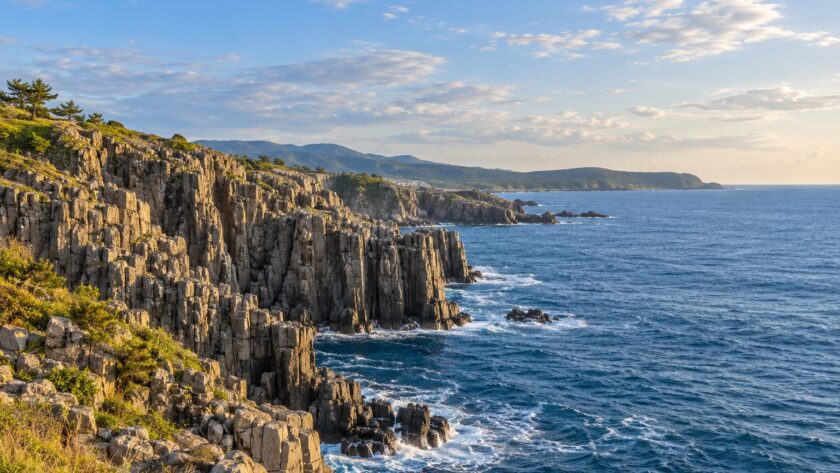
Fukui rewards travelers who like a change of pace within a single journey. One day can revolve around dinosaur fossils; another can lead through a working Zen monastery or a workshop where everyday objects are made with extraordinary care. On the coast, broken columns of rock meet the Sea of Japan. Farther south, lakes, fishing towns and food traditions invite a longer stay. The challenge is choosing a coherent route, because these experiences are spread across the prefecture.
Travel information checked on October 10, 2026. Confirm opening calendars, reservations and transport before departure. The featured image is an AI-generated, photo-style illustration inspired by Fukui’s coast, not a photograph of an exact real viewpoint.
Choose a region before choosing your hotel
For a first visit, use Fukui City as a base for the northern and eastern sights: Eiheiji, Katsuyama and the Dinosaur Museum, the coast around Tojinbo, and the craft communities around Echizen. Three full days let you explore several of these without attempting everything. Four days allow a workshop or an overnight hot-spring stay. If dinosaurs are the main reason for coming, give Katsuyama its own day rather than treating the museum as a short stop between distant attractions.
Southern Fukui, usually called Wakasa, deserves a separate extension. Tsuruga makes a useful arrival or departure point, while the Five Lakes of Mikata and Obama open up a different coastal itinerary. Trying to fit northern temples, a craft workshop and southern lakes into one day creates more travel than exploration. Choose two or three themes, then leave some unscheduled time for lunch, weather changes and the journey between stations and actual sights.
Getting to Fukui and understanding local transport
The Hokuriku Shinkansen links Tokyo with Fukui and Tsuruga through Kanazawa. From Osaka or Kyoto, the usual fast rail route combines the Thunderbird limited express to Tsuruga with a Shinkansen connection for destinations farther north. Start with the prefecture’s official access planner, then check the timetable for your date. JR West’s Tsuruga transfer guide explains the station layout and ticket gates, which is useful when traveling with luggage or children.
Reaching Fukui Station does not mean reaching every attraction. Local railways and buses complete many journeys, and departures can be much less frequent than in Tokyo. The official local transport planner compares routes to major sights. Awaraonsen Station and Awara-Yunomachi Station serve different parts of the hot-spring area; check which one your accommodation recommends. Save your return connection before leaving, and keep the stop name in Japanese as well as English.
A rental car can make dispersed workshops and the southern coast easier to combine, but it is not essential for a focused northern trip. Compare a day of rental costs with a carefully chosen taxi connection instead of assuming you need a car throughout. For rail travel, check the actual coverage of any pass against each operator. For driving, allow extra time for unfamiliar roads and parking, and avoid planning a first experience of winter driving around an ambitious rural circuit.
For a realistic budget, separate accommodation and long-distance rail from the smaller costs that accumulate during sightseeing. A taxi to finish a rural connection, a workshop fee and an included ryokan dinner can change the comparison between two otherwise similar plans. Decide which experience matters most, reserve that first and keep the rest adjustable. If anyone in your group uses a wheelchair, cannot manage many stairs or needs frequent seating, ask individual venues about the exact route available. Descriptions such as accessible or family-friendly do not explain every surface, doorway or distance, and a short advance conversation can prevent a tiring surprise.
Make the Dinosaur Museum a proper day out
The Fukui Prefectural Dinosaur Museum is in Katsuyama, away from the prefectural capital. Its displays include mounted skeletons, other fossils, reconstructed prehistoric scenes and moving dinosaur models. This range makes it interesting both for children attracted by the spectacle and adults who want to understand what fossil evidence can reveal. Look beyond the largest skeletons: comparing feet, teeth and body shapes can turn a visual visit into a conversation about how animals lived.
Use the museum’s visitor information and ticket link to check opening days and the available admission options before traveling. A common public-transport approach is the Echizen Railway to Katsuyama, followed by a bus or taxi. Build those connections into your arrival plan. Avoid booking a tightly timed activity elsewhere immediately afterward, particularly if someone in your group is likely to want a second circuit of the galleries.
The museum’s Field Station is a separate organized experience associated with the excavation area, rather than an exhibit you automatically enter with ordinary museum admission. Check its operating dates, ticket arrangements and participation guidance independently. If you book it, make the museum and field experience the day’s priorities. With younger children, an ordinary museum visit plus a relaxed lunch may be more enjoyable than filling every available hour with structured activities.
Find a quieter side of Katsuyama at Heisenji
Heisenji Hakusan Shrine offers a different sense of time: moss, stone approaches and wooded grounds associated with the worship of Mount Hakusan. Its history includes a much larger religious settlement, and the nearby Mahoroba visitor center provides context for the remains. The attraction is not simply a single photo spot. Walk slowly enough to notice changes in the stonework, the shade beneath the trees and the relationship between the present shrine and its older landscape.
Combine Heisenji with the museum only if the transport and your energy allow it. These are separate destinations, even though both are in Katsuyama. Check bus connections or arrange a taxi rather than assuming an easy walk between them. Wear shoes with dependable grip, keep to the paths and protect the moss by staying off it. A quiet hour here can be a satisfying end to a busy museum day, but it should remain optional rather than become a rushed obligation.
Visit Eiheiji as a working monastery
Founded by Dogen in 1244, Eiheiji remains an active center of Soto Zen practice. Its halls and connecting passages occupy a wooded mountain valley. A visit introduces architecture and religious life together: the care given to ordinary tasks is part of the place’s meaning. Allow time to follow the visitor route calmly, with pauses to look at the wooden structures and painted ceilings instead of approaching the complex as a quick collection of landmarks.
The prefecture’s Eiheiji visitor guide explicitly asks visitors not to photograph trainee monks and explains that some areas restrict entry or photography. Follow the instructions given on arrival. If you want meditation, a morning service or an overnight experience, confirm the relevant program and booking conditions in advance; ordinary sightseeing admission should not be taken as a reservation for these activities. Ask about stairs and the visitor route if mobility is a concern.
Choose a quieter meal afterward and leave a little space in the schedule to absorb the visit. Travelers using buses should distinguish a direct service from an itinerary that changes between train and bus. Confirm the final return departure rather than relying on the frequency you remember from a larger city. A temple visit can occupy much of a rewarding day when paired with lunch and unhurried travel; it does not need a long list of additional sights.
Walk through the past at Ichijodani
At Ichijodani, the story shifts from religious practice to the life of a medieval castle town. Begin with the Ichijodani Asakura Family Site Museum for an introduction to the Asakura clan, the settlement and archaeological evidence. The restored townscape provides a different experience, with reconstructed residences and streets that help make the excavated landscape more legible. They are distinct visitor facilities, so allow time to move between them and check both opening arrangements.
This is a good choice for travelers who enjoy understanding how a place functioned rather than only photographing its most prominent building. Start indoors if the weather is unsettled, then decide how much of the outdoor area suits the conditions. Carry rain protection and drinking water, and confirm the return service before walking farther into the valley. For a short trip, choose between an extended Ichijodani visit and another distant attraction instead of squeezing both into an already full afternoon.
Tojinbo and an overnight stay at Awara
The coast at Tojinbo is known for its columnar rock formations and open views over the Sea of Japan. You can appreciate the cliffs from land, while sightseeing cruises offer another perspective when conditions permit. Make the boat an optional addition, not the single activity on which the day depends. Wind, waves and visibility influence the experience, and a dramatic sea is a reason to be more conservative about where you walk.
Wear secure shoes, keep back from exposed edges and avoid concentrating on a camera while stepping over uneven rock. You do not need to scramble to the most exposed point to appreciate the formations. Leave time for a meal before returning inland, particularly if your onward bus has a long gap. Late light may be attractive, but a sunset plan only works if you have also arranged the journey back afterward.
Awara Onsen offers a natural overnight pairing with the northern coast. Choose accommodation around the experience you want: a quiet bath, a substantial dinner or simply a convenient place to rest. Confirm whether meals are included, the latest dinner arrival time, bathing rules and any station pickup. If you need a private bath or have questions about tattoos, ask the property directly before booking rather than assuming every inn follows the same policy.
Plan a craft day in Echizen
Fukui’s craft destinations reward attention to process. At Echizen Washi Village’s Paper & Culture Museum, displays introduce the history, manufacture and variety of local paper. Nearby facilities provide different ways to see or experience papermaking. Decide whether you mainly want an exhibition, a demonstration or a hands-on session, then check the appropriate venue. These are related experiences, but they do not necessarily share identical schedules or booking requirements.
A paper workshop makes a particularly good anchor for a slower day. Before booking, ask how long the activity takes, whether instructions are available in a language you understand and when your finished work can be collected. Leave room in your bag to carry it flat. When shopping, consider the intended use: paper for a small artwork, a notebook or a decorative object may need different qualities. Asking one specific question often leads to a more memorable purchase than browsing hurriedly.
Takefu Knife Village brings another local industry into view through factory visiting, shopping and experience options. Check which activities will operate on your chosen day and whether a class requires advance booking. For a purchase, discuss grip, maintenance and the kind of cooking you actually do. A beautiful object is more useful when its care requirements fit your habits. Ask the shop about protective packing and transport arrangements before committing to anything difficult to carry.
The prefecture’s Echizen craft itinerary also introduces lacquerware and pottery destinations. Use it to select a theme, not as a promise that every stop is convenient by bus. One booked activity, lunch and one additional workshop or museum is a sensible target. Travelers without a car should confirm the last connection at each venue; a short-looking distance on a map can still create a long wait.
Eat beyond the obvious seafood meal
Echizen oroshi soba combines buckwheat noodles with grated daikon, often accompanied by bonito and green onion. Sauce katsudon offers a different kind of comfort: thin fried pork cutlets dressed in sauce over rice. These are useful starting points for a casual lunch, and the prefecture’s local food guide explains the regional style. If you are used to katsudon topped with egg, check the menu rather than expecting the same dish everywhere.
For seafood, let the season shape the order. Echizen snow crab is associated with the colder months, while heshiko, fish preserved with salt and rice bran, shows a different side of the coast’s food culture. The official food overview is a useful introduction. Ask the price and portion size before ordering a premium crab meal. Dietary requirements need specific discussion, since a vegetable-looking dish or noodle broth may still contain fish ingredients.
Add Wakasa when you have more time
Tsuruga can be more than a transfer station. The prefecture’s walking guide to Tsuruga introduces its railway and port heritage, shopping streets and places to eat. An overnight stop gives you more flexibility than a tight connection between trains. Choose one historical stop and a meal, store luggage where appropriate and check closing times before setting off. This is especially useful if you are continuing toward the southern lakes rather than returning north.
The Five Lakes of Mikata offer waterside landscapes distinct from Tojinbo’s exposed cliffs. The lakes differ in depth and salinity, and the surrounding region includes elevated viewpoints along the Rainbow Line. Pick a clear-weather window if distant views are your priority. Check how you will reach the specific viewpoint or lakeside facility; arriving at a regional station is only the beginning of that journey. With limited time, choose one activity around the lakes rather than circling everything.
Farther west, the Miketsukuni Wakasa Obama Food Culture Museum explores the area’s historical relationship with food supplied to the ancient capital. It also lists cooking and craft experiences, which should be checked separately for availability. Obama makes sense for travelers interested in food history and a slower coastal stay. Give southern Fukui at least an additional night if you want it to feel like part of the journey rather than a distant detour.
A flexible four-day first visit
Day one: arrive in Fukui, leave your luggage and visit Eiheiji if your arrival time allows a comfortable return. Otherwise, settle in and move the temple to another morning. Day two: dedicate the day to Katsuyama and the Dinosaur Museum, adding Heisenji only if connections and energy permit. Keeping both nights in Fukui reduces packing and gives you a familiar transport base while you learn how the local routes work.
Day three: travel to Tojinbo, then stay at Awara Onsen with enough time for check-in and dinner. Day four: choose a craft visit around Echizen or return toward Fukui for Ichijodani before your onward train. These are alternatives, not a single checklist. If you want both crafts and archaeology, add a day. For a longer Hokuriku journey, the Ishikawa travel guide can help you extend north toward Kaga and Kanazawa.
Seasonal planning and the final checks
Choose the season around your main activity. A museum and workshop itinerary has more flexibility in rain than a trip built around coastal viewpoints. Warm-weather sightseeing needs water and breaks; colder months call for attention to road conditions, daylight and transport disruption. Pack shoes that work for both town walking and damp stone paths. Leave an indoor alternative in your plans, and treat a changed boat departure or an overcast viewpoint as a reason to adjust the day.
Before leaving, confirm the museum calendar, any workshop reservation, your accommodation’s meal times and the last bus from each rural stop. Carry a small amount of cash and keep essential destination names available offline. Most importantly, protect the time you have deliberately left open. Fukui becomes more rewarding when there is room to examine a piece of paper, understand a fossil display or enjoy a meal without watching the clock throughout.