Ishikawa is a place to notice how things are made: the curve of a garden shoreline, the painted surface of a porcelain bowl, the latticework of a wooden teahouse, or the small dishes arranged for dinner at a hot-spring inn. Kanazawa provides the most familiar introduction, but the prefecture becomes more varied as you travel south toward Kaga and Hakusan or north into the Noto Peninsula.
A satisfying first trip needs more than a quick circuit of Kanazawa’s famous sights. Allow two days for the city and another night for a hot-spring stay if your schedule permits. With additional time, choose a carefully planned Noto visit or a southern countryside excursion. This guide offers a four-day outline, practical transport advice, and ways to experience Ishikawa’s craft and food traditions without turning every day into a checklist.
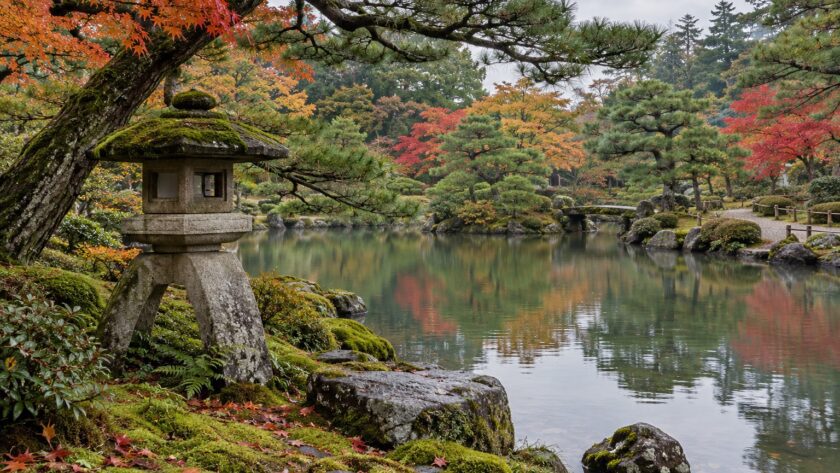
Information checked on October 10, 2026. Opening arrangements, transport and recovery-related access can change; check the linked official sources before traveling. The featured image is an AI-generated, photo-style illustration inspired by Kanazawa’s Japanese gardens, not a photograph of an exact real viewpoint.
Choose between the city, hot springs and peninsula
Kanazawa is the easiest starting point for most visitors. Its gardens, historic neighborhoods and museums support a trip built around walking and buses. Southern Ishikawa offers a different rhythm: the Kaga and Hakusan area combines hot-spring towns, ceramic and lacquer traditions, temples and mountain landscapes. Farther north, Noto is a substantial rural destination that deserves its own transport plan rather than being treated as a small extension of the city.
For a short holiday, two nights in Kanazawa followed by one in Kaga is a useful balance. It lets you see major cultural sites, spend time in a workshop or museum, and finish with a less hurried evening. Travelers who prefer coast and rural communities could replace Kaga with a confirmed Noto stay. Trying to include both ends of the prefecture in three days leaves little room for the experiences that make each area distinctive.
Getting to Ishikawa and moving around
Tokyo connects to Kanazawa by Hokuriku Shinkansen. From Kyoto or Osaka, the usual rail journey involves the Thunderbird limited express to Tsuruga and a Shinkansen connection onward. The city’s official arrival guide explains these routes and access from other regions. Check your specific train and transfer rather than relying on an old description of a direct Thunderbird service to Kanazawa.
Within Kanazawa, combine neighborhood walks with the city’s bus network. The Loop Bus links the main sightseeing areas, but direction matters: an attractive-looking stop name does not guarantee the shortest ride. Compare a day pass with your actual journeys before buying it, and check payment methods for the service you board. Leave large suitcases at your accommodation or appropriate luggage storage while exploring narrow streets and crowded buses.
Staying near Kanazawa Station simplifies arrival and onward travel; a central base around Korinbo or the market area can suit longer evenings in town. For Kaga, confirm the connection between your arrival station and your chosen hot-spring village. A ryokan shuttle, where offered, may require advance booking. The room reservation alone should not be taken as confirmation that a driver will be waiting when your train arrives.
Kenrokuen and Kanazawa Castle: give them a morning
Kenrokuen is a strolling garden shaped over generations under the Maeda family. Ponds, carefully trained trees and changing views make it more rewarding than a single famous photo position suggests. Walk a small circuit first, then return to the details that interest you. Autumn foliage and winter yukitsuri rope supports give it very different appearances, while spring blossoms and summer greenery bring their own reasons to linger.
Choose shoes for gravel, slopes and damp surfaces, and allow time to stop rather than moving at sightseeing-map speed. If accessibility is a consideration, consult the city’s accessible travel itinerary, which links to more detailed facility and route information. Historic landscapes can include steps or uneven sections even where accessible approaches exist. A little planning makes the difference between enjoying the garden and repeatedly needing to change direction.
Nearby Kanazawa Castle Park adds walls, gateways, reconstructed buildings and another perspective on the former domain’s history. Decide which interiors you want to enter rather than expecting a single surviving castle keep. Pairing the garden and park creates a coherent morning, but save energy for the afternoon. A seated lunch is a better bridge between them and the next neighborhood than another hurried snack on the move.
Higashi Chaya and Nagamachi: two different historic neighborhoods
The wooden facades of Higashi Chaya recall Kanazawa’s teahouse entertainment culture. Today, the district also contains shops, cafes and residences, so look beyond the central street and choose an interior visit or a short tea break. Early hours can suit a quiet exterior walk, while arriving after businesses open gives you more to do. Those are different experiences, and neither needs to occupy an entire day.
Respect private entrances and people going about their work. Ask before photographing individuals or shop interiors, and consume takeaway food where the seller directs you rather than walking with it through the historic streets. The nearby Asano River makes a useful change of pace after shopping. For more context, the Higashi Chaya Kyukeikan Rest House occupies a restored townhouse and provides a place to pause and orient yourself.
Nagamachi offers a different atmosphere, with lanes, earthen walls and former samurai residences. The Nomura Samurai Residence is one way to move from looking at a neighborhood to understanding a domestic interior and garden. Leave room for sitting quietly if conditions permit. A smaller space rewards close observation: the view through a doorway or the relationship between a room and its garden can matter more than the number of rooms visited.
Contemporary art and a craft experience
Balance the historic streets with the 21st Century Museum of Contemporary Art, Kanazawa. Consult its current exhibition and visitor information before choosing a day. Different exhibitions and individual installations can have different access arrangements, and a photograph of a famous work is not proof that you can enter it whenever you arrive. Make the museum a visit to art that interests you, with time to look, rather than a stop devoted only to one image.
Ishikawa’s craft traditions include gold leaf, Kutani porcelain, Kaga-yuzen silk dyeing and lacquerware. A hands-on session helps explain what you are seeing in galleries and shops. Select one material you find appealing and book a workshop with clear information about language, duration and what you can take home. For ceramics, ask whether firing requires later collection or shipping before assuming the finished item will fit into your departure plans.
When buying craft, ask how the object is intended to be used and cared for. A decorative finish may need different treatment from an everyday drinking cup, and a hand-painted piece deserves suitable packing. Set a budget before browsing, then spend it on something you will enjoy using or displaying. Supporting a maker can be as simple as choosing one well-understood item instead of several souvenirs bought without knowing their origin.
Omicho Market and the pleasures of eating locally
Omicho Market brings seafood, produce and restaurants into a busy central setting. Visit to see ingredients as well as to eat. Individual businesses keep their own hours, so choose a few possibilities rather than expecting every stall to be open at the same time. If a popular restaurant has a long queue, decide whether that particular meal matters more to you than the rest of the morning.
Seafood is an obvious starting point, but the prefecture’s food culture also includes heirloom vegetables, local rice, sake and carefully composed Kaga cuisine. A more formal meal can reveal how ingredients, season and tableware work together. You do not need every meal to be elaborate: alternate a planned dinner with simpler lunches so your appetite and budget remain comfortable throughout the trip.
Tea and a small sweet make another worthwhile pause. The city’s tea-culture guide distinguishes different experiences, from introductory sessions to more involved tea practice. Choose according to your curiosity and available time. Tell the host about dietary requirements when booking, and check ingredients in broths and sauces elsewhere. In a region associated with seafood, a dish that looks vegetable-based may still use fish stock.
For one meal, pay attention to the serving vessels as well as the food. Notice how the color of a plate changes the appearance of a vegetable, or how a small covered bowl creates a moment of anticipation. This connects the craft shops and museums with everyday hospitality. If you enjoyed a particular dish, ask its name and write it down; that small discovery can become a more personal memory than ordering only the specialties already on your list.
Kaga Onsen: make the overnight stay the attraction
Kaga Onsen refers to an area with distinct hot-spring towns rather than one compact resort. Choose your village and accommodation together. Yamashiro Onsen is known for its central public baths, including the atmospheric Ko-Soyu, which recreates an older bathing style. Read the instructions at the facility you use: layouts and washing arrangements vary, and the right routine is not identical in every bathhouse.
Yamanaka Onsen suits travelers who want a town walk with river scenery. Kakusenkei Gorge follows the Daishoji River, with bridges and a waterside path close to the hot-spring town. Check local access and footing before walking, especially after rain. You can enjoy a short section and return for a bath without needing to complete every path or cross every bridge on the map.
Arrive early enough to enjoy the inn before dinner. Confirm meal inclusion, dining times, bedding, private-bath options and any rules important to your group at booking. A room-only price and a dinner-and-breakfast plan are different products, even at the same property. For a single-night stay, packing a small overnight bag and keeping the day lightly scheduled lets the bathing, meal and atmosphere become the experience you came for.
Porcelain, temple landscapes and the Hakusan foothills
The Kutani-yaki Art Museum introduces the region’s richly decorated porcelain and its changing styles. It is an appealing addition for travelers who have admired ceramics at dinner or in Kanazawa shops. Look for differences in color and composition rather than trying to memorize every historical period. Check its opening calendar before choosing your travel day, and keep onward transport in mind if you are heading to a hot-spring inn afterward.
Natadera Temple, in Komatsu, brings together rock formations, wooded grounds, gardens and religious buildings. Its connection with Hakusan worship helps place the scenery within a larger cultural landscape. Give the grounds enough time for a gradual visit and follow the signed route. This is a particularly good stop for travelers who enjoy the relationship between architecture and nature, rather than treating temples primarily as collections of famous objects.
For a foothill excursion, Shirayama Hime-jinja Shrine offers an introduction to the sacred associations of Hakusan. A shrine visit and a summit climb are very different undertakings. If mountain hiking is your priority, plan it separately around the season, route conditions, transport and your experience. Do not turn a city sightseeing day into an improvised high-mountain outing simply because the peak appears nearby on a regional map.
Visiting Noto thoughtfully during recovery
Noto’s coastal settlements, farming landscapes and craft traditions are a major part of Ishikawa’s identity. Recovery from the 2024 earthquake and subsequent heavy rain is not uniform across the peninsula. The official Noto travel update, based on August 2026 information and checked for this guide, welcomes visitors while noting remaining road works, detours and changing bus arrangements. It also identifies the Noto Desk at Kanazawa Station as a place to seek current planning advice.
Start with a place you want to visit and a business that confirms it can welcome you. Then check how to get there and back. A scenic drive, a reopened public bath, a workshop visit and an overnight stay each require different confirmation. Avoid turning an old peninsula-wide itinerary into a promise that every stop is operating. Choose fewer destinations, leave travel margins, and respect any barriers or requests from residents and workers.
Nanao and Notojima can provide a more focused northern extension than an ambitious drive around the entire peninsula. The Notojima Tourism Association publishes local notices, including events and facility information. Use them to select an actual visit rather than assuming a familiar attraction name is enough. For a longer journey toward Wajima or Suzu, arrange accommodation and transport first, then add sightseeing that fits the confirmed route.
Spending at operating shops, restaurants and accommodation is a direct way to support the places you visit. Ask permission before photographing people or private property, and do not treat damaged homes or ongoing reconstruction as sightseeing displays. If a road or facility is unavailable, adapt without pressuring anyone for access. A rewarding visit can be modest: a meal, a conversation and one carefully chosen local experience may be enough for the day.
A four-day route for a first visit
Day one: arrive in Kanazawa, store your luggage and choose an easy afternoon around Omicho Market and Higashi Chaya. Leave time for a cafe or a teahouse interior, then settle into dinner. If you arrive late, reduce the plan to a short neighborhood walk. Historic streets may remain accessible after shops close, but that does not make an evening stroll a substitute for a daytime cultural visit.
Day two: give Kenrokuen and Kanazawa Castle Park the morning. After lunch, choose the contemporary art museum or a craft activity, with Nagamachi as an alternative for travelers most interested in historic homes. Keep the evening flexible. Completing every option would create a long day of entrances and exits, while choosing according to your interests gives each place time to register.
Day three: travel south and make one cultural stop, such as Natadera or the Kutani-yaki Art Museum, before checking into your Kaga accommodation. Select the stop around transport and opening hours rather than forcing both into the transfer day. Day four: enjoy a bath or a short town walk, then leave with enough time for your onward train. An unhurried final morning is part of the value of staying overnight.
With extra days, add Noto as a separately planned extension or explore the Hakusan foothills. If you have only two days, concentrate on Kanazawa and save the regional outings for another visit. Travelers moving between Hokuriku prefectures can continue with our Toyama travel guide. Keep intercity travel on days when you have fewer timed reservations, so a missed connection does not unravel a carefully booked museum visit or inn dinner.
Seasonal planning and small practical decisions
Spring and autumn are attractive for garden walks, but flowering and foliage dates vary. Summer calls for breaks between outdoor districts; winter can bring striking garden scenery alongside wet, cold or snowy walking conditions. Pack for the forecast rather than the postcard. A compact umbrella, shoes with reliable grip and a plan for an indoor afternoon are useful companions to Ishikawa’s outdoor attractions.
Reserve the experiences that anchor the trip first: a particular inn dinner, workshop or limited-entry exhibition. Fit ordinary walking around those appointments, leaving gaps for meals and discoveries. Carry some cash for smaller purchases and save transport details offline. Above all, look closely. Ishikawa becomes memorable through the attention you give to ordinary things, whether a lacquered bowl at breakfast, water moving through a garden, or a shopkeeper explaining how a familiar-looking object was made.