Aomori rewards travelers who give northern Japan room to breathe. At the northern end of Honshu, festival floats glow inside a waterfront museum, apple orchards stretch toward Mount Iwaki, and clear water threads through the woods of Oirase Gorge. Archaeological sites and contemporary art museums add depth to a journey that might otherwise seem entirely about scenery. The appeal is the combination: a morning with prehistoric objects, an afternoon of modern sculpture, and a dinner shaped by the surrounding countryside and sea.
The prefecture is too spread out for a comfortable checklist weekend. Hirosaki and the Tsugaru area lie to the west; Hachinohe is on the Pacific side; the Shimokita Peninsula reaches north; and the Hakkoda mountains and Lake Towada create a separate inland journey. For a first visit, allow four or five days and choose a connected route. This guide explains the main experiences and offers a practical five-day plan without trying to visit every distant corner.
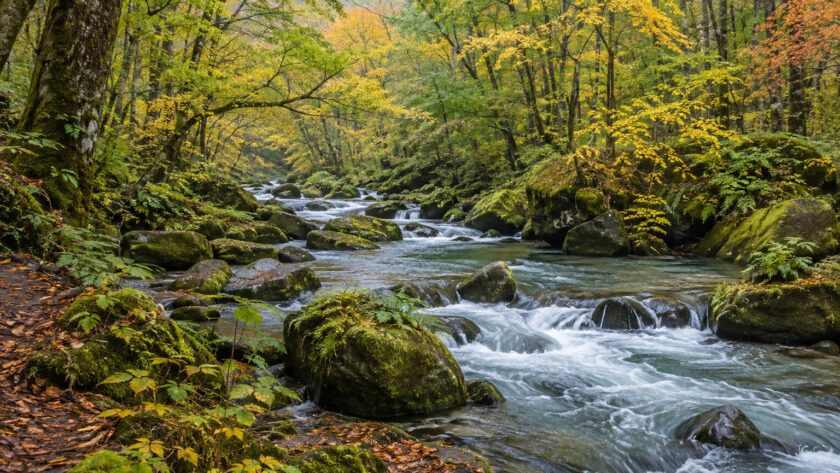
Information checked on October 9, 2026. Confirm opening calendars, transport, and seasonal access through the official links before traveling. The featured image is an AI-generated, photo-style illustration inspired by Oirase Gorge, not a photograph of a specific location.
Start in Aomori City: Festival Art and the Waterfront
Aomori City makes a useful introduction because its waterfront sights can fit around an arrival day. Begin at Nebuta Museum WA RASSE, close to Aomori Station. Its large illuminated floats let you appreciate the construction, painted faces, and dramatic compositions associated with the city’s summer festival. Even outside festival season, the museum gives the visit a strong sense of place. Check the day’s program if demonstrations are a priority.
Allow time to stand back from the floats as well as inspect details. The figures are designed to communicate movement at street scale, so the overall scene matters as much as craftsmanship. Afterward, use the waterfront for an unhurried walk and leave space for lunch. This is a sensible first afternoon after a long rail journey; saving a distant mountain excursion for another day reduces the consequences of a delayed arrival.
Sannai Maruyama: A Different Starting Point for Japanese History
The Sannai Maruyama Site preserves evidence of a substantial Jomon settlement and belongs to the UNESCO-listed Jomon Prehistoric Sites in Northern Japan. Archaeological remains, reconstructed buildings, and museum displays help explain daily life long before the castle towns familiar to many visitors. Look for the relationship between objects and place: pottery, storage, dwellings, and burial areas tell different parts of the settlement’s story.
Start with the indoor interpretation before exploring the grounds. It makes the reconstructions easier to understand and helps distinguish surviving evidence from modern explanation. This is especially worthwhile with children, who may find an object or building more engaging when given a specific question to investigate. Leave enough time for the outdoor portion, and check the official calendar rather than assuming the site opens every day.
Aomori Museum of Art
The Aomori Museum of Art is a natural companion to Sannai Maruyama for visitors interested in both history and visual culture. Yoshitomo Nara’s large white Aomori Dog is a major draw, but avoid planning the entire visit around one photograph. The museum offers a different way to consider the region through artists, architecture, and exhibition spaces. The outdoor passage to the dog has seasonal limitations, so check the available viewing route.
Opening dates deserve particular attention. At the time of checking, the museum’s official announcements included an extended renovation closure scheduled for September 27, 2027, through April 14, 2028. Shorter closures and exhibition changes also affect visits. Consult the calendar for your actual date before arranging transport, and keep the waterfront or another open attraction as an alternative.
Hirosaki: A Castle Park and an Apple Landscape
Hirosaki suits travelers who enjoy spending a full day in one city. Give the castle park a generous part of the morning, then let lunch and a neighborhood walk fill the afternoon. Seasonal scenery changes the character of the visit, so plan around what interests you rather than expecting the same view throughout the year. For photography, an early start also leaves more flexibility to return when light or weather improves.
There is an essential distinction between visiting the park and entering the castle. According to the Hirosaki Tourism and Convention Bureau, access to the main tower’s interior has been suspended since November 24, 2025, with the closure expected to last several years for relocation and preservation work. Do not book a trip on the assumption that you can climb inside. Check the latest restoration information and follow local signs around work areas.
Hirosaki City Apple Park adds an agricultural dimension to the city. Orchard paths, apple products, and views toward Mount Iwaki make it more than a quick souvenir stop. Picking is seasonal and depends on growing conditions, so confirm availability before promising the experience to children. Outside picking periods, treat the visit as a walk through an apple-growing landscape, with a snack or drink afterward.
Oirase Gorge and Lake Towada
Oirase is best experienced at walking speed. Water moves around mossy rocks and through broadleaf woodland, with waterfalls and changing currents providing frequent reasons to pause. The official national park trail guide describes a route of roughly fourteen kilometers between Yakeyama and Nenokuchi on Lake Towada. That is a substantial outing once transport, photographs, and breaks are included; the full distance is not necessary for a rewarding visit.
Choose a shorter section around your walking ability and confirmed transport. Decide the exit point before setting off, rather than relying on finding a convenient bus after becoming tired. Bring suitable footwear, a waterproof layer, water, and enough food for your intended time outside. A streamside path can still involve slippery surfaces, and stopping frequently makes progress slower than a map’s distance might suggest.
Vehicle access is also something to check, not assume. The Oirase ecotourism information service publishes designated restriction periods and associated shuttle arrangements. These do not necessarily cover the same dates every year. Its guidance also notes limited reception in parts of the gorge and relatively few toilets. Save the relevant map and timetable before leaving your accommodation, and use facilities before beginning a longer walk.
Lake Towada offers a change of pace after the enclosed woodland. Plan time simply to sit by the shore rather than immediately adding another activity. A lakeside overnight can make the area feel less rushed, but confirm dinner arrangements and onward transport before booking. The Towada and Oirase tourism website is a useful starting point for current local information, including seasonal experiences and announcements.
Towada Art Center: Make Time for the City
Towada Art Center is in central Towada city, not beside Lake Towada. Confusing the two can leave a surprisingly awkward gap in an itinerary. The museum’s access information explains connections from gateways such as Shichinohe-Towada and Hachinohe. Check the actual route that matches your overnight stop rather than treating the museum as an automatic addition to a lakeside walk.
The collection includes Ron Mueck’s Standing Woman and Choi Jeonghwa’s Flower Horse, while the surrounding art spaces include works by Yayoi Kusama and Erwin Wurm. Give the indoor installations and outdoor works their own time. A museum visit followed by a slow walk around the neighboring art is more satisfying than rushing through solely to collect photographs of recognizable sculptures.
Hakkoda: Keep the Mountain Day Flexible
The Hakkoda Ropeway can bring a mountain landscape into an Aomori-based trip, but it works best as a weather-dependent choice. The operator’s guidance warns of suspension during strong winds or severe weather and annual maintenance in early November. Snow can obscure walking routes well beyond the middle of winter. A working ropeway is not a guarantee that every trail is suitable for an ordinary sightseeing walk.
Check conditions before departing and ask staff which routes suit your equipment and experience. For a first visit, a modest outing near the summit station may be enough when conditions permit. Avoid scheduling the last possible return connection: queues, changing weather, and slower walking can quickly consume a narrow margin. If visibility is poor, the city’s museums may offer a more rewarding use of the day.
Hachinohe: Markets, Coastal Walks, and Local Food
Hachinohe gives the trip a Pacific-facing counterpart to Aomori and Hirosaki. Its official visitor guide highlights morning markets, food culture, and the Tanesashi Coast. If the Tatehana Wharf morning market is central to your plans, arrange your overnight stay around a confirmed operating Sunday and check the current seasonal schedule. A dawn market visit is much easier from a nearby base than as an ambitious excursion from another city.
Use the market as a place to browse, eat, and observe everyday activity. Carry small cash and avoid blocking stalls while photographing. Later, the coast offers space for a different sort of morning or afternoon. Stop at the Tanesashi Coast Information Center for local interpretation and route advice before choosing a walk. Match its length to your return transport and the day’s wind and weather.
Two Extensions for a Longer Trip
Juniko and the Tsugaru Coast
The Juniko lakes and Aoike provide an attractive western extension for travelers drawn to forest scenery. The Aomori nature parks guide places them within the wider Tsugaru landscape. Visiting accessible lakeside woodland is different from undertaking a trek into the protected core of Shirakami-Sanchi. Choose the specific trail you intend to follow and check access conditions, rather than using the famous regional name as a complete plan.
Rail enthusiasts can investigate JR East’s Resort Shirakami service along the Gono Line. Treat the journey itself as part of the holiday and check operating dates and seat availability before arranging accommodation. Combining a scenic train, a forest walk, and a long onward journey on one day can leave little flexibility. An additional overnight makes more sense if you want both the coast and the woods.
Shimokita and Osorezan
For a separate northern excursion, Osorezan introduces the spiritual landscape of the Shimokita Peninsula. Approach it as a sacred place where people may be visiting for personal reasons. Keep voices low, follow photography restrictions, and avoid treating memorial objects as props. Seasonal opening and transport need careful checking. Add time for Shimokita instead of squeezing it between Hirosaki and Lake Towada merely because all three appear within one prefecture.
What to Eat and How to Plan Meals
Apples are an easy thread to follow across a western Aomori itinerary. At Apple Park, compare the available varieties or choose an apple-based snack; in town, leave room to try a different preparation later. Buying a small amount first is a practical way to discover what you enjoy. If bringing fresh fruit onward, check the rules for your eventual destination before deciding it will make a suitable international souvenir.
In Hachinohe, look for senbei-jiru, a regional soup made with wheat-based crackers designed to cook in the broth. They soften while retaining a distinctive texture. Recipes can include meat or fish stock and vegetables, so confirm ingredients if you have dietary restrictions; the word “cracker” does not imply a vegetarian dish. It is a useful contrast to the sweet apple flavors associated with the prefecture.
Plan rural meals as carefully as rural transport. Ask your accommodation whether dinner is included, what time it is served, and whether alternatives are nearby. Keep lunch plans simple on a walking day, and carry a backup snack before entering the gorge. For allergies, prepare a clear written explanation and confirm it with the person preparing the food. A flexible city dinner is much easier to arrange than a late arrival in an unfamiliar lakeside settlement.
Getting Around and Choosing a Base
The Shinkansen provides a practical approach to the prefecture, but your arrival station should match your route. Shin-Aomori and central Aomori Station are different places; Hachinohe is useful for the eastern side. Consult JR East’s Aomori information and current journey schedules when choosing trains. Do not assume a rail pass covers every local bus or special shuttle you may need.
For a city-focused holiday, Aomori and Hirosaki can anchor several nights without daily hotel changes. For Oirase and Lake Towada, compare a scheduled bus journey with an overnight near the area. A car adds flexibility for some rural routes, but parking, seasonal restrictions, and weather remain part of the calculation. The easiest itinerary often uses rail between cities and commits a whole day to an inland excursion.
When booking Hachinohe accommodation, distinguish the Shinkansen station area from the downtown area around Hon-Hachinohe. Choose the former for an early intercity departure, or compare downtown options if evenings and local sightseeing matter more. Check the door-to-door connection to your chosen hotel before reserving. A station name alone is not enough to tell you whether the location suits your plans.
A Practical Five-Day First Visit
Day one: Aomori waterfront. Arrive, leave luggage, and visit WA RASSE if opening times allow. Keep the rest of the day light, with a waterfront walk and dinner in the city. If your train arrives late, move the museum to the following morning rather than trying to race through it before closing.
Day two: Jomon history and art. Give Sannai Maruyama the morning and, when its calendar permits, the Aomori Museum of Art the afternoon. Check both opening schedules before fixing the order. Travelers who prefer one substantial museum visit can spend longer at their first choice and return to the city for a relaxed evening.
Day three: Hirosaki. Travel west for the castle park and a city lunch, remembering the tower interior closure. Add Apple Park if transport and seasonal activities fit your interests. Return to your Aomori base, or stay in Hirosaki if you prefer a quieter evening without watching the clock for the journey back.
Day four: Oirase and Lake Towada. Set aside the day for the inland transfer and a manageable streamside walk. Continue to the lake only when connections allow, and consider a nearby overnight. This day needs the most advance planning: book accommodation first, then confirm how you will arrive, walk, eat, and depart.
Day five: Choose art or the Pacific coast. Continue toward Towada city for the art center, or toward Hachinohe for food and a coastal outing, according to available transport. Do not force both into a short departure day. A sixth night is valuable if you want the full eastern experience or need to align a market visit with Sunday.
For a shorter visit, keep days one through three and save the inland and eastern areas for another journey. For a longer trip, add nights around the lake or Hachinohe before considering Shimokita or Juniko. This preserves a coherent route and gives you more time outdoors without turning every morning into a hotel checkout.
Seasons and Final Planning Details
Build around your main interest: park scenery, festival culture, orchard activities, woodland walks, or snow. These experiences do not share one ideal week. Spring and autumn conditions vary by elevation, and winter changes access as well as appearance. Check local reports close to departure; an old photograph is a useful inspiration but cannot tell you whether a particular trail, road, or facility is open.
Before booking, check three things together: accommodation, the exact day’s transport, and attraction calendars. Then leave room for one weather-related change. Carry essential route information offline and keep your final intercity connection comfortably separated from a rural excursion. Aomori is most enjoyable when the distances are respected and each stop has time to become more than a photograph.