Iwate brings together several very different versions of northern Japan. In Hiraizumi, a small golden Buddhist hall preserves the ambitions of a medieval cultural center. In Morioka, rivers, stone castle walls, and old commercial buildings reward a day on foot. Farther east, rural Tono links ordinary landscapes with extraordinary stories, while the Sanriku Coast opens onto pale rocks, fishing towns, and the Pacific. Hot springs and mountain resorts add another reason to stay longer.
The challenge is choosing a sensible route. Iwate’s main inland railway corridor runs north to south, while journeys to the coast take you across the mountains. A place that looks nearby on a prefecture map may require a significant transfer. For a first visit, give the inland corridor four or five days, or add a coastal overnight instead of repeatedly crossing back and forth. This guide introduces the highlights and a flexible five-day itinerary.
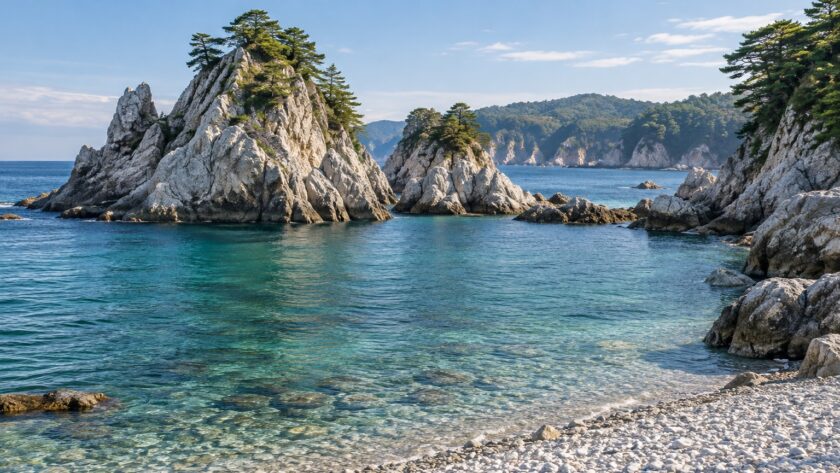
Information checked on October 10, 2026. Confirm current opening arrangements, weather, and transport through the official links before departure. The featured image is an AI-generated, photo-style illustration inspired by Jodogahama on the Sanriku Coast, not a photograph of a specific viewpoint.
Hiraizumi: Understanding the Buddhist Pure Land
Hiraizumi deserves time beyond a quick photograph of its most famous temple. Its UNESCO-listed temples, gardens, and archaeological sites express the idea of the Buddhist Pure Land through buildings and landscape. Chuson-ji and Motsu-ji are the obvious starting points, but they offer different experiences. One draws attention to surviving religious art and a wooded approach; the other invites you to read a garden and imagine buildings that no longer stand.
At Chuson-ji, follow the Tsukimizaka approach and allow time for the grounds before reaching the Konjikido. Completed in 1124, the Golden Hall preserves remarkable craftsmanship, including gilded surfaces and Buddhist imagery. Its intimate scale is part of its impact: this is a concentrated work of devotion rather than a huge palace. The temple’s museum adds context through the treasures preserved from Hiraizumi’s past.
Read the interpretation before trying to absorb every decorative detail. Knowing why the hall was made gives the gold and craftsmanship greater meaning. Follow the site’s photography rules and keep the atmosphere quiet around worshippers. The approach involves an incline, so visitors with limited mobility should check access arrangements in advance. Leave bulky luggage at your accommodation or confirm station storage instead of assuming the temple has lockers.
Motsu-ji offers a gentler visual rhythm around Oizumigaike Pond. The local tourism association’s introduction explains the importance of its garden and the scale of the former temple complex. Walk slowly enough to notice changing relationships between water, shoreline, and stones. Combining the two temples makes a satisfying cultural day; adding multiple distant attractions afterward can make both feel unnecessarily hurried.
Geibikei: A River Journey Between Cliffs
For a contrasting experience in southern Iwate, consider a boat trip through Geibikei Gorge. The Satetsu River runs between high limestone cliffs, and the calm passage lets the scenery unfold gradually. Boatmen use poles to move along the water, and traditional singing is associated with the journey. Trees, rock faces, reflections, and the sound of the river supply the interest without requiring a strenuous hike.
The Japan National Tourism Organization’s guide suggests allowing about ninety minutes for the cruise itself. Add time for reaching the landing, waiting, and returning to your next connection. Verify departures and operating conditions before traveling, particularly when weather may affect the river. Geibikei and the similarly named Genbikei are different gorges; check the destination carefully when searching a route or showing a taxi driver your plans.
Morioka: Give the City a Full Day
Morioka is an enjoyable base precisely because it does not demand constant transfers between headline attractions. Start with the riverside and central streets, then build a walk around the castle ruins and historic buildings. The Morioka Castle site is now a park with substantial stone walls. Come for the shape of the terraces, the masonry, and the surrounding greenery rather than expecting a surviving castle tower to climb.
The Bank of Iwate Red Brick Building adds a different historical layer. Its Western-style architecture contrasts with the castle remains and helps make a city walk more varied. Check the building’s visiting calendar if you want to go inside. Between sights, leave room for a coffee stop and an unplanned turn down a shopping street; Morioka works well when the afternoon is not divided into rigid appointments.
Use the Morioka tourism association to find current visitor information, local routes, and events. A walking plan centered on the city is also a useful alternative when mountain weather is poor. If traveling with children or anyone who tires easily, choose a small loop with a definite lunch stop instead of attempting every marked sight on the tourist map.
Three Noodle Experiences Worth Separating
Morioka’s noodle culture provides a reason to stay for several meals. Wanko soba is the most theatrical option: small servings of soba arrive repeatedly, and placing the lid on your bowl signals that you have finished. It can be a lively shared experience, but there is no need to treat lunch as a competition. Ask the restaurant to explain the procedure before starting, especially if you prefer a modest amount of food.
Morioka reimen offers a different texture: firm, elastic noodles in chilled broth, commonly accompanied by kimchi. The prefecture’s tourism guide describes its Korean roots and development in Morioka. Jajamen, another local specialty, combines noodles with a savory meat-and-miso topping; see JNTO’s Iwate overview for an introduction. Spread the three styles across separate meals so each remains enjoyable rather than turning them into one oversized tasting exercise.
Broths, toppings, and noodles can contain ingredients that are not obvious from a photograph. Confirm dietary requirements with the restaurant and carry a clear written explanation of allergies if needed. Small restaurants may have limited seating, so build a little waiting time into lunch. Choose a convenient meal near your walking route rather than crossing the entire city just to follow a fixed sequence of dishes.
Hanamaki: Literature and a Hot Spring Overnight
Hanamaki is closely associated with Miyazawa Kenji, whose writing connected imagination with the natural world. The city’s introduction to the Miyazawa Kenji Memorial Museum describes displays covering literature, education, agriculture, and science. This broader perspective makes the museum worthwhile even if you have only encountered the title Night on the Galactic Railroad. Read a short introduction to his work before visiting, and the objects and explanations will have more context.
Check Hanamaki City’s current Kenji facilities page for notices and related attractions, including the Fairy Tale Village. A family may prefer an imaginative environment to a detailed biographical exhibition, while a literature enthusiast may want longer in the museum. Choose according to your interests and the day’s opening arrangements; trying to cover every Kenji-related location can crowd out the time needed to appreciate any one of them.
The wider Hanamaki hot spring area is a good place to exchange sightseeing for an overnight stay. Properties vary in atmosphere, meals, transport, and bathing arrangements. Check those details before reserving: a large resort and a small traditional inn may offer very different experiences. If dinner is included, arrive comfortably before the required time, and confirm any station shuttle directly with your accommodation.
At an onsen inn, ask about private bathing options if communal bathing is unfamiliar or unsuitable for your group. Confirm any tattoo policy with the specific property, since arrangements vary. Meal preferences should be discussed before arrival, particularly when dinner is a set menu. These small decisions can matter more to the quality of the stay than choosing the most photogenic exterior or the room with the longest list of amenities.
Tono: Folklore in an Inhabited Landscape
Tono’s appeal lies in the connection between stories and ordinary places. The Tono Tourism Association introduces The Legends of Tono, published in 1910 by Kunio Yanagita from accounts shared by local storyteller Kizen Sasaki. Kappa and household spirits are part of this folklore, but the landscape also reflects farming, faith, and community life. Approach the stories as cultural traditions, not as claims that supernatural creatures can actually be encountered.
Begin at Tabi no Kura Tono, the visitor information center opposite the station. Maps, advice, and bicycle rental can help you turn scattered points of interest into a manageable outing. Ask which places work together on your available time and transport. A rural cycling route can be rewarding in suitable weather, but it should be planned around daylight, distance, and the bicycle return deadline.
For traditional buildings and rural context, investigate Tono Furusato Village. Choose it as a substantial visit rather than a brief detour between trains. Across the Tono area, remember that fields, houses, and small shrines may belong to people going about their daily lives. Stay on public routes and ask before photographing residents or entering spaces that are not clearly open to visitors.
Jodogahama and the Sanriku Coast
Near Miyako, Jodogahama is known for pale rock formations, green pines, and blue water. The shoreline rewards a quiet walk and time spent looking across the cove. It is also a useful reminder that coastal sightseeing can be satisfying without a long list of paid activities. Allow the weather and light to shape your pace instead of treating the beach as a quick stop between drives.
Miyako makes a practical focus for a first coastal overnight. Consult the Sanriku Fukko National Park guide and local visitor centers for current conditions and suitable walks. Parts of the Michinoku Coastal Trail are challenging, so choose a specific short section rather than assuming that everything described as a coastal path is easy. Check the route’s surface, elevation changes, and transport at both ends.
The Sanriku Railway offers a way to make travel between coastal communities part of the experience. Consult its current timetable and service notices instead of relying on an old downloadable schedule. Plan one or two meaningful stops, with enough time to leave the station and explore. A regional railway is not an urban hop-on service, and missing a departure can change the whole afternoon.
Ryusendo Cave: Blue Water Below Ground
In Iwaizumi, Ryusendo Cave reveals underground lakes and limestone formations along a visitor route. The blue water is the main visual attraction, but the transition from the outdoor landscape into a cool, enclosed environment is part of the experience. Treat it as a dedicated excursion with a confirmed transport plan, not an assumed short detour from every destination on the coast.
The cave’s visitor guidance notes wet floors, stairs, steep sections, and a temperature of about ten degrees Celsius throughout the year. Bring a layer even in summer and wear shoes with dependable grip. Visitors concerned about steps or narrow passages should contact the operator about the available route. Rising water can cause closure, so the cave should not automatically be treated as a guaranteed alternative during heavy rain.
Remembering 2011 in Rikuzentakata
A longer coastal trip can include the Iwate Tsunami Memorial Museum in Rikuzentakata. Its purpose is to preserve the experience and lessons of the Great East Japan Earthquake and Tsunami. Give the visit its own time rather than squeezing it between scenic viewpoints. Exhibits about loss, survival, and rebuilding call for attention, and some travelers may want a quiet break afterward.
Rikuzentakata belongs to a different part of the coast from Miyako, so plan the journey as a southern coastal extension. Follow the museum’s guidance on photography and respect people visiting memorial spaces. Spending time in local shops or eating in town can sit naturally alongside learning about the disaster, without expecting residents to discuss personal experiences. The region is a place where people live and work as well as a place of remembrance.
Mountain Time and Traditional Crafts
If winter sports are your main interest, build a separate stay around a mountain base such as Appi Resort. Check the actual season’s lift operation, lessons, rental equipment, and transfers before booking. In warmer months, available activities differ, and a scenic mountain outing still depends on weather. A resort day is more enjoyable with enough time on the mountain than with a long return journey dominating the schedule.
For something to bring home, Iwate’s traditional crafts include Nanbu ironware and several lacquerware traditions. Look beyond color and shape: ask how an object is intended to be used, how it should be cared for, and whether it suits your kitchen. A kettle, teapot, and decorative piece can require different handling. Consider the weight and packing before buying a substantial iron item midway through a rail trip.
A Flexible Five-Day Inland Itinerary
Day one: Hiraizumi. Arrive through Ichinoseki and continue to Hiraizumi, using the tourism association’s access overview alongside current timetables. Visit Chuson-ji and Motsu-ji if arrival time permits. If starting late, choose one and leave the other for the next morning. Stay locally or in Ichinoseki to avoid adding an unnecessary evening transfer.
Day two: Geibikei and Hanamaki. Reserve a generous block for the gorge cruise and its connections. Continue toward Hanamaki for a hot spring stay, checking the final transfer and dinner deadline first. If the boat schedule makes the day too tight, keep Hanamaki as the priority and omit the cruise rather than risking a rushed arrival.
Day three: Kenji’s Hanamaki, then Morioka. Choose one or two literary attractions, have lunch, and continue to Morioka. Keep the evening for a noodle meal and a short city walk. Distinguish Hanamaki Station from Shin-Hanamaki Station when planning transfers; choosing the wrong departure point can create an avoidable taxi journey.
Day four: Morioka. Spend a full day among the castle walls, historic architecture, cafés, and craft shops. This is the least complicated day in the route and provides useful breathing room. If you missed a planned attraction earlier because of weather, resist automatically filling every spare hour; an unhurried city day is part of the holiday.
Day five: Tono or more Morioka. Make Tono a full-day outing only after checking both directions of travel. Otherwise, extend your city exploration and depart with a comfortable connection. To include Jodogahama, add at least a coastal overnight and the transfer time, or replace Tono and another inland day. Ryusendo and Rikuzentakata need further choices rather than being automatic additions.
Practical Planning for a Better Trip
Spring blossoms, autumn colors, snow, and coastal walks each suggest a different itinerary. Conditions vary between towns and higher ground, so use local reports close to departure. Keep one weather-sensitive activity flexible and check notices for outdoor areas. Around temples, rivers, and coastlines, ordinary comfortable walking shoes will be more useful than planning an outfit around photographs.
Before paying for accommodation, match each overnight location to your actual arrival station and onward route. Check where dinner will come from, whether a shuttle requires a reservation, and how you will store luggage during sightseeing. Compare the cost of individual journeys with any transport pass only after deciding the route. A pass has little value if it encourages extra travel that displaces the places you came to enjoy.
Iwate works best as a series of deliberate stays: a day for the temples, an evening for the baths, a city explored on foot, and enough time for whichever rural or coastal landscape matters most to you. Choose those anchors first. The resulting journey will feel richer than a hurried attempt to connect every famous name on the map.