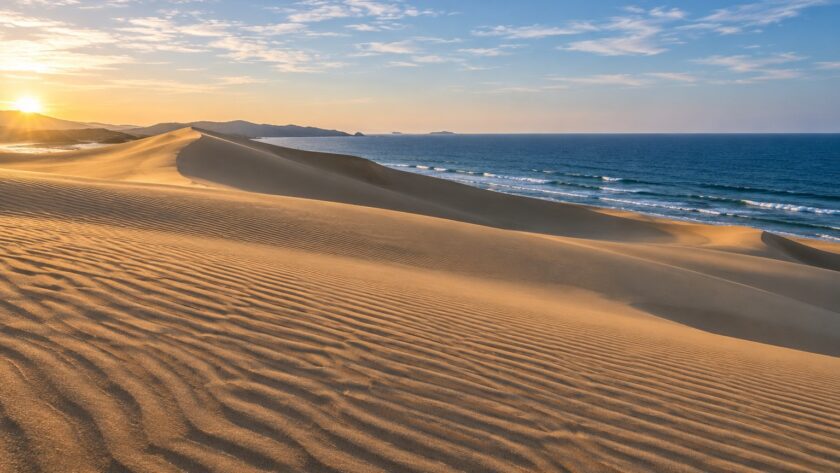
Tottori unfolds between the Sea of Japan and a mountainous interior: sand ridges above a blue horizon, white warehouse walls beside a canal, hot-spring inns, and forest paths beneath Mount Daisen. Its famous dunes are a compelling introduction, but the prefecture rewards travelers who stay beyond a single photograph. Manga museums and character-filled streets bring a playful counterpoint to the coast and countryside.
The most useful planning decision is how much territory to cover. Tottori city anchors the east, Kurayoshi and Misasa offer a central stop, and Yonago makes a convenient western base. Choose one area for a short visit, or allow four to five days to connect them. This guide explains what belongs together, where transport needs attention, and how to leave room for weather.
Understanding the Route and Getting There
Think of Tottori as a journey along the coast with excursions inland. According to JNTO’s prefecture overview, the main rail approaches include services toward Tottori through Himeji and toward Yonago through Okayama. Flights serve the eastern and western ends of the prefecture. Choose your arrival point around your first overnight stop, rather than assuming the two ends are interchangeable.
For an east-to-west trip, arrive in Tottori, pause around Kurayoshi, and finish in Yonago. Reverse the sequence if your onward journey makes that easier. Compare actual connections for your travel date before booking accommodation, especially when combining an intercity train with a rural bus. A short distance on a map can still involve a long wait between services.
A rental car helps with scattered coastal viewpoints and countryside accommodation, but it is optional for a trip built around towns and carefully chosen excursions. Drivers should include parking time, unfamiliar roads, and weather in their plans. Rail travelers should identify the final return bus before leaving the station and keep enough flexibility to shorten a visit if a connection changes.
Pack with those local transfers in mind. A small overnight bag is easier to manage on buses than several large cases, and luggage storage should be confirmed rather than assumed at every stop. Save accommodation addresses and essential reservations offline. When traveling as a group, agree on the minimum you want from each day so that one delayed departure does not unsettle the entire trip.
Tottori Sand Dunes: Give the Landscape Time
The Tottori Sand Dunes are a coastal landscape shaped by wind and sand, with ripples, slopes, and a sea view that changes as you climb. Walking toward a ridge reveals their scale more effectively than stopping beside the entrance. The Umanose ridge is a familiar viewpoint, but you can enjoy the atmosphere without making every climb or crossing the entire sandy area.
Early or late daylight can reveal texture in the sand, although weather and your transport schedule should determine the visit. Bring water, sun protection, and footwear suitable for loose sand. Climbing a slope can take considerably more effort than walking the same distance on pavement. On a hot day, shorten the outing and take breaks before fatigue becomes a problem.
Keep belongings secure when it is windy, protect camera equipment from blowing sand, and follow posted conservation rules. Leave the landscape as you found it, without writing large messages or removing sand. For visitors with limited mobility, contact the visitor facilities about current accessible viewing options and equipment; an accessible arrival area does not make steep, soft dunes easy to cross.
For photography, allow yourself to notice smaller patterns as well as the sweeping view. Wind ripples and the contrast between sand and water can be compelling without climbing to the busiest point. Keep your party together, and agree where to meet before separating for pictures. The return across soft ground can feel longer after you have spent an hour exploring.
The Sand Museum and the Uradome Coast
Nearby, the Sand Museum turns sand into detailed sculptural scenes. Its exhibitions change, so photographs from an earlier year may show work that is no longer on display. The Spain-themed exhibition runs from April 24, 2026, through January 3, 2027. Treat those dates as a specific exhibition window, rather than evidence that the museum remains open continuously throughout the year.
Check the museum’s visitor information before arranging a trip around it: preparation periods bring closures between exhibitions. The main display is indoors, but the museum warns that indoor temperatures can be close to those outside. Bring clothing appropriate to the season. Combining the museum with a shorter dunes walk is a satisfying day without requiring another long excursion.
Farther east, the Uradome Coast offers rocky inlets, small beaches, and clear water when conditions cooperate. Its appeal is different from the dunes: the coast breaks into intimate coves instead of one broad sweep of sand. Choose a particular beach, walking section, or sightseeing boat as your destination; “Uradome” covers more than a single convenient arrival point.
A boat trip can show the shoreline from a fresh angle, but it should remain weather-dependent. The local sightseeing boat operator provides service information; confirm the departure point and operating status directly. Wind and swell can affect sailings even when the sky looks promising. Keep a land-based alternative and avoid making a tightly timed onward connection depend on the cruise.
Kurayoshi: White Walls, Red Roofs and Pear Culture
In central Tottori, Kurayoshi’s historic district offers a slower rhythm. White plaster walls, red tiled roofs, and narrow waterways reward a walk with frequent pauses. The pleasure lies in small details and the relationship between buildings and streets. Leave space for a café or a shop that interests you instead of treating the area as a sequence of compulsory photo stops.
Kurayoshi Station and the old town are separate locations. Consult the city’s access guidance for the onward journey before assuming you can step off a train directly into the warehouse streets. If you have luggage, settle storage or hotel arrangements first. Walking historic lanes is much more enjoyable without wheeling a large suitcase across every bridge and threshold.
The Tottori Nijisseiki Pear Museum, also known as Nashikkokan, adds context to one of the prefecture’s signature fruits. Displays explore pear cultivation, with a large tree exhibit and tasting opportunities. Check its calendar rather than assuming daily opening. It works particularly well as an indoor addition to a town visit, or as a change of pace for families.
Old-town visits also work well when different members of a party have different energy levels. Arrange a clear meeting place, give shoppers and photographers some independent time, and reconvene for lunch. Ask before photographing shop interiors or people at work. These are everyday streets as well as visitor destinations, so keep entrances and narrow passages clear while stopping to look.
Misasa Onsen and the Demanding Mitokusan Pilgrimage
Misasa Onsen is an appealing place to exchange station transfers for an evening at a hot-spring inn. The river and compact streets give a stay more character than a quick bathing stop. Book an overnight visit if the budget permits, and confirm dinner arrangements: arriving late can mean missing an inn’s scheduled meal rather than simply eating whenever you choose.
Ask your accommodation about bath access, private bathing options, tattoo policies, and dietary needs before booking. These details vary by property. Wash before entering a shared bath, keep towels out of the water, and follow the facility’s guidance. Plan the stay around rest and local atmosphere; you do not need to adopt health claims about the water to enjoy the experience.
Nearby Mitokusan Sanbutsuji is a different undertaking. The route toward Nageiredo involves steep terrain, roots, and chains, rather than an ordinary temple stroll. The temple’s official entry rules require groups of at least two, footwear checks, and suitable conditions. Small children are not permitted on the mountain route, and walking sticks are prohibited. Weather can close access; check before traveling.
Only attempt that route if everyone in your party can meet the requirements and is comfortable using their hands on demanding ground. Do not pressure a reluctant companion into climbing simply to complete an itinerary. A restful Misasa stay or additional time in Kurayoshi is a worthwhile alternative. Separate this decision from the easier question of whether you would enjoy the surrounding area.
Hokuei and Detective Conan: Check the Museum Transition
Fans of Detective Conan can detour to Hokuei for the Gosho Aoyama Manga Factory, which explores the creator’s work and creative process. It is most rewarding when you have an interest in the series, although accompanying travelers may appreciate the illustrated displays. Build the stop around the museum and a relaxed look around town, rather than assuming every exhibit will have extensive English explanation.
There is an important planning update: the museum’s current official notice states that operations in the present building end on January 11, 2027, with a new building planned for spring 2027. That is not a promise of uninterrupted access. Check the latest location, opening date, reservations, and closure calendar before booking a future trip specifically to visit.
Mount Daisen: Forest Walks or a Proper Mountain Day
In western Tottori, Mount Daisen changes the mood from seaside horizons to wooded slopes and a striking mountain profile. The national park’s foothill walking guidance introduces Daisenji Temple, forest scenery, and Ogamiyama Shrine’s inner sanctuary. This lower mountain area offers a meaningful visit even when a summit climb is outside your interests or abilities.
Temple approaches and forest paths still involve slopes, steps, and potentially slippery surfaces. Wear shoes with grip, take a layer for changing weather, and check the return transport before starting. Move quietly around places of worship and allow time to enjoy the forest. A modest walk with good visibility can be more rewarding than a rushed climb into deteriorating weather.
If you want a full mountain hike, prepare separately. JNTO’s Daisen guidance distinguishes the accessible Misen summit route from the closed ridge toward Kengamine. Do not follow a map line onto a closed ridge. Carry appropriate equipment, consult current conditions, and turn back when necessary. Snow changes the demands substantially; a summer hiking plan cannot simply be reused for winter.
Yonago, Kaike Onsen and Sakaiminato
Yonago is a useful western base if you want to combine a Daisen outing with the coast. Staying near the station simplifies rail connections; staying at Kaike Onsen emphasizes a seaside inn experience. Neither choice automatically removes the need to plan local transport. Consider how you will reach dinner, start the next morning, and retrieve luggage before deciding between them.
Kaike Onsen brings hot-spring accommodation to the shoreline. It suits travelers who want a final evening with a bath and sea air after several days of sightseeing. Compare properties for their actual views, meal plans, and bath arrangements rather than assuming every room faces the water. If you intend to swim, verify the designated beach’s current season and conditions locally.
Sakaiminato is associated with manga artist Shigeru Mizuki and the supernatural creatures known as yokai. The Mizuki Shigeru Museum provides context for his work, while the character sculptures along the town’s famous road make an enjoyable walk. You can appreciate their strange, humorous designs without knowing every story, although a little background makes the details more engaging.
Pair the museum and streets with lunch rather than racing through between trains. JNTO’s western Tottori overview introduces the surrounding port and coastal area. Check restaurant opening hours independently, particularly if arriving after the main lunch period. Sakaiminato and Daisen work better as separate outings than as obligatory halves of one crowded day.
When choosing a western hotel, check the full journey rather than the nightly price alone. An attractive inn can become less convenient if you need an early departure and cannot arrange transport. Conversely, a station hotel may make it easy to travel but provide little reason to linger in the evening. Decide whether you want your accommodation to be a practical base or part of the experience.
What to Eat and When to Visit
Look for Tottori pears when available, seafood along the coast, and tofu chikuwa, a local fish-and-tofu specialty. Winter travelers may encounter Matsuba crab menus, but season, price, portion size, and booking requirements vary. Ask what a set meal actually includes. A simple lunch and one carefully chosen regional dinner often give a better sense of place than an expensive specialty at every stop.
For dietary restrictions, communicate specific ingredients rather than relying solely on a dish’s appearance. Broths and sauces may contain fish even when the main ingredients look vegetable-based. Carry a written explanation in Japanese when needed and confirm it with your accommodation in advance. Rural meal choices can be limited late in the evening, so leave time to buy food before boarding the final train.
Spring and autumn are appealing for combining town walks with outdoor sightseeing, but conditions differ between the coast and the mountain. Summer calls for heat precautions on exposed dunes; winter can bring snow and disrupted travel. Check forecasts for the actual destinations, not only the prefectural capital. Build a flexible indoor stop into each section of the trip instead of expecting identical weather everywhere.
Set priorities before buying tickets. If the dunes are your main reason for coming, protect the best available weather window for them. If a museum is essential, organize the route around its confirmed opening day. Keep optional stops genuinely optional, and budget for a local taxi or an extra meal when plans change. Small reserves of time and money make regional travel considerably easier.
Rain does not require abandoning the prefecture, but it may require changing the balance of a day. A museum, café, or longer inn stay can replace exposed coastal walking. Confirm the alternative is actually open before setting out, particularly around regular closure days and exhibition changes. Avoid moving an unsuitable outdoor activity into a smaller remaining time slot simply because it was on the original plan.
A Flexible Five-Day Tottori Itinerary
Day one: arrive in Tottori and settle in before visiting the dunes. Add the Sand Museum only if its exhibition calendar and your arrival time allow a comfortable visit. Otherwise, move it to the next morning. Keep the evening simple, with dinner near your accommodation and time to check the following day’s coastal transport.
Day two: choose Uradome for a coastal walk or a boat trip if conditions permit. Return for your luggage and continue toward Kurayoshi only when the connections work comfortably. If this feels compressed, keep a second Tottori night and remove another stop later. A relaxed regional journey benefits more from one enjoyable coast visit than three hurried transfers.
Day three: explore Kurayoshi’s old streets and consider the pear museum. Continue to Misasa for an inn stay, or remain in Kurayoshi for easier onward travel. Manga enthusiasts can substitute Hokuei, subject to the museum transition. Do not add the demanding Mitokusan route casually to this day; it needs its own preparation and a suitable group.
Day four: travel west and choose a Daisen foothill outing if transport and weather support it. Stay in Yonago or Kaike Onsen. Day five: visit Sakaiminato before departing, allowing a generous buffer for your train or flight. With only two days, choose either the dunes and eastern coast or Yonago with one western excursion, and save the remaining region for another visit.
Editorial note: Official sources were checked on October 10, 2026. Schedules, closures, access rules, and opening plans can change; consult the linked operators before travel. The featured image is an AI-generated illustration inspired by the Tottori Sand Dunes, not a documentary photograph of an exact location.