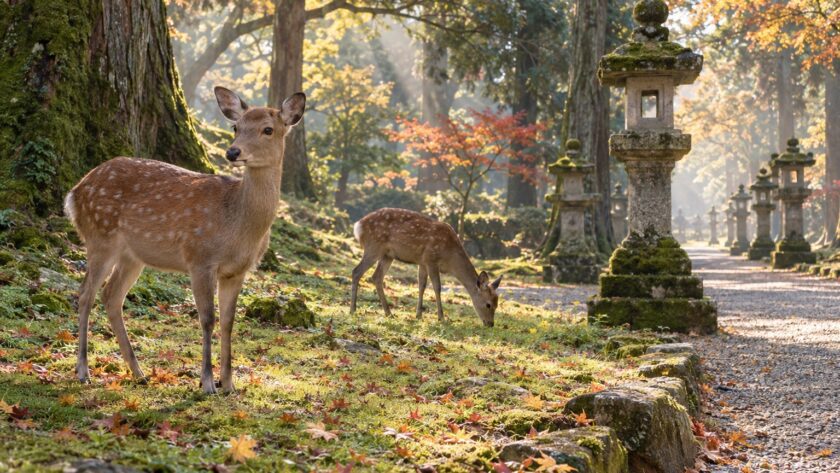
Nara rewards travelers who look beyond its famous deer. In the city, temple roofs rise above open parkland, wooded paths lead toward vermilion shrine buildings, and old merchant streets invite a slower afternoon. Elsewhere in the prefecture, ancient temple compounds, the rural landscapes of Asuka, and the mountain town of Yoshino offer very different ways to experience Japan’s early cultural history.
A day trip can introduce the essentials, but two or three days make the journey more satisfying. This guide explains how to choose between the main areas, organize transport, approach religious sites respectfully, and leave room for food and unplanned discoveries. The suggested itineraries prioritize a manageable pace: Nara becomes much more interesting when there is time to stop looking at the next train.
Understand the prefecture before planning your route
Nara Prefecture lies inland in the Kansai region, with Nara city in its northern part and extensive mountain landscapes farther south. The city was Japan’s capital during much of the eighth century, but the prefecture’s historical attractions extend well beyond that period. The Japan National Tourism Organization’s Nara overview provides a useful introduction to the region and its connections with neighboring Osaka and Kyoto.
For planning purposes, divide a first visit into separate days: central Nara and its park; western temples around Nishinokyo or Ikaruga; and one excursion south to Asuka or Yoshino. These are choices, rather than a checklist to complete in one outing. The official prefectural destination guide helps place these areas geographically before you reserve accommodation or decide which railway to use.
Getting to Nara and choosing a base
Nara has two principal arrival stations with different locations: Kintetsu-Nara and JR Nara. Kintetsu-Nara is convenient for approaching the park, while JR Nara can suit travelers arriving on JR services or staying near that station. Choose the actual station in your route planner rather than entering only the city name. A hotel described as near Nara Station may involve a different walk from the one you imagined.
Kintetsu is particularly useful when combining the city with other prefectural destinations. Consult the railway’s official English website for routes, current operations, and ticket conditions. Limited express services require the appropriate limited express ticket as well as the base fare. Compare any pass against the journeys you will actually take, and allow time for transfers instead of choosing the shortest connection automatically.
Stay centrally if evening meals, an early park walk, and straightforward luggage storage are your priorities. A rural inn can be a memorable alternative, but check its nearest station, onward bus or pickup arrangements, dinner requirements, and arrival deadline before booking. For a short first visit, changing hotels every night can consume more useful time than it saves on the map.
Nara Park: build a walk around two main sights
Nara Park is a broad landscape containing lawns, wooded approaches, and major cultural attractions rather than one enclosed visitor facility. Todaiji and Kasugataisha make strong anchors for a first walk. The official park area guide also introduces nearby gardens and viewpoints, including Nigatsudo. Choose a route with a clear lunch break rather than assuming every attraction can be absorbed while passing through.
Wear shoes suitable for a long day that may include gravel, slopes, and steps. A map distance between two temple gates says little about the walking inside each complex. If anyone in your group tires easily, plan an abbreviated version in advance: one principal interior, a comfortable meal, and a shorter park stroll can make a complete day. Keep the optional stop genuinely optional.
Meeting the deer responsibly
The deer are wild animals, even when they approach people confidently. The Nara City Tourism Association’s deer guidance explains their long association with Kasugataisha and practical precautions. Feed only the designated shika senbei deer crackers; bread, sweets, and other human food are unsuitable. Keep paper, bags, and wrappers secured, because deer may try to eat objects you are carrying.
Do not tease animals with food, chase them for photographs, or touch a fawn. Supervise children closely and give deer room to move away, especially when males are more assertive in autumn. Buying crackers is optional: watching quietly from a respectful distance can be just as enjoyable. A photograph is never a reason to crowd an animal or block its route.
Todaiji: give the Great Buddha time
Todaiji’s Great Buddha Hall is a natural centerpiece of a first visit, but the temple consists of more than that single building. Its official English website distinguishes the Great Buddha Hall, other halls, and the museum, with separate visitor information. Check the areas you intend to enter and their current admission arrangements rather than assuming one ticket includes everything on the grounds.
Allow time to notice the approach, the scale of the timber architecture, and the change in atmosphere inside the hall. Afterwards, decide whether another hall or an uphill walk toward Nigatsudo suits your energy. For families, a single question can make the visit engaging: how does the building change your sense of the Buddha’s size? There is no need to turn every stop into a history examination.
Kasugataisha: forest approaches and lanterns
Kasugataisha offers a different rhythm, with stone lanterns along wooded approaches and hanging lanterns within the shrine complex. Consult the shrine’s official visitor information for access and current arrangements. Ordinary visits, special inner-area admission, and particular ceremonies or openings are different experiences. Lantern illumination should not be assumed to occur every evening; check an announced event if that is your main reason for coming.
Walk slowly enough to enjoy the transition from open park to shaded paths. Keep conversations quiet near worship, follow signs about photography, and avoid standing in front of people who are praying. If you want to linger, reduce another stop rather than trying to recover the time by hurrying through the shrine. The approach is part of the visit, not simply the distance before the destination.
Kofukuji and Buddhist art: plan around current access
Kofukuji is an important stop near the central walking area, but its famous five-storied pagoda is undergoing major conservation. The official restoration project describes the protective enclosure and extensive repair work. Do not plan around an unobstructed pagoda photograph. Check the temple’s current arrangements for other accessible buildings and collections, and view the repairs as part of the continuing care of a living historic site.
For a closer look at religious sculpture and related art, consider Nara National Museum. Its official visitor information covers admission, access, opening arrangements, and photography guidance. Confirm the exhibition calendar before making it your rainy-day alternative. A museum visit is most rewarding when you choose a few works to examine carefully, rather than trying to remember every name on every label.
Naramachi: leave room for ordinary streets
Naramachi adds merchant houses, small shops, and a more intimate scale to a temple-focused visit. The official neighborhood guide introduces traditional buildings, craft stops, and Gangoji. This is a good place to trade a packed sightseeing schedule for a gentle wander, but individual shops and facilities keep their own opening days. Pick one place you particularly want to enter and let the rest remain flexible.
Remember that attractive lanes can also be residential. Keep doorways clear, ask before photographing inside small businesses, and buy something if you spend time enjoying a shop’s hospitality. A quiet street is not an invitation to look through private windows. For lunch, choose a place that fits your appetite and timing rather than joining a long queue simply because other visitors have joined it.
Nishinokyo and Horyuji: choose a second temple day
Toshodaiji offers a rewarding change of setting west of central Nara. The temple’s official introduction explains its founding by the monk Ganjin in 759 and the significance of its surviving architecture. Religious images may have restricted or special opening periods, so distinguish seeing the grounds and buildings from viewing a particular statue. This is a good excursion for visitors who want to spend more time with architecture.
Horyuji lies in Ikaruga and deserves its own transport plan. The temple’s official visitor guide gives seasonal hours, admission information, and access from JR Horyuji Station. The station and temple are not the same place; account for the onward walk or bus. An early start can leave space to appreciate the temple without treating the return connection as a countdown.
On a short trip, choose either a concentrated Nishinokyo outing or a substantial Horyuji visit. Combining multiple large temple compounds is possible only if the transport and your interests support it, and it can lead to visual fatigue. Before adding another site, ask what you hope to notice there that you have not already enjoyed. Fewer entrances often leave stronger memories.
Asuka: ancient history in a rural landscape
Asuka spreads its attractions across a landscape of fields, settlements, and hills. The official Asuka area guide introduces places such as Asukadera, Ishibutai, and Okadera. Unlike a compact city-center circuit, a successful day here depends on selecting a small group of sites and understanding the distances between them. Treat the countryside itself as a reason to visit rather than empty space between monuments.
A bicycle can be useful, but choose a route suited to your confidence, the gradients, and the weather. Check rental arrangements through an Asuka bicycle rental operator, including availability and return conditions, before relying on that plan. An electric-assist option may help with hills where available. Carry water, allow a generous return margin, and use a different transport plan if riding would make the day stressful.
Yoshino: allow a full mountain excursion
Yoshino is a separate outing, especially if you want to explore beyond the first viewpoints and shopping streets. The official Yoshino guide introduces its mountain setting, temples, seasonal scenery, and local foods. Cherry blossoms are a major attraction, but elevation and weather affect flowering. Choose your travel date using current local reports rather than assuming a photograph’s peak conditions will repeat on a fixed calendar day.
Kinpusenji gives the area religious depth beyond its scenery. The temple’s official English information explains the Zaodo hall and the three principal Zao Gongen images, which are shown during special openings rather than on every ordinary visit. Restoration can also affect parts of the complex. Confirm what will be accessible and follow the instructions for worship and photography on the day.
Budget time for uphill walking and the final connection between the railway and your chosen starting point. Seasonal buses, ropeway arrangements, and road restrictions need checking for your dates. Keep a realistic turnaround time, especially if you are returning to accommodation elsewhere. Yoshino is a poor destination for squeezing into a spare afternoon after a full morning of central Nara sightseeing.
What to eat in Nara
Nara’s regional foods provide an easy way to vary the trip. Look for kakinoha-zushi, pressed sushi wrapped in persimmon leaves; Miwa somen noodles; and dishes featuring Yamato vegetables. The official guide to traditional Nara cuisine introduces these specialties. Ask the seller how to eat an unfamiliar item, and tell staff about allergies before ordering rather than relying on its appearance.
Use meals to shape the day’s pace: a proper lunch can restore energy between large temple complexes, while a small sweet and tea may suit a slower neighborhood afternoon. In rural areas, settle the dinner question before the evening, especially if your accommodation does not include meals. Carrying a simple snack is sensible, but keep all personal food away from the deer.
A practical three-day itinerary
Day one: arrive at your chosen Nara station, store luggage, and focus on Todaiji and a park walk. After lunch, continue toward Kasugataisha if energy and opening hours permit. Finish with a relaxed meal near your accommodation. Travelers with only one day should use this as the core route and resist adding a distant excursion simply to increase the number of places visited.
Day two: choose Horyuji or Nishinokyo for a morning devoted to architecture, then return for Naramachi or a museum visit according to opening hours. This contrast helps prevent a succession of temples from becoming a blur. If heavy rain is forecast, move the indoor visit earlier and shorten exposed walking. Leave enough time to retrieve luggage if you are changing accommodation.
Day three: choose Asuka for rural exploration or Yoshino for a mountain-town excursion. Establish the outward and return transport before departure, and reduce your destination list if the connections are awkward. Neither choice needs a companion excursion to justify the day. Travelers staying longer can devote an additional day to the other area, keeping the pace comfortable rather than doubling the distance.
Seasonal choices and final preparations
When comparing accommodation, think about the beginning and end of each day. A room near a convenient station may be more useful than a cheaper one requiring two additional transfers. Check whether breakfast starts early enough for your excursion, whether luggage can be held after checkout, and how you will return after dinner. These details have a larger effect on a short stay than a long list of amenities.
Budget for the visits you value most, then leave a little space for an unexpected exhibition or local purchase. Several separate admission charges can accumulate across a temple-heavy day, so do not buy every available ticket automatically. Read what each admission covers and decide whether you have the interest and time to use it. Free time to walk or sit can be as worthwhile as another interior.
If traveling with children, alternate concentrated indoor visits with open space and predictable breaks. Agree on a meeting point before entering a busy approach, and keep adults responsible for food and belongings near deer. A small sketchbook or a challenge to spot different roof shapes can encourage attention without requiring extra attractions. End the outing while the group still has energy for the journey back.
Photographers should build a route around permitted viewpoints and ordinary visitor access. Do not assume a tripod, drone, or indoor photograph is allowed because an image appeared online. Respect a posted restriction even when other visitors ignore it. When a building is covered for conservation or the light is disappointing, look for details you can enjoy within the rules instead of seeking a restricted angle.
Finally, keep a short record of the places you particularly enjoyed: a hall’s name, a food you would order again, or a quiet street worth revisiting. Nara presents many unfamiliar names in quick succession, and a few notes help preserve the distinctions. That habit also makes a return visit easier to plan, with more time for the area that interested you most.
Spring blossom trips and autumn foliage visits benefit from flexible expectations and early accommodation planning. Summer calls for water, shade, and shorter outdoor stretches; winter rewards daylight-conscious scheduling and appropriate layers. Conditions can differ between the northern city and higher southern destinations. Look at the actual forecast and local operating notices for the place you intend to visit, not only a general Kansai forecast.
Before leaving, confirm your first attraction’s opening day, your final return connection, and one dependable meal option. Carry some cash for smaller purchases and admission desks, plus a charged phone and an offline map. Ask individual sites about step-free routes if needed, since accessible transport does not guarantee accessible interiors. These small preparations create room for the unhurried observation that makes Nara so rewarding.
Editorial note: Official sources were checked on October 10, 2026. Hours, admission, special openings, transport, and restoration access can change; consult the linked operators before traveling. The featured image is an AI-generated, photorealistic illustration inspired by Nara Park and its wooded shrine approaches, not a documentary photograph of an exact location.