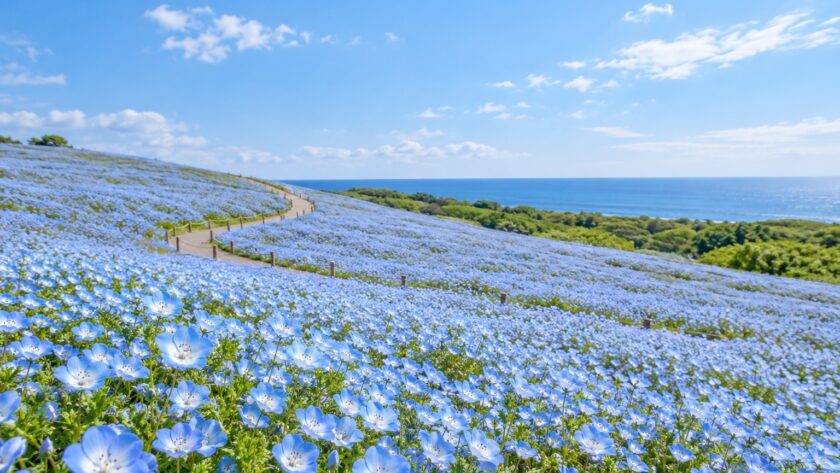
Ibaraki offers a different rhythm from Tokyo: a garden scented with plum blossoms, a hillside washed in spring blue, fishing ports facing the Pacific, and mountain paths above broad agricultural plains. It is a rewarding destination for travelers who enjoy choosing a few places carefully and spending time in them. The famous flower photographs are only the beginning.
This guide brings together Ibaraki’s major sights, regional food, transport choices, and a practical three-day itinerary. Mito and the nearby coast make a useful first trip. Tsukuba, Kasama, and the northern waterfall country work better as deliberate additions than as quick stops squeezed into the same day. Choose your route around the season and the amount of time you want outdoors.
Information checked on October 9, 2026. Opening days, transport services, admission arrangements, and flower conditions can change; consult the linked official sources before visiting. The featured image is an AI-generated illustration inspired by spring nemophila at Hitachi Seaside Park, not an actual photograph or a report of current conditions.
Understanding Ibaraki Before You Go
Ibaraki lies northeast of Tokyo in the Kanto region. Its attractions are spread across several distinct areas. Mito, the prefectural capital, is a practical starting point for gardens and history; Hitachinaka and Oarai provide the nearby coastal chapter. Farther south, Tsukuba combines science with mountain scenery. Northern Ibaraki has a more rural, mountainous character. The Japan National Tourism Organization’s Ibaraki overview is a useful introduction to these contrasts.
For one day, select a single area. For two nights, base yourself in Mito and explore the central coast. With four or five days, add one inland destination and consider changing hotels. Measuring a trip by the number of attractions visited tends to work poorly here: a missed bus, a long lunch queue, or an unexpectedly lovely garden can alter the day’s pace.
Mito: Kairakuen, Kodokan, and Lakeside Walks
Kairakuen is among Japan’s three celebrated landscape gardens. Established in 1842 by Tokugawa Nariaki, it is especially associated with plum blossoms, whose varieties bloom at different times from roughly February into March. Beyond the plum grove, bamboo, cedar trees, and open views create a garden worth exploring outside its most photographed season. Read the official Kairakuen guide for its history and seasonal highlights.
Allow time to notice the transitions between shaded groves and brighter open ground. The experience is more satisfying when you follow the garden’s changing spaces instead of walking directly to a photo location. In blossom season, arrive with flexible expectations: a festival date does not guarantee that every variety will be at its peak.
Pair the garden with Kodokan, the former Mito domain school founded in 1841. The two places express complementary ideas: serious learning and restorative leisure. Kodokan gives the garden visit historical context, turning a pleasant walk into an introduction to the ambitions of the Mito domain. Check individual admission arrangements if you plan to enter additional buildings.
Lake Senba adds an easygoing outdoor interval. The prefecture’s Mito cultural itinerary suggests including its shoreline alongside the historic sights. Choose a shorter walk if the weather is uncomfortable; completing an entire circuit is unnecessary. Keep a café stop or leisurely meal in the schedule, especially after a morning of standing and walking.
Hitachi Seaside Park: Plan Around the Flowers
The blue nemophila on Miharashi Hill have become one of Ibaraki’s signature images. The park’s official nemophila page gives the usual viewing season as mid-April to early May. Actual flowering depends on the year’s conditions. The blue hillside is a seasonal planting, so visitors arriving in another month should expect a different landscape.
Autumn brings another famous scene: kochia changing from green toward red, generally during October. The prefecture’s seasonal sightseeing route introduces this transformation alongside other park highlights. Pick the season that interests you, then check the park’s latest flower reports close to departure. Booking a trip around a single exact bloom date always involves uncertainty.
Treat the park as a substantial outing. A hill photograph, lunch, walks between planting areas, and a rest can easily occupy much of your day. Wear comfortable shoes, carry water, and consult the map before choosing an entrance. Travelers with limited walking stamina should check suitable routes and mobility information rather than assuming every viewpoint is close to the gate.
The official multilingual visitor guide links to maps and practical information. Consult the current ticket page too: seasonal pricing can apply during popular flower periods. Avoid relying on an old admission figure, and leave extra time for entry and transport when flowers attract large crowds.
Oarai and Nakaminato: A Day Beside the Pacific
Oarai Isosaki Shrine
Oarai’s best-known coastal landmark is Kamiiso-no-Torii, the shrine gate standing on rocks in the sea. It is associated with Oarai Isosaki Shrine, founded in 856. Visit the shrine itself as well as the coastal viewpoint; the religious setting deserves more attention than a quick photograph of the gate.
Sunrise is appealing, but reaching the coast before dawn requires separate planning. Staying locally makes an early start more realistic than depending on the first train from Tokyo. Use designated viewing areas, respect barriers, and keep away from wave-washed rocks. If conditions are rough, a later visit or a different coastal walk is a better choice than pursuing a particular image.
Seafood and the Aquarium
Nakaminato Fish Market is a good place to build lunch into your sightseeing. Seafood rice bowls, sushi, and other fish dishes make the market an attraction in its own right. Individual businesses set their own opening days and hours. Arrive with time to compare menus and wait for a table instead of scheduling a meal just before a tight connection.
Aqua World Oarai offers an indoor alternative, particularly useful when coastal weather turns unpleasant or children need a change of activity. Give it a meaningful block of time. Its visitor information explains that schedules and entry arrangements may vary, so check notices before making it the centerpiece of your day.
Oarai and Nakaminato belong to the same broad coastal outing, but do not assume the station, shrine, aquarium, and market form one compact pedestrian district. Plot each transfer before leaving. Depending on bus connections and your walking preferences, choosing two main stops can produce a much more enjoyable day than attempting all four.
Tsukuba: Mountain Views and Space Science
Mount Tsukuba rises above the surrounding plain with two summits, Nantai and Nyotai. Cable car and ropeway services offer ways to gain elevation without hiking the entire ascent. However, reaching a transport terminal does not remove all walking: the operator’s summit-route guide describes rocky sections, including a relatively steep approach toward Nantai. Choose a route that matches your footwear and ability.
For a gentle mountain day, focus on the shrine area, an uphill ride, and a manageable walk near the upper stations. For a hiking day, start earlier and carry appropriate supplies. Check operating notices and the last downhill departure before setting out. Clouds can hide the long views, so enjoy the forest and shrine setting without treating a panorama as guaranteed.
Tsukubasan Shrine provides a cultural starting point near the mountain’s base. The official tourism listing describes a shuttle-bus connection from Tsukuba Station, followed by a walk. Include that onward journey in your planning: arriving in Tsukuba city is not the same as arriving at the mountain.
Science enthusiasts can instead organize a day around the Tsukuba Space Center. JAXA’s current visitor website distinguishes exhibition visits from guided tours and requires online advance reservations for guided tours. Check the calendar and booking conditions for your date. The mountain and space center are separate outings; combining them is sensible only after checking the actual connections and available visit times.
Kasama: Ceramics at a Slower Pace
Kasama offers a satisfying contrast to large scenic attractions. Its pottery streets and studio shops invite you to look closely at bowls, cups, glazes, and the differences between individual makers. Browse with a practical question in mind: would you use this piece for morning coffee, a shared meal, or flowers at home? That often leads to a more meaningful souvenir.
Consider a workshop if making something interests you more than shopping. The prefecture’s craft workshop guide introduces pottery experiences in Kasama. Confirm the activity language, reservation requirements, and arrangements for firing and collecting or shipping your work. A pottery class is rarely a promise that a finished fired bowl can leave with you immediately.
Leave room for an unhurried lunch and resist filling every gap with another shop. If you are buying ceramics, ask for protective packing and think about the rest of your journey. A small, well-chosen cup is easier to carry than several fragile pieces purchased simply because there was space in the day’s schedule.
Northern Ibaraki: Fukuroda Falls and Daigo
Fukuroda Falls cascades across a broad, tiered rock face in Daigo. Green surroundings, autumn foliage, and cold-weather ice give the place different seasonal characters. Freezing depends on the weather and should never be assumed. The tourism listing identifies a taxi connection from Fukuroda Station; account for the final approach when planning a rail-based visit.
Make this a dedicated northern excursion rather than an extra stop after the seaside park. The official Daigo guide introduces the area’s hot springs, scenery, and local crafts. An overnight stay lets you enjoy dinner and a quieter morning without rushing back across the prefecture. Confirm meal times and transfers with your accommodation when booking.
An Alternative for Cyclists: Lake Kasumigaura
If cycling appeals more than another sightseeing stop, consider a separate day around Lake Kasumigaura. The Tsukuba-Kasumigaura Ring-Ring Road guide introduces a national cycle route linking lake scenery and the Mount Tsukuba area, with Tsuchiura suggested as a starting point. You do not need to tackle the entire network to enjoy it. Choose a short return route, arrange a suitable rental bicycle, and check the wind forecast before committing to a distance.
A lakeside ride works best when the journey itself is the activity. Leave time for photographs, lunch, and finding your way through unfamiliar junctions. Check rental return times, helmet availability, and whether the bicycle can be returned anywhere other than its collection point. For families or occasional cyclists, a modest route with a generous time allowance is more useful than copying the mileage of an experienced rider.
What to Eat in Ibaraki
Ibaraki’s food gives a trip texture beyond sightseeing. Natto, fermented soybeans with a distinctive aroma and sticky consistency, is closely associated with the prefecture. Try a small serving if it is unfamiliar. Hoshiimo, dried sweet potato, offers a sweeter introduction. Hitachi beef and winter anglerfish dishes provide other possibilities; the official regional food guide explains these specialties and their seasonal context.
In Kasama, look for chestnut sweets, particularly during autumn; the prefecture’s themed travel guide highlights the area’s chestnuts. Around Nakaminato, Daimaruya’s tourism listing introduces dried sweet potatoes and sweet-potato desserts. Packaged snacks are useful souvenirs, but check storage instructions before buying items that must survive several more days of travel.
Use meals to anchor the day geographically. Eat seafood while you are on the coast instead of crossing the prefecture for a famous restaurant. With dietary requirements, ask about ingredients and sauces before ordering; a menu photograph alone cannot explain a dish. Allow a flexible lunch window, especially at popular weekend destinations.
Getting There and Getting Around
For Mito and Hitachinaka, the JR Joban route is the main rail approach from Tokyo. Hitachi Seaside Park’s official train and bus access page gives an approximate 85-minute limited-express journey from Tokyo to Katsuta, followed by a bus connection. That is not a door-to-door estimate: add station access, waiting, traffic, and walking inside the park.
For Tsukuba, the Tsukuba Express route guide lists rapid services from Akihabara taking as little as 45 minutes. Other service types take longer. This is a useful independent route into southern Ibaraki, but it does not make Tsukuba a convenient substitute station for every destination elsewhere in the prefecture.
Public transport works well when you select a focused route and check the outward and return connections together. Rural services require more attention than Tokyo’s frequent trains. Save the last useful departure, identify a fallback taxi option, and keep some cash available for smaller businesses and local journeys. Check ticket and payment acceptance for the specific operator you plan to use.
A rental car adds flexibility for northern Ibaraki, dispersed studios, and accommodation away from stations. It also brings parking, navigation, and traffic into the calculation. A mixed trip can work well: travel by train to your main base, then rent locally for the days that benefit most. Compare the complete journey rather than assuming driving is automatically faster.
A Comfortable Three-Day First Visit
Day One: Mito’s Garden and History
Arrive in Mito, leave your luggage at your accommodation if possible, and visit Kodokan. After lunch, continue to Kairakuen, with a Lake Senba walk if time and energy allow. Stay in Mito for dinner. Starting with a compact cultural day gives the trip structure without making the first morning depend on a complicated series of transfers.
Day Two: Hitachi Seaside Park
Travel via Katsuta and devote the main part of the day to the park. Prioritize the planting areas that are actually in season, then add other walks according to your interests. Return to your base without a fixed late-afternoon attraction. This buffer is particularly valuable during busy flower periods, when transport and queues can take longer than expected.
Day Three: The Coast
Choose Oarai Isosaki Shrine and a seafood lunch, adding either Nakaminato browsing or Aqua World according to your route and pace. For an early departure back to Tokyo, keep only two main activities. If you have another night, stay on the coast and arrange a sunrise visit independently of the daytime itinerary.
With an extra day, choose Tsukuba, Kasama, or Daigo according to your interests. A mountain day suits walkers, ceramics suit a slower cultural trip, and Daigo rewards travelers seeking rural scenery. These are alternative extensions, not a checklist to complete together. Rework your accommodation and onward transport around the addition you select.
Choosing Your Season and Setting a Budget
There is no single best month for every Ibaraki itinerary. Early spring favors Mito’s plum blossoms, later spring draws attention to the seaside park, and autumn suits a mix of foliage and harvest flavors. Summer requires room for shade and indoor breaks, while winter encourages shorter outdoor visits followed by a warm meal. The prefecture’s seasonal overview helps match your interests to the broader calendar. Treat these as seasonal themes, then verify conditions for your actual travel dates.
Build your budget around accommodation, intercity travel, local transfers, meals, and attraction admission. Add a separate allowance for pottery, gifts, or a taxi when a connection is inconvenient. Before buying a transport pass, compare its coverage with the journeys you will actually make. A cheap rail fare is less useful if the itinerary then requires several costly transfers. Keeping each day geographically focused usually makes both the spending and the travel experience easier to manage.
Where to Stay and Final Planning Tips
Choose Mito for a first visit centered on history and the central coast, Katsuta when the seaside park is your priority, Oarai for a coastal overnight, and Tsukuba for a southern itinerary. In rural areas, the location of your accommodation matters as much as its appearance. Confirm the nearest usable transport stop, check-in window, and dinner availability.
Before booking, decide which attraction matters most, check its seasonal conditions, and build the rest of the trip around it. Keep a weather alternative and avoid making every day an early start. If Ibaraki forms part of a longer journey, our Tokyo travel guide can help organize the city portion. A few well-paced days in Ibaraki then add gardens, coastal meals, and open landscapes to the experience.