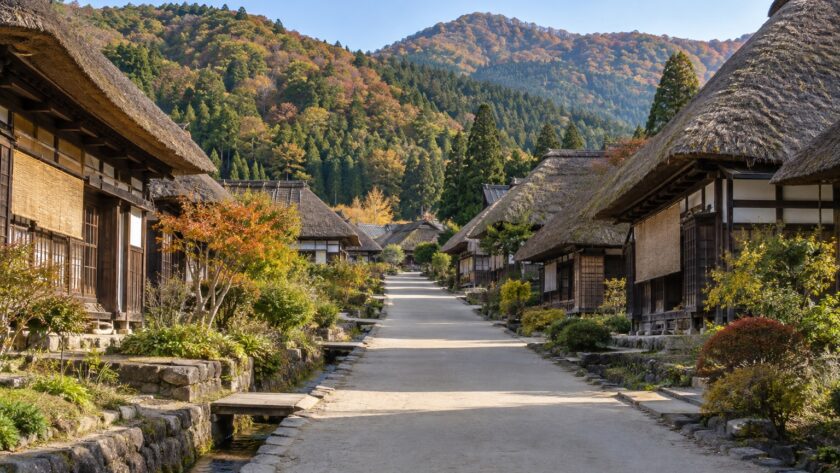
Fukushima is a prefecture of generous distances and striking changes of scene. In Aizu, a red-roofed castle overlooks a city shaped by samurai history. Farther south, thatched houses line the old road through Ouchi-juku. Around Mount Bandai, woodland paths lead past unusually colored ponds, while the Pacific coast offers seafood, marine life and places to learn about the events of 2011. The most satisfying trip begins by deciding which of these landscapes you want time to understand.
Information checked October 10, 2026. Confirm current transport, opening hours, trail conditions and access restrictions through the official links before traveling. The featured image is an AI-generated, photo-style illustration inspired by Ouchi-juku in autumn, not a photograph of an exact street or building.
This guide recommends five days for a first journey focused on Aizu and the Bandai area, with the coast or Fukushima City’s orchards as optional extensions. You can shorten the route, but avoid treating the prefecture as one compact destination. A memorable bowl of ramen, an afternoon learning about a building, or a quiet morning beside a lake can be worth more than another long drive to fit in a famous name.
Choose a region, then choose your accommodation
Think of Fukushima in three broad areas: mountainous Aizu in the west, the central corridor around Koriyama and Fukushima City, and Hamadori along the Pacific. Koriyama is a useful railway connection for the western sights, while Fukushima City is a better starting point for nearby orchards and hot springs. Aizu-Wakamatsu makes a practical base for history and excursions. The prefecture’s Aizu overview helps place the western destinations in context.
For the itinerary below, begin with three nights in Aizu-Wakamatsu or nearby Higashiyama Onsen, then spend a night around Inawashiro or Urabandai. This reduces daily repacking without making every outing a return journey from the same hotel. If public transport is your priority, check the accommodation’s actual bus stop and evening connections before booking. A property described as being in the Bandai area may still be inconvenient for the particular trail you want.
Aizu-Wakamatsu: start with the castle and its story
Tsurugajo Castle is the visual anchor of Aizu-Wakamatsu. Its white walls and red roof tiles stand above surviving stonework and moats, with parkland around the keep. The present tower is a reconstruction, so approach it as a museum and viewpoint rather than an untouched medieval interior. JNTO’s Tsurugajo guide introduces the castle, exhibitions and Rinkaku Teahouse. Allow time for the displays before heading upstairs; the view makes more sense after learning what happened here.
The castle’s history includes the conflict of 1868, when Aizu fought during the transition from the shogunate to the new imperial government. That context matters throughout the city. The nearby castle park gives you space to pause after the museum, and cherry blossom season adds a different layer to the visit. Do not squeeze the entire complex between two tightly timed buses. A relaxed half day, including lunch, is a reasonable planning allowance.
Elsewhere in town, Sazaedo offers a compact but fascinating architectural experience. Built in 1796, it uses a double-helix arrangement of sloping passages that separates the upward and downward routes. The official Sazaedo introduction explains the unusual design. Walk slowly and notice how the structure guides movement. The inclined wooden interior may not suit every visitor, so confirm accessibility rather than assuming a small building means an easy, level visit.
Leave part of your city day for shops and a local meal. Around Nanokamachi, browsing can be a more rewarding activity than rushing from doorway to doorway with a camera. If a craft workshop interests you, reserve a specific session and ask about duration, language support and when the finished item can be collected. This is also a good day for an indoor alternative if mountain weather is poor; save your clearest forecast for the outdoor part of the trip.
Higashiyama Onsen: make the overnight stay part of the journey
Just outside central Aizu-Wakamatsu, Higashiyama Onsen has inns along the Yukawa River and a mix of traditional and more modern accommodation. It can combine a city sightseeing day with an evening of bathing and dinner. The prefectural tourism guide describes its setting and local connections. Compare properties carefully: a river view, a private bath and a meal-inclusive plan are separate features, not benefits automatically included with every room.
If dinner is included, treat the arrival time as a genuine appointment. Contact the inn if a train delay threatens it, and discuss allergies or dietary needs before booking. Ask whether bedding is on the floor, whether lifts serve the room, and whether a transfer must be reserved. For a short stay, one comfortable evening here can add more to the trip than a second distant excursion. Leave enough time the next morning to enjoy breakfast without hurrying out.
Ouchi-juku: follow an old road through the mountains
Ouchi-juku developed as a post town on a route linking Aizu with the Nikko area. Its thatched buildings make the historical street unusually coherent, but it remains a place with working businesses and people maintaining the buildings. The official destination guide describes the settlement’s role and preservation. Arrive with time to walk the main street, look closely at the roof construction and stop for something to eat. A quick photograph from one end misses much of its appeal.
Negi soba is the best-known local food experience: buckwheat noodles served with a long green onion used in place of chopsticks. Try it if it appeals, but do not let the novelty dictate your entire meal. Check the menu and ingredients, particularly if you avoid fish-based broth. Shops and dining places keep their own hours; arriving near closing time may leave little opportunity to eat. Treat a popular lunch queue as a reason to adjust your walking order.
Public transport usually involves the railway to Yunokami Onsen and a bus or taxi onward. The prefecture’s Ouchi-juku access guide explains the route, including the fact that Aizu Railway is not a JR line. Check current services and pass coverage separately. Do not copy a historical timetable into your plan or assume there will be an immediate taxi available. Establish the return connection first, then decide how long to stay.
In snow, the village can feel transformed, but road travel and walking become more demanding. Wear footwear suited to slippery surfaces and allow extra transfer time. If you climb to a viewpoint, assess the steps and conditions before committing. Stay outside private areas, keep shop entrances open and follow local fire precautions around the thatched buildings. This is a good excursion to give its own day, especially when traveling by train and bus.
Kitakata: ramen with time to wander
Kitakata is an appealing change of pace after the castle and mountain village. Its food culture includes ramen for breakfast, known as asara, and a visit can be organized around one carefully chosen bowl rather than several hurried tastings. The official Kitakata gourmet itinerary offers an introduction. Confirm that your chosen restaurant actually serves breakfast before taking an early train; opening days and sold-out closing times vary from shop to shop.
Give the town more than the length of the queue. Kitakata’s storehouse architecture provides a reason to walk between meals, and the Aizu attractions guide includes ideas for exploring its streets and crafts. Pick a manageable area near the station if you are on foot. A distant restaurant may look close on a map while adding a long walk to both ends of the visit. Keep the afternoon adaptable and return to your base before you are overtired.
Urabandai and Goshikinuma: build a proper walking day
North of Mount Bandai, the Goshikinuma pond group offers a succession of blue and green water views among woodland. Despite the familiar translation referring to five colors, the area includes more than five ponds. The Urabandai Tourism Association describes a trail of about four kilometers, taking roughly seventy to ninety minutes one way in ordinary conditions. For a leisurely visit, allow extra time for photographs, pauses and any muddy sections.
Plan the two ends of the walk before starting. If you leave a car at one entrance, you still need to return to it; if you depend on a bus, its departure matters more than a generic walking-time estimate. Carry water and a light snack, and use a map to identify your chosen exit. The main pleasure is seeing successive ponds through gaps in the trees, so do not measure success by walking as fast as the published estimate.
The trail is relatively gentle, but that does not make it universally accessible or suitable for ordinary sneakers in every season. Rocks, roots and wet ground need attention. The tourism association recommends an experienced guide for winter snowshoe visits. Stay on established paths and leave plants and wildlife undisturbed. A summer walking description should never be treated as instructions for an independent winter outing, and a photograph of bright water cannot promise the same color under different light.
Lake Inawashiro: the wider landscape
Lake Inawashiro offers a different scale from the enclosed woodland ponds. Its broad water and views toward Mount Bandai make it a good place to slow the itinerary down. The official lake guide introduces seasonal scenery and activities. Choose a specific shore or activity provider rather than simply navigating to the lake’s name; the shoreline is extensive, and the station is not a substitute for planning the last part of the journey.
If you want boating, cycling or another outdoor activity, check that it is operating on your dates and suitable for everyone in the group. A lakeside lunch and short walk are enough for travelers who want scenery without a full activity session. Avoid using this day to add a mountain summit simply because it appears nearby. The ponds, the lake and a summit climb require different amounts of time and preparation, even when they share the same background mountain.
Central Fukushima: blossoms and fruit as seasonal detours
Miharu Takizakura is a celebrated weeping cherry tree, estimated to be more than a thousand years old. Its branches create the waterfall-like form reflected in its name. The official Miharu guide explains access and the spring setting. Plan around current flowering reports rather than a fixed annual date. During blossom season, traffic and special transport arrangements can affect a visit, so leave space around your onward train.
Near Fukushima City, the Fruit Line is an area of orchards offering seasonal picking experiences. The prefecture’s fruit-picking guide explains that many visits are timed eating sessions, with fruit to take home purchased separately. Ask the orchard which fruit is ready and what the booking includes. One farm and a relaxed café stop can fill a pleasant half day; there is little need to rush between several similar orchards.
The Pacific coast: a separate chapter
Iwaki makes a useful focus for a coastal stay. Aquamarine Fukushima, in Onahama, emphasizes marine environments and the meeting of ocean currents off the prefecture. Its habitat displays provide an engaging indoor option, particularly for families. The official aquarium listing links to visitor information. Check the final bus or taxi connection to the waterfront and allow enough time inside rather than treating the aquarium as a brief stop between long drives.
Farther north, the Great East Japan Earthquake and Nuclear Disaster Memorial Museum in Futaba offers an important place to learn about the disaster, evacuation and recovery. Give the visit time and attention. Check current opening arrangements, transport and language support directly, especially if you hope to hear a talk or join a guided program. Do not assume that a museum near a railway corridor is within comfortable walking distance of its station.
Some areas near Fukushima Daiichi remain subject to access restrictions. Use the prefecture’s current safety and access information and local notices for the places you intend to visit; an old map or a general statement about the prefecture is insufficient. Stay out of restricted areas and private property. In recovering communities, ask before photographing people and homes, and approach memorial sites with the same respect you would bring to any place connected with loss.
What to eat beyond the headline bowl of ramen
Aizu’s sauce katsudon pairs a breaded pork cutlet with sauce and rice, while kozuyu is a regional soup associated with local household and ceremonial cooking. The official local-food guide introduces both alongside other specialties. A varied food day might mean noodles at lunch and a regional set meal at dinner. Ask about ingredients rather than judging from appearance: a vegetable-rich soup or noodle dish can still contain seafood or meat stock.
If you enjoy sake, select a tasting that fits your transport plan and leave driving to someone who is not drinking. A bottle purchased from a shop can be a simpler option when your schedule is tight. For edible souvenirs, check storage instructions and your onward journey before buying fresh products. Carrying fruit or chilled food through several hotel changes can be less practical than choosing something to enjoy immediately.
A five-day Aizu and Bandai itinerary
Day one: travel to Aizu-Wakamatsu, leave your bags and visit Tsurugajo if your arrival allows an unhurried museum visit. Otherwise, walk the grounds and save the interior for tomorrow. Have a local dinner and settle into your city hotel or Higashiyama inn. Day two: explore Sazaedo and the city at a comfortable pace, adding a booked craft activity or further historical interpretation according to your interests.
Day three: visit Ouchi-juku using prechecked rail and onward transport, then return to the same base. Keeping this day focused avoids rushing the village meal or the final connection. Day four: make a morning or lunchtime visit to Kitakata, then move toward Inawashiro or Urabandai. If the connections are awkward, move first and leave Kitakata for a future visit; the itinerary should serve the journey, not the other way around.
Day five: walk the Goshikinuma trail if conditions are suitable, with your luggage stored by prior arrangement and your onward transport already checked. Depart through the appropriate rail connection, or add another night for Lake Inawashiro. For a three-day trip, stay in Aizu and choose either Ouchi-juku or the Bandai area. Add the coast as two or more additional days rather than attempting to visit Futaba and Iwaki between western sightseeing stops.
Transport and the final planning decisions
The standard rail approach from Tokyo to Aizu-Wakamatsu uses the Tohoku Shinkansen to Koriyama and a connection west. Book your main train, but pay equal attention to the local connection and the journey from the station to your accommodation. Rural buses may determine the shape of a day. Keep essential route details offline, carry some cash and confirm luggage storage instead of relying on an unverified locker being available.
A car is useful for dispersed landscapes, but winter driving requires suitable equipment and experience, and scenic roads can close seasonally. Choose accommodation near the experiences that matter most, check conditions shortly before departure, and retain an indoor alternative. Fukushima offers enough variety for several trips. On the first one, a clear regional focus lets you enjoy the contrast between history, village life and open landscapes without spending the holiday continually in transit.