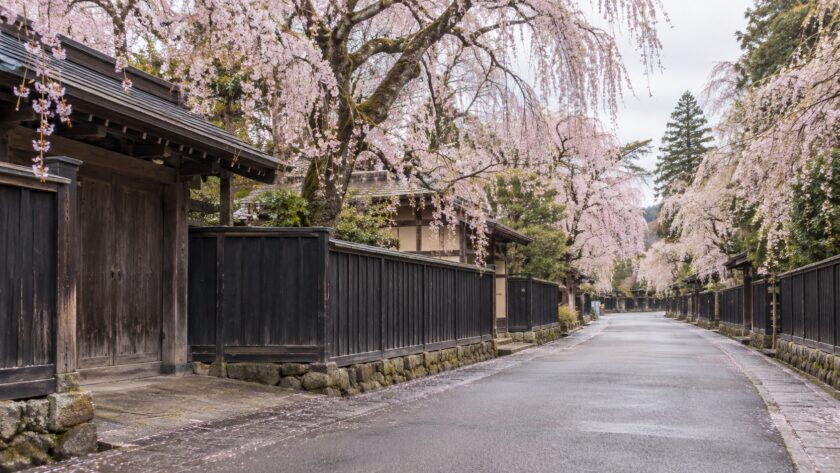
Akita rewards travelers who enjoy the spaces between headline sights: a quiet street behind a wooden gate, a lakeside lunch with no urgent departure, or an evening at a mountain inn after the day visitors have left. On the western side of Tohoku, the prefecture brings together samurai heritage, deep-blue water, hot springs, rice-growing landscapes and distinctive local traditions. It is a place to choose a few experiences carefully and give them room.
A first trip can connect Kakunodate, Lake Tazawa and Nyuto Onsen with Akita City and the Oga Peninsula. Those places show different sides of the prefecture, but they are not neighboring stops on a single sightseeing loop. The five-day route below moves from the eastern inland area toward the city and coast. Shorter alternatives let you reduce the distance without losing the character of the journey.
Information checked October 10, 2026. Recheck official transport schedules, opening hours, seasonal access and local advisories before traveling. The featured image is an AI-generated, photo-style illustration inspired by spring in Kakunodate, not a photograph of a particular street or residence.
Choose Your Akita Route Before Booking Hotels
For historical streets, lake scenery and a hot spring night, concentrate on the Senboku area in eastern Akita. Kakunodate and Tazawako have railway stations, while the lakeshore and mountain inns require onward transport. The local tourism association’s area introduction explains how Kakunodate, Tazawako and Nishiki fit together. This is a manageable focus for a three-day stay, particularly when you are already traveling through neighboring Iwate.
Akita City is a separate, useful base for urban sightseeing and an excursion toward Oga. Choose this combination if folk culture and the Sea of Japan coast interest you more than mountain bathing. With four or five days, the two halves can work together. With only two days, selecting one half will usually be more satisfying than spending much of the visit watching the clock at transfer points.
Book the most important overnight experience first. A particular onsen inn may have limited availability or meal arrangements that determine your arrival time. Once that night is settled, build the surrounding rail and bus journeys around it. A hotel map alone cannot tell you whether a late train connects with the final bus into the mountains.
Arriving by Train or Air
The Akita Shinkansen’s Komachi trains provide a rail connection from Tokyo through Morioka to Tazawako, Kakunodate, Omagari and Akita. Reserve the journey you need and check its stopping pattern for your date. JR East lists Komachi as an all-reserved-seat service; its official train information also illustrates the route and the separation from Hayabusa at Morioka. Board the correct train section, rather than assuming every carriage continues to Akita.
If you arrive from the Tokyo or Morioka direction, consider beginning in Tazawako or Kakunodate and ending in Akita City. That can avoid traveling all the way to the city before doubling back. Reverse the route if your flight or onward plans make that more convenient. The right sequence depends on your arrival point, not on which attraction appears first in a brochure.
Akita Airport has bus connections to the city; the airport lists approximately forty minutes to Akita Station’s west entrance. There is no railway station directly at the terminal. Check the official airport access page for current buses and advance-booked transport options. Allow for collecting bags and any waiting time when comparing flying with the train. An early flight departure is another reason to spend the final night near a reliable airport connection.
Kakunodate: Look Beyond the Famous Street
Kakunodate’s historic district is an excellent place to begin. The town developed in the early seventeenth century, and its former samurai neighborhood still has broad streets, mature trees and substantial residences. Some houses welcome visitors, including the Aoyagi and Ishiguro houses. The JNTO introduction to the samurai district gives an overview. Choose a house to explore inside as well as walking the street; the buildings add depth to what might otherwise become a series of exterior photographs.
Give yourself at least half a day, and preferably a leisurely day if architecture or crafts are central interests. Start with a simple orientation walk, visit one residence, and pause for lunch before deciding whether another interior would add something different. Doors, gardens and exhibits are not all equally accessible, so travelers with mobility requirements should confirm specific arrangements rather than assume the whole district has a single standard.
Kakunodate also has merchant streets and the Tamachi area. The tourism association’s Kakunodate neighborhood guide helps you move beyond the most photographed section. A second walk after lunch can reveal how the wider town relates to the samurai quarter. Respect private entrances and occupied homes: an attractive wooden gate is not necessarily an invitation to step through it.
Cherry Trees and Cherry-Bark Craft
Spring is a celebrated time to visit Kakunodate, when weeping cherry trees soften the historic streets. The blossom period depends on conditions each year, and a reservation for a particular date cannot guarantee peak flowers. Decide whether blossoms are the main purpose of the trip or a welcome possibility. If they are essential, keep surrounding plans flexible and consult local updates closer to departure.
The town’s connection with cherry trees extends to kabazaiku, the craft of working with cherry bark. Polished bark brings subtle patterns and warm color to objects such as tea containers. JNTO’s Kakunodate guide introduces this craft alongside the town’s history. Browsing with time to ask about materials and care can make a purchase more meaningful. Look at the surface, joinery and practical use of an object, rather than choosing only by the size of its souvenir label.
Lake Tazawa: The Station Is Not the Lakeshore
Lake Tazawa is Japan’s deepest lake, but its appeal on a visit is more immediate: open water, changing shades of blue and mountains framing the horizon. Haruyama on the eastern shore is a principal visitor base, with places to eat and seasonal activities. The official Tazawako area guide introduces the lakeshore and nearby hot spring districts. Choose one or two places to enjoy the water rather than feeling obliged to complete a circuit.
Tazawako Station is inland. You need another journey to reach the lake, and the famous golden Tatsuko statue is on the opposite side from the eastern gateway. The tourism association’s Tatsuko statue directions specifically warns that arriving at the eastern shore does not put you beside the statue. Check the route and stops of any circuit bus or boat you plan to use. Do not mistake the name of a destination for a promise that every landmark is within a short walk.
A lakeside morning pairs well with an afternoon transfer to an onsen, provided the connections line up. Leave room for a meal and a weather change. If you want to cycle or take part in a water activity, confirm operating dates, equipment and the time needed to return it. Trying to circle a lake before a fixed inn pickup can turn an otherwise peaceful outing into an unnecessary rush.
Nyuto Onsen: Make the Overnight Stay the Main Event
Nyuto Onsenkyo consists of seven hot spring inns scattered around the foot of Mount Nyuto within Towada-Hachimantai National Park. The baths draw on different sources, and the wooded setting is part of the attraction. The Nyuto Onsen association introduces the member properties and bathing options. Treat the area as a collection of distinct inns, not one resort building where every bath is reached from the same lobby.
Compare properties by the stay they offer. A room’s bathroom facilities, sleeping arrangement, meal plan and access may matter more than the most famous photograph of its outdoor bath. Ask directly about private bathing, mixed bathing, tattoo policies or other requirements before reserving. Choose a place where the practical details suit your party, and avoid assuming that every inn follows identical rules.
Public buses from Tazawako Station serve the Nyuto area, but the nearest stop and final approach depend on your accommodation. Use the local access guide and then confirm the exact stop with the inn, including any pickup reservation. The same guide is useful for distinguishing the lake, highland resorts and more distant mountain destinations. Keep your luggage manageable if you will be changing vehicles.
An overnight visit gives you time to settle, bathe and enjoy dinner without monitoring the final bus. If you visit only for the day, check the chosen property’s day-use hours and availability in advance. Those hours can differ from overnight guests’ access. Leave the last part of the afternoon unhurried; a good hot spring visit does not require collecting the greatest possible number of baths.
Akita City: Parks and Living Festival Culture
In Akita City, begin with Senshu Park, where the remains of the Satake clan’s Kubota Castle occupy a green setting close to the station area. This is a place for a relaxed walk through a former castle landscape, not a promise of an intact original castle keep. Allow time to climb and pause if you want to explore the grounds rather than simply cross them on the way to lunch.
The Akita City Folk Performing Arts Heritage Center, also known as Neburinagashi-kan, introduces local traditions including Kanto through displays and audiovisual material. It gives context to the city’s festival identity when your trip falls outside the main event. Check the current activity schedule if a live demonstration is important; museum admission alone should not be treated as a guarantee of a particular performance.
The Kanto Festival is associated with prayers for a good harvest and remarkable balancing skills using bamboo poles fitted with lanterns. It is traditionally held from August 3 to 6. Confirm the program for the year you will visit before booking around it. For a festival stay, accommodation and the journey back after evening events deserve attention as early as the sightseeing plan itself.
Oga: Understanding Namahage in Its Home Region
Oga’s Namahage are visiting deities in a living local tradition, not simply frightening costumes for entertainment. They visit households at the turn of the year, admonishing idleness and bringing wishes for health and abundance. The local tourism site’s Namahage introduction explains the community context and the differences between local masks. Reading a little beforehand makes the museum visit more rewarding than judging the tradition by its dramatic appearance alone.
At the Namahage Museum, masks and other exhibits show that variety, while a documentary adds the setting of household visits. Nearby, the Oga Shinzan Folklore Museum presents demonstrations in a traditional house. These visitor presentations are distinct from actual New Year’s Eve visits to private homes. Use the official visitor information to coordinate the two facilities, because the demonstration has set times rather than continuous entry to a performance.
Leave time to process what you have seen, especially with children who may find the loud, close encounter intense. Follow the staff’s guidance and choose the experience that suits your group. If you are interested in the wider religious setting, the museum’s nearby sites guide introduces Shinzan Shrine, which is closely associated with the tradition.
Plan the Oga Transfer Before You Leave Akita
The JR Oga Line links Akita with Oga Station, but the museum is not a station-front attraction. The Namahage Shuttle is a scheduled shared sightseeing taxi service requiring advance reservation. Its routes connect several visitor areas, including the Shinzan museums and Cape Nyudo. Check availability and the booking deadline for your date; do not arrive expecting an unreserved hop-on sightseeing bus.
For a day trip, one cultural focus and one additional stop are usually enough. A coastal viewpoint may work well if transport and weather cooperate, while a longer museum visit can be a better choice in poor conditions. With a car, allow for stopping time as well as driving time. Without one, reserve the return segment with the same care as the outward trip. An overnight stay on the peninsula gives you more breathing room.
Eating in Akita: Start with Kiritanpo
Kiritanpo is a natural introduction to Akita’s food. Cooked rice is pounded, formed around a skewer and toasted; it can be eaten with miso or cut into pieces for a hot pot. A kiritanpo nabe brings together the rice, broth and other ingredients in a satisfying shared meal. JNTO’s article on Oga and its cuisine describes the dish and its place in the region.
Order with your appetite and schedule in mind. A hot pot suits an evening when you can sit comfortably, while a lighter lunch leaves room for an included inn dinner. Tell accommodation providers about dietary requirements when booking, since a set meal may be prepared ahead of time. Ask restaurants about stock and seasoning rather than assuming a rice-based dish is vegetarian. Along the coast, let the day’s availability guide a seafood order.
A Five-Day Route from Inland Akita to the Coast
Day one: arrive at Kakunodate, leave your bags and explore the samurai district. Choose one residence, browse for cherry-bark craft, and allow a second walk through another part of town. Stay locally if you want an unhurried evening, rather than adding a late transfer after a full travel day.
Day two: continue to Tazawako Station and the lakeshore. Plan one lake stop around the available transport, then travel to your booked Nyuto or highland inn in time for check-in and dinner. Keep the accommodation’s arrival requirements fixed while leaving the sightseeing flexible. The lake is enjoyable without trying to reach every viewpoint.
Day three: enjoy breakfast and a slow morning before returning toward the railway. Continue to Akita City and use the remaining daylight for Senshu Park or a city walk. Day four: make the prearranged Oga excursion, centering it on the Namahage museums. Return to Akita or stay on the peninsula if that suits your plans.
Day five: visit the heritage center or finish shopping before departure. Keep this day light enough to protect your onward connection. For a three-day trip, retain Kakunodate, the lake and an onsen stay, or choose Akita City and Oga instead. These are suggested pacing choices, so adjust them to actual transport and opening days.
Seasonal Choices and Practical Details
Akita’s seasons can change the whole purpose of a trip. Spring draws attention to Kakunodate’s blossoms; summer offers green landscapes and festival travel; autumn brings foliage at different elevations. The tourism association’s Senboku autumn guide describes how color progresses through the mountain and lake areas. Treat typical viewing periods as a starting point, then check recent local reports rather than assuming one weekend will peak everywhere.
Winter calls for a route built around snow conditions and transport you can confidently use. A mountain inn and a town stay can be enough without adding ambitious drives. Confirm road access, seasonal closures and current local advice before any countryside outing. At other times of year, check trail conditions and wildlife advisories with local visitor centers before setting out, particularly for walks beyond maintained town streets.
Carry a small amount of cash, suitable walking shoes and the address of each inn in Japanese as well as English. Save your essential connections and reservation details offline. Akita works best when the logistics are settled early enough that you can forget them for a while: linger over a house interior, notice the surface of the lake, and give an evening meal the time it deserves.