Nagano is a prefecture of contrasts held together by mountains. A morning inside Matsumoto’s wooden castle can lead to an afternoon browsing merchant streets; another day might take you through a cedar-lined shrine approach or along the old Nakasendo road. Winter brings ski holidays, while the warmer months open up river valleys and highland scenery. The appeal lies in choosing the right combination, rather than trying to collect every famous place.
For a first visit, start with Matsumoto and Nagano City, then add one outdoor excursion that suits the season. Five days give you room for both cities and a choice of Kamikochi, the Kiso Valley or northern Nagano. Travelers with fewer days should concentrate on one base. A week allows a more leisurely route, including an overnight in a post town, a hot spring village or a mountain resort.
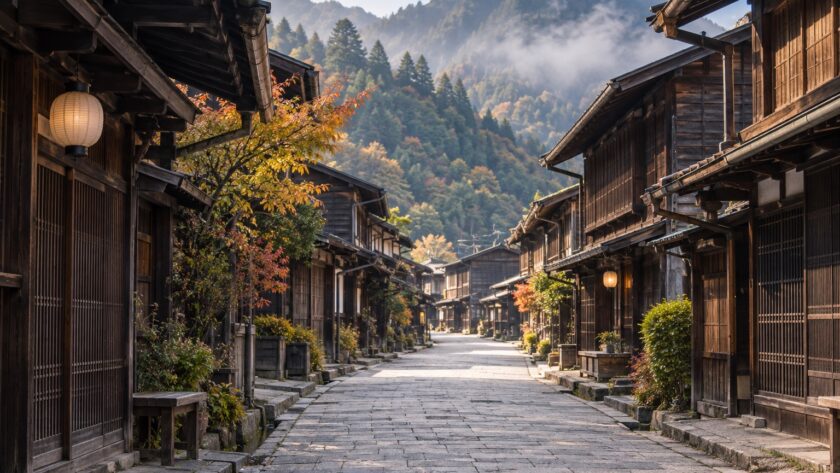
Information checked October 10, 2026. Confirm current transport reservations, opening calendars and trail conditions through the official links before departure. The featured image is an AI-generated, photo-style illustration inspired by the historic streets of Narai-juku in the Kiso Valley, not a photograph of an exact real location.
Understanding the Map: Nagano City Is Only One Part
When booking, distinguish Nagano Prefecture from Nagano City. The city is a useful base for Zenkoji Temple and excursions toward Togakushi or Obuse. Matsumoto works better for its castle, the approach to Kamikochi and journeys toward the Kiso Valley. Hakuba and Karuizawa each deserve their own accommodation decision. A hotel described simply as being in Nagano may be far from the attraction you have in mind.
Think in terms of travel corridors. The Hokuriku Shinkansen serves Nagano City and Karuizawa, while Matsumoto is reached from Shinjuku by the Azusa limited express or from Nagoya by the Shinano. The prefecture’s official access guide outlines these different approaches. Choose an arrival station that matches your first overnight stop, and compare the whole journey rather than just the fastest train segment.
A practical route from Tokyo is to arrive in Matsumoto and leave through Nagano City, or reverse that order. JR East’s Azusa information helps with the Matsumoto approach. If you are also visiting Yamanashi, our Yamanashi guide offers ideas along that broader corridor. Avoid adding a distant stop merely because it looks nearby on a small map of Japan.
For each change of base, sketch the journey from hotel door to hotel door. Include luggage collection, station transfers and the walk at the other end. This is especially useful when combining a post-town visit with a move between Matsumoto and Nagano City. If the sequence becomes awkward, keep a second Matsumoto night or drop the extra stop. An inexpensive room is less appealing when reaching it repeatedly consumes your daylight.
Matsumoto: Start With the Castle, Stay for the Streets
Matsumoto Castle makes an excellent first anchor for the trip. Its dark exterior and surviving wooden keep reward both an outside circuit and a closer interior visit. The castle’s official visitor guidance explains an important limitation: the keep has steep, narrow stairs and no elevator. Anyone with mobility concerns should consider the grounds and exterior views separately from climbing through the building.
Leave large luggage at your accommodation where possible and allow room for a queue. A castle visit becomes uncomfortable if you are watching the clock for an imminent train. Wear shoes that are straightforward to remove, since visitors take them off inside. Follow the staff’s instructions and keep moving carefully on the stairs; the current admission page also lists visiting rules and ticket information.
Afterward, use the river and older shopping streets to change pace. Matsumoto’s tourism material introduces Nakamachi and Nawate, including the former merchant district and the pedestrian lane beside the Metoba River. Look for small shops and stop for lunch instead of rushing directly back to the station. The pleasure here comes from details: a storefront, a bridge, a carefully made everyday object.
For a rainy afternoon, consult the city’s walking map to locate museums and plan a shorter circuit. Treat it as a geographic aid, then check the individual venue’s current calendar. Choosing one indoor visit near your existing route is more effective than improvising several cross-city transfers after the weather has already turned.
Kamikochi: A Valley Walk With Serious Transport Planning
Kamikochi suits travelers who want mountain scenery without making a summit climb the purpose of their holiday. Begin with a valley outing around the river and Kappa Bridge, choosing the length according to conditions and your return booking. Do not confuse a relatively gentle valley path with permission to extend onto a mountain route. The equipment, experience and time needed can change substantially beyond the sightseeing area.
The official Kamikochi FAQ describes the regular visitor season as mid-April to mid-November. Winter closes normal visitor facilities and requires a different approach; this is not a destination to treat as a casual year-round bus trip. Check the latest announcements as well as the seasonal calendar, because heavy rain can interrupt access even during the open months.
For travel from Matsumoto, read Alpico’s route and reservation instructions before buying tickets. At the time of checking, reservations are required for both outbound and return buses. The route may involve the non-JR Kamikochi Line train to Shin-Shimashima followed by a bus; do not assume your rail pass covers that connection. Reserve the return first if a specific departure is essential.
Driving does not remove the final transfer. Under the private-vehicle restrictions, cars and motorcycles must remain outside Kamikochi, with transfers from parking areas such as Sawando or Hirayu. Budget for parking and onward transport, and check which approach fits your route. An early start, a manageable walk and an unhurried return will usually offer more than trying to add another distant attraction afterward.
Carry a layer for cooler conditions, rain protection, water and a way to take your rubbish away. Keep a shorter walk in mind if the forecast deteriorates, and follow local notices over an old downloaded itinerary. If mountain scenery is the main reason for your visit, staying several nights in the Matsumoto area provides more flexibility than putting your only outdoor day between two fixed long-distance journeys.
The Kiso Valley: Choose a Post Town or a Trail Day
The Nakasendo once linked Edo, now Tokyo, with Kyoto through inland Japan. In the Kiso region, preserved post towns make that history tangible through timber buildings, old street patterns and places that served travelers. The prefecture’s Nakasendo guide identifies Narai, Tsumago and Kiso Fukushima as useful places to begin. Narai is particularly straightforward for a town visit because its railway station is close to the historic street.
In Narai, leave time for a slow walk, lunch and a look at locally associated lacquerware. A post town is more enjoyable when you notice how the street functions today, rather than searching only for an empty photograph. People still live and work here. Keep doorways clear, ask before photographing interiors and resist stepping onto private thresholds to obtain a better angle.
For a longer outing, the walk between Tsumago and Magome connects two well-known post towns through countryside and forest. Tsumago is in Nagano; Magome is in neighboring Gifu. Check the current trail status and bus connections at both ends before deciding your direction. The walking time alone does not account for meals, photographs, town visits or waiting for onward transport.
Choose either a satisfying Narai visit or a dedicated southern Kiso walking day if time is limited. Combining everything can leave the most appealing streets feeling like checkpoints. Staying overnight offers a quieter rhythm, but confirm dinner arrangements and arrival times with your inn. Pack a small walking bag and verify any luggage service directly rather than assuming it operates on your date.
A historic street stroll and a forest hike should have different packing lists. For the former, comfortable everyday shoes and a small bag may be sufficient in good conditions. For the latter, assess the surface, ascent, forecast and distance between facilities before setting out. Confirm current local guidance about wildlife and trail disruptions, and carry a map that does not depend on uninterrupted reception. Turnaround time matters as much as the destination.
Nagano City and Zenkoji Temple
Nagano City is worth more than a station transfer. The approach to Zenkoji Temple provides a natural introduction, with shops and food stops leading toward an important Buddhist pilgrimage destination. The temple can be reached on foot or by bus from Nagano Station. Allow time to appreciate the approach and grounds before deciding which paid areas or experiences to include.
A temple visit is also an opportunity to slow the itinerary. Watch how other visitors approach worship, follow photography signs and avoid speaking over a service. If an early ceremony or temple lodging appeals to you, check participation details and booking requirements beforehand. This is an experience to organize with attention to its religious purpose, rather than adding it as a hurried novelty before breakfast.
Keep the remainder of the city day simple. A late lunch and a neighborhood walk can balance a morning spent concentrating on architecture and ritual. Staying near the station is convenient for onward journeys; staying nearer the temple may better suit an early visit. Compare those advantages with luggage, restaurant plans and the next day’s departure rather than choosing solely by room price.
Togakushi or Obuse: Two Very Different Excursions
Togakushi lies in the highlands above Nagano City, where shrines and forest paths create a more secluded atmosphere. The cedar-lined approach toward Okusha is a major attraction, but reaching shrine areas involves real walking rather than stepping off a bus into a single compact complex. Choose a route appropriate to your group and check seasonal access, especially when snow or ice is possible.
Build the day around a few connected places and a soba lunch. Before setting off on a longer approach, identify the bus stop for your return and the departure you intend to catch. A shortened shrine walk can still be rewarding. Trying to visit every shrine, add a distant pond and make a tight connection back to the city can take attention away from the forest itself.
Obuse offers a different kind of day, with art and a compact town visit. The local tourism association introduces the Hokusai-kan Museum, while Nagano’s food-focused travel guide highlights Obuse’s chestnut sweets. Check the museum’s exhibition calendar, then leave time for a café. Choose Obuse when you want a less walking-intensive cultural outing, while still checking the specific route for accessibility.
Jigokudani and a Hot Spring Overnight
At Jigokudani Yaen-koen, visitors observe Japanese macaques rather than enter an animal performance. The park’s official guide makes clear that monkeys may not appear on some days, particularly in autumn, and that bathing is not continuous or guaranteed. Check current information before traveling. The familiar snowy hot spring image represents particular conditions, not a promise attached to every admission ticket.
The first-time visitor guide describes an unpaved approach walk of around half an hour. Allow extra time for your own pace and the weather, and choose suitable footwear. Follow the observation rules: do not feed, touch or crowd the monkeys, and avoid staring into their eyes. Keep food put away and give animals room to move.
Consider making a hot spring stay the anchor for a northern Nagano outing, with the park as one component rather than the sole justification. Ask your chosen property about station transfers, meals and bathing arrangements. Check private-bath availability or tattoo policies directly if relevant. Having an enjoyable evening planned makes the trip feel worthwhile even when animal sightings or weather do not match expectations.
Hakuba and Karuizawa: Give Each Its Own Time
For a ski holiday, Hakuba Valley is a collection of ten ski areas across several municipalities, not one compact resort. Pick accommodation according to the slopes, lessons, rentals and transport you expect to use. A common area pass does not eliminate the need to check shuttle schedules. Beginners should make instruction and suitable terrain central to the plan, rather than choosing solely by dramatic mountain photographs.
Karuizawa works well for a separate highland break focused on walking, cafés and time outdoors. The tourist association’s maps include walking and cycling routes, which help distinguish an easy local circuit from a longer outing. If renting bicycles, choose a route that matches your confidence, the weather and daylight. Neither Karuizawa nor Hakuba needs to be forced into a first trip already covering Matsumoto and Nagano City.
Eating Your Way Through Nagano
Soba is a useful thread through a Nagano journey, and Togakushi is closely associated with it. Oyaki dumplings and gohei mochi provide other ways to sample regional food, as described in the prefecture’s food guide linked above. Try different meals along your route rather than making a special transfer for every dish. A warm lunch after a forest walk can be as memorable as a heavily researched restaurant booking.
Ask about ingredients when you have dietary requirements: a vegetable filling does not establish what is in the seasoning, and noodle sauces may contain fish stock. At an inn, communicate requirements before booking a meal plan. For souvenirs, choose something that travels well and that you will actually use or eat. Ask a craft seller about care instructions, or check how long a confection keeps before buying it early in the trip.
A Flexible Five-Day First Visit
Day one: Matsumoto. Arrive, leave your bags and visit the castle if the remaining opening time allows. Otherwise, walk the surrounding streets and save the interior for the following morning. A relaxed dinner and an early night are sensible preparation for an outdoor excursion; there is no need to make arrival day the busiest day of the holiday.
Day two: Kamikochi in its visitor season. Use your reserved transport, take a valley walk and return to Matsumoto. Adjust the distance to the conditions. If access or weather makes this unsuitable, keep the day in town or choose another currently accessible activity. An alternate plan should be appealing in its own right, not merely a way to fill the hours.
Day three: Narai or more Matsumoto time, then Nagano City. Narai can provide a focused introduction to the Kiso Valley if train connections fit. Retrieve your luggage before continuing north and avoid a tight dinner reservation after the transfer. If you prefer a longer Nakasendo hike, add a night in Kiso instead of compressing it into this travel day.
Day four: Zenkoji and the city. Spend the morning around the temple, then enjoy a slower afternoon. Day five: choose Togakushi, Obuse or Jigokudani. Select one according to weather, interests and onward departure time. For a late return, another Nagano night is preferable to gambling on a tight final connection. Add Hakuba or Karuizawa only with additional days.
Seasonal Choices and Booking Priorities
Choose dates around the experience you care about most. A ski trip, a Kamikochi walk and a post-town holiday have different ideal conditions. Spring and autumn scenery varies with elevation, so one city’s blossom or foliage report will not describe the whole prefecture. In winter, allow more time for walking and transfers; in warmer months, do not mistake mountain air for a guarantee of dry weather.
Book accommodation and any essential transport first, then fill the flexible spaces. Check Alpico’s current route information for relevant bus journeys, including seasonal operation. Budget for local transport beyond the main railway, and compare pass coverage against your actual route. Keep some cash available, download the necessary directions and tell your accommodation if your arrival changes. A thoughtful Nagano trip leaves enough room to enjoy the mountains, streets and meals between the headline sights.