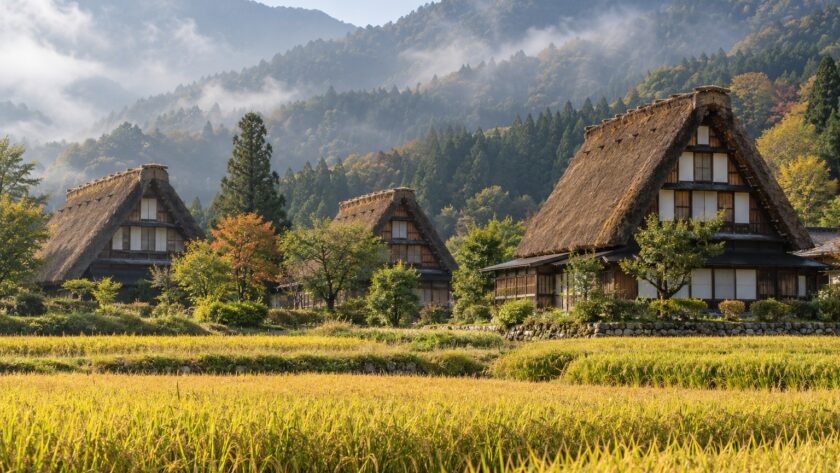
Gifu rewards travelers who look beyond a single famous view. In the north, steep thatched roofs and timber merchant houses sit against the mountains of Hida. Farther south, rivers connect towns known for paper, food replicas, and old commercial streets. Between them, a night at a hot spring can give a journey room to breathe. The variety is part of the attraction, but it also makes thoughtful route planning essential.
This guide brings together Takayama, Shirakawa-go, Gero Onsen, Gujo Hachiman, Mino, Gifu City, and Magome. You do not need to visit them all. A good first trip combines two or three complementary places, leaving time to enter buildings, eat a proper lunch, and notice the ordinary activity around the celebrated streets.
Understand the geography before booking
Think of Gifu in terms of travel corridors. Takayama and Gero fit naturally along the railway through the Hida region. Shirakawa-go requires a road journey. Gujo Hachiman and Mino belong to a different corridor along the Nagara River, while Magome sits in the southeast near the Nagano border. Places that look close on a prefecture map may involve an awkward connection.
Nagoya is a useful gateway, with onward rail access toward Gifu, Gero, and Takayama. Start with the JR Central Gifu guide, then check the actual services for your dates. Reserve longer journeys around holidays and festivals. For northern excursions, the Nohi Bus website brings together routes and service information. Check the final bus in each direction before deciding how long to spend sightseeing.
Choose your accommodation around the journey you want next morning. Staying near Takayama Station simplifies a bus excursion; sleeping near the old streets favors an unhurried town visit. An inn outside a center may offer a lovely setting, but confirm transfers and dinner times. These details matter more than choosing the hotel with the most attractive photograph.
Takayama: merchant streets and everyday markets
Takayama makes a practical first base because several experiences fit into a walkable town visit. The city’s official introduction describes its preserved merchant townscape, sake breweries, shops, and historic houses. Begin with the Sanmachi area, where dark timber facades create a strong sense of continuity. Rather than treating every shopfront as a photograph, choose one building to explore inside and one local business where you want to spend time.
Start another morning at the markets. The official morning-market guide identifies two locations: beside the Miyagawa River and in front of Takayama Jinya. Produce, pickles, sweets, and crafts give you different reasons to stop. Stall numbers vary with weather and season, so do not expect a fixed spectacle. Bring a small bag, ask before photographing a seller, and buy something you can enjoy during your stay.
Takayama Jinya adds substance to the streets outside. This historic government complex preserves the main building of a provincial magistrate’s office from the period of shogunate administration. Its rooms help explain how Hida was governed, rather than simply displaying an attractive old exterior. Allow enough time to read the interpretation and take your shoes off where required; rushing through on the way to lunch loses much of the point.
For a full day, combine the market, Jinya, a leisurely lunch, and an afternoon around the old town. Leave a gap between them instead of booking consecutive activities. If a street is crowded, continue along the river and return later. The city’s walking-map information helps locate facilities and understand congestion. Travelers interested in making something can also browse the city’s traditional experiences directory and arrange a workshop in advance.
Shirakawa-go: give the village time and space
Shirakawa-go’s Ogimachi village is famous for gassho-style farmhouses with steep thatched roofs. The landscape is memorable, but these buildings belong to a living community. Approach the visit as time in a village, with boundaries between public paths, ticketed interiors, fields, and homes. A roof does not become public property because it appears on a travel poster.
Use the village’s SHIRAKAWA-Going visitor guide before traveling. It explains congestion, access, and responsible tourism, and confirms that there is no railway to Shirakawa-go. Aim for a weekday morning if your itinerary allows, then spend several hours rather than making a quick photo stop. Stay on public routes, leave agricultural land undisturbed, and keep voices low near homes. Carry your rubbish away and follow local smoking and photography signs.
The Nohi Bus Shirakawa-go route page distinguishes services requiring reservations from non-reserved departures. It also warns that congestion, snow, and road closures can cause substantial delays. Arrange the return journey as carefully as the outward one. Avoid placing an expensive onward train or flight immediately after your expected return, and keep essential medication and warm clothing with you rather than in stored luggage.
Choose a house open to visitors, stop for lunch, and consider the village viewpoint only when access and conditions are suitable. An elevated view is an optional addition, not the whole experience. Winter illumination is a special event on selected dates, not an every-night display. Consult the operator’s 2027 light-up arrangements for the relevant season; ordinary daytime transport should not be assumed to provide an evening return.
Gero Onsen: make the overnight stay the attraction
Gero is a natural place to slow down between Takayama and the southern part of the prefecture. The town sits on the railway corridor through the Hida region, and the Japan National Tourism Organization’s Gero guide introduces its hot springs and footbaths. An overnight stay works particularly well when you want a quiet afternoon and a meal at your accommodation rather than another long sightseeing circuit.
Compare what each booking actually includes. Dinner, breakfast, private bathing, and shuttle transfers are separate questions; a room described as Japanese style does not guarantee all of them. Tell the inn about dietary requirements before committing to a meal plan. If you prefer a private bath or need step-free access, obtain a clear answer about the specific facilities, not just the hotel’s general description.
Keep the day deliberately simple: arrive, leave your bags, walk through town, and return in time to settle in before dinner. Follow the property’s bathing rules, wash before entering a communal bath, and keep towels out of the water. For a daytime visit, consult the local tourism association’s bathing-facility directory and confirm current access with the facility. Do not assume every riverside water feature permits full-body bathing.
Gujo Hachiman: waterways, dancing, and food replicas
Gujo Hachiman offers a different rhythm: narrow streets, flowing water, and small businesses that reward a slow circuit on foot. The prefectural guide to Gujo Hachiman highlights its waterways and historic streets, as well as the summer Gujo Odori dance tradition. If the dance is your main reason for visiting, check the year’s specific dates and arrange accommodation around the event, rather than assuming every summer evening has the same program.
Food replicas make an engaging second focus. At Sample Village Iwasaki, visitors can try creating display food, including familiar tempura and lettuce forms. Check which branch offers your chosen activity, its current opening days, and whether advance booking is needed. For families, confirm age requirements directly. A workshop gives everyone a shared task and leaves you with something more personal than another bag of identical souvenirs.
Give Gujo a substantial part of a day. Have lunch, explore a few side streets, and pause by the water without blocking residents’ routes. Do not copy people jumping from bridges or treat canals as swimming areas. Arriving by rail also requires planning the final leg from Gujo-Hachiman Station to the central sightseeing streets; the station and the old-town core are not the same place. Verify local bus connections or allow for the walk.
Mino: look closely at paper and old rooflines
Mino is a rewarding choice for travelers who prefer materials and craftsmanship to landmark collecting. The prefecture’s craftsmanship route connects its washi heritage with the old merchant district and raised udatsu walls. Walk slowly enough to examine roof edges and facades. Then move inside a paper shop or exhibition, where the relationship between a working material and a prosperous town becomes easier to understand.
The city’s handmade-washi introduction explains that visitors can make paper at the Mino Washi Paper Museum. Confirm the workshop schedule and transport before committing, since the museum is a separate destination from the old streets. Within the historic area, the Mino Washi Akari Art Gallery shows how paper changes when shaped around light. These are complementary visits, but you need not fit both into a short stop.
Buying one useful object can sharpen the experience. Compare a sheet, a small stationery item, or a lampshade according to how it will travel and how you will use it at home. Ask about protection from moisture and crushing. If you make paper yourself, check when it will be ready and how to carry it before setting your departure time.
Gifu City: riverside streets, with a castle closure to know
In Gifu City, head toward the Nagara River and Kawaramachi, a former riverside merchant district with lattice-fronted buildings, shops, and places to eat. It is a good setting for a relaxed afternoon: choose a cafe, look for traditional craft goods, and continue toward the river. Allow time for the local journey from the main railway stations; the historic riverside is not immediately outside them.
There is an important current limitation. According to Gifu City’s official notice, Gifu Castle’s keep is closed for renovation from May 19, 2026, until the end of October 2027, provisionally. This was checked on October 10, 2026. Do not plan an interior castle visit during that period. Check updated city information before arranging a mountain excursion, and build your day around accessible riverside and town attractions instead.
Magome: a separate route for walkers
Magome belongs to southeastern Gifu and works best as its own outing or as part of a journey toward the Kiso Valley. The JNTO Magome guide introduces the sloping old post town and access from Nakatsugawa. Stone paving and an uphill street make good footwear worthwhile even if you only intend to browse. This is not a convenient little extra to tack onto every Takayama day.
Walking onward toward Tsumago crosses into Nagano and requires more preparation than a stroll around Magome. Check trail conditions, daylight, weather, and the transport available at your chosen endpoint. Carry water and leave generous time for stops. If conditions are poor, enjoying the town alone is a worthwhile alternative. For a longer cross-prefecture route, use our Nagano travel guide to connect the Kiso Valley with other destinations.
What to eat along the way
The prefecture’s food guide offers a useful vocabulary: Hida beef, hoba miso served on a magnolia leaf, gohei-mochi grilled rice snacks, ayu sweetfish, and chestnut sweets such as kurikinton. These belong to different local traditions and menus. Choose food where it fits the journey rather than demanding every specialty in every town. A market snack, a simple lunch, and one carefully chosen dinner make a satisfying day.
Set a budget before ordering premium beef, since the cut, portion, and preparation matter. Travelers avoiding meat or fish should explain ingredients clearly; a vegetable-looking dish may still contain fish stock. Ask about allergens rather than relying on a photograph or translated dish name. If you buy sake or fragile craft goods, check packing and baggage needs before the final day.
A flexible five-day first itinerary
Day one: travel to Takayama and settle into a base for three nights. Keep the afternoon open for a first walk and an easy dinner. Day two: visit a morning market, Takayama Jinya, and the old streets, with space for a workshop if booked. Avoid turning the full town day into a second long bus excursion.
Day three: make a planned Shirakawa-go outing, using confirmed outward and return transport. Leave the evening flexible in case of delays. Day four: continue to Gero, arriving early enough to enjoy your accommodation. Day five: travel south for Gifu City’s riverside district before continuing onward, provided your departure schedule leaves enough room.
For seven days, add Gujo Hachiman and Mino as a separate southern segment with an overnight base chosen around their transport. If walking is the priority, substitute a Magome and Kiso Valley segment instead. These suggestions are planning frameworks, not guaranteed connections. Check each transfer before reserving rooms, especially when mixing rail corridors with infrequent local buses.
Choose the season, then leave some flexibility
Before paying for accommodation, write down three priorities: the experience you most want, the connection that cannot move, and the amount of luggage you will carry. For example, someone mainly interested in Takayama’s architecture can stay in one room for several nights and make a single village excursion. Someone seeking an inn dinner should protect the afternoon arrival time. Those are different trips, even when both include the same prefecture.
A car is most useful when it solves a specific rural connection, not simply because Gifu contains mountains. Compare rental, parking, and one-way return arrangements against the public-transport journey you would otherwise make. In historic centers, park in designated areas and continue on foot. If you prefer trains and buses, reduce hotel changes and accept that a longer lunch in one town can be more enjoyable than squeezing in a distant attraction.
For travelers with limited mobility, ask about the exact route from the station or bus stop to the entrance, the presence of steps, and whether an accessible toilet is available. Old interiors, sloping streets, and village viewpoints present different challenges. A broad label such as accessible or family-friendly cannot answer every need. Send a short list of practical questions to the accommodation or attraction, and retain the reply with your booking details.
Build your daily budget from the items you actually intend to use: intercity transport, local transfers, admission, one activity, meals, and accommodation. A rail or regional pass should be compared with that route, including any buses it excludes and reservations it still requires. Save booking confirmations and destination names offline. Carry some cash for smaller purchases, but avoid assuming either that every shop takes cards or that none do. Knowing where you will eat after returning late is another small decision that can make a northern excursion much easier.
Gifu’s lowland towns and northern mountain villages do not share identical conditions. Pack layers, and check forecasts for the actual places on your itinerary. In warmer weather, begin walking early and keep indoor visits available for hot or wet afternoons. Autumn is appealing for town walks and rural scenery, but a single date cannot guarantee peak foliage throughout the prefecture.
For winter, waterproof footwear with dependable grip is more useful than dressing only for photographs. Build extra time around northern road journeys and avoid learning snow driving during a tightly scheduled holiday. In any season, keep one activity optional each day. That flexibility lets you respond to a closure, a delayed bus, or an unexpectedly absorbing craft demonstration without sacrificing the rest of your trip.
Planning information checked October 10, 2026. Opening arrangements, transport, workshops, and event access can change; use the official links when finalizing your trip. The featured image is an AI-generated, photo-style illustration inspired by Shirakawa-go’s thatched farmhouses and autumn fields. It is not a photograph of an exact real house or viewpoint.