Miyagi makes an inviting first journey into Tohoku. You can spend a morning among the wooded hills of Sendai, eat lunch in a lively city center, and devote the following day to the pine-covered islands of Matsushima Bay. Farther inland, hot spring towns encourage a slower pace. Along the northeastern coast, fishing communities offer good food and places to learn about the region’s recent history.
The most rewarding approach is to give Miyagi several days rather than treat Sendai as a station between Tokyo and somewhere farther north. Start with the city and Matsushima, then choose one extension: a night at an onsen, mountain scenery around Zao, or a coastal stay in Kesennuma. This guide explains how those choices fit together without turning every day into a succession of transfers.
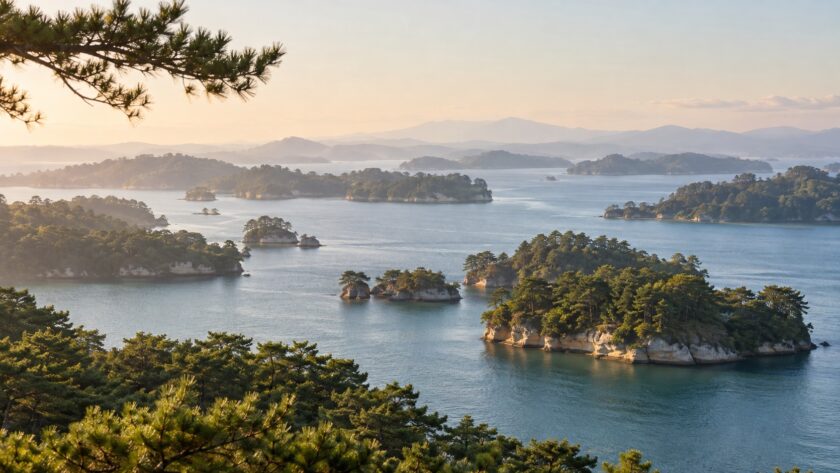
Information checked October 10, 2026. Confirm current opening hours, transport, weather and access restrictions with the official sources linked below. The featured image is an AI-generated, photo-style illustration inspired by Matsushima Bay, not a photograph of a specific viewpoint.
Getting Oriented: Build Your Trip Around Sendai
Sendai is Miyagi’s capital and a useful base for exploring the prefecture. Its main station gives you a clear arrival point, while the surrounding hotels and restaurants make evenings straightforward. A room near the station is especially practical if you plan multiple rail excursions; staying farther into the central shopping district can be pleasant if most of your time will be spent walking around the city. The Japan National Tourism Organization’s Sendai overview introduces the city’s principal areas and specialties.
For a first visit, allow at least three days: one for Sendai, one for Matsushima, and one for an additional interest. Four days makes an overnight hot spring stay easier to enjoy. Five or six days gives you room to explore a more distant coastal or mountain area without returning to the same city hotel every evening. These are suggested planning allowances, not a checklist of mandatory stops.
Think about geography before booking accommodation. Matsushima lies northeast of Sendai, Akiu is to the west, and the Zao area is southwest. Naruko and Kesennuma lead you in different directions again. Pairing nearby places usually produces a better day than combining two famous names simply because both appear in a Miyagi guide.
Getting There and Traveling Without a Car
Sendai is served by the Tohoku Shinkansen, making rail a natural choice when arriving from Tokyo or continuing through northern Japan. Choose a service that fits your itinerary and check reservation requirements before traveling. If you fly into Sendai Airport, the railway links the airport with Sendai Station. The prefecture describes the journey as approximately 25 minutes; allow additional time for baggage and waiting for a train. Consult Miyagi’s airport railway information and the airport’s access guide.
Within Sendai, walking, subway trips and sightseeing buses can cover a varied itinerary. The Loople Sendai connects major visitor sites on a one-way circuit. That direction matters: two stops that seem close on a map may require a long ride if you board the loop expecting it to run both ways. Compare the route with your planned order, and check the final departures before lingering at a late-afternoon stop.
You do not need a rental car for a trip focused on central Sendai and Matsushima. A car becomes more useful when linking rural viewpoints, scattered mountain attractions or several coastal towns. Rent for those particular days if appropriate, rather than automatically paying for parking throughout a city stay. For any rural outing, identify the return connection first and leave a buffer before a reserved long-distance train.
Sendai’s Date Heritage: Castle Views and Zuihoden
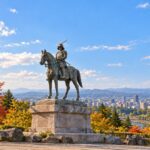
The Date family provides a thread through many of Miyagi’s best-known historic sites. Begin at the Site of Sendai Castle, also called Aoba Castle. Come for the elevated outlook, stone foundations and equestrian statue of Date Masamune. This is a castle site, so do not arrive expecting an intact original keep filled with rooms to explore. The setting is most satisfying when you take time to look across the modern city and consider the position of the former stronghold.
Zuihoden offers a different encounter with the same history. The mausoleum of Masamune stands among trees on Kyogamine, with elaborate ornament and strong colors. The original building dated from 1637; it was destroyed in the 1945 air raids, and the present mausoleum was reconstructed in 1979. Understanding that history helps distinguish the surviving tradition from the age of the structure you see. The site’s official historical introduction explains the mausoleums and their restoration.
Allow for the approach as well as the buildings. Zuihoden’s visitor information describes steep sections and many steps, which can make access difficult for wheelchair users or travelers who cannot manage stairs. Ask about your specific needs before committing to the visit. For a relaxed day, choose these two principal sites, add a long lunch, and leave some time for the city streets instead of trying to stop at every point on the bus circuit.
Make Time for Everyday Sendai
After the historic hills, return to the city for a change of scale. Jozenji-dori’s trees provide an appealing setting for a stroll, while the central shopping arcades are useful when the weather turns wet. You can plan an afternoon around a café, browsing and dinner rather than another ticketed attraction. The tourism office’s Discover SENDAI website is a helpful starting point for current exhibitions, seasonal events and neighborhood ideas.
Resist filling every evening with a separate excursion. One of Sendai’s advantages is having a comfortable urban base after a day outdoors. Use that time to check tomorrow’s transport, choose a restaurant and give your feet a rest. Travelers arriving late can save the main sightseeing for the following morning instead of squeezing an unfamiliar hill route into the last hour of daylight.
Matsushima Bay: Give the Islands a Full Day
Matsushima’s appeal lies in the relationship between sea, islands and the historic town beside them. A sightseeing boat gives you a moving view of the bay, while a walk along the waterfront lets you slow down and notice changing light between the pines. Decide whether you want a cruise returning to Matsushima or a service linking Matsushima and Shiogama; they create different onward journeys. The Matsushima Tourism Association’s visitor FAQ explains these route types. Confirm current departures and operating conditions directly before boarding.
Pay close attention to station names when planning the train journey. Matsushima-Kaigan on the Senseki Line is closer to the central visitor area than Matsushima Station on the Tohoku Main Line. Zuiganji’s own directions give approximately ten minutes on foot from the former and twenty-five from the latter. Either may work with your wider route, but the difference matters when you have luggage or a timed booking. Check the actual train stops rather than assuming every service with a similar destination is interchangeable.
Keep the day’s order flexible. If visibility is good and boats are running, a morning cruise can anchor the itinerary. In poor conditions, spend more time at the temples and reconsider the water later. Leave an unplanned gap for lunch and the shoreline. A full day gives you choices; a very tight connection turns any queue or weather change into a problem.
Zuiganji, Entsuin and the Temple Waterfront
Zuiganji Temple deserves more than a quick photograph of its approach. Rebuilt under Date Masamune and completed in 1609, it preserves important Momoyama-period architecture. The main hall and living quarters are designated National Treasures, and the museum adds context through objects associated with the temple and Date family. Pay attention to the different rooms and decorative details. Follow the site’s directions concerning footwear and photography, and remember that last admission can precede closing time.
Nearby Entsuin offers gardens and a mausoleum associated with Date Mitsumune, Masamune’s grandson. Godaido, beside the waterfront, provides another compact historic stop, reached over distinctive red bridges. Their proximity makes it tempting to hurry between them, but two thoughtful visits are preferable to several rushed entrances. Use the association’s official sightseeing guide to choose according to your interests. Some approaches include stairs and uneven surfaces; proximity on the map does not automatically mean easy access for everyone.
If you stay overnight in Matsushima, choose accommodation for the experience you want. A bay-facing room makes sense if you intend to spend time there; a simpler room may be enough if you will be out from breakfast until dinner. Check how far the property is from your arrival station and whether its dinner requires an early check-in. Do not pay for an included evening meal and then schedule a late arrival that prevents you from enjoying it.
What to Eat: Gyutan, Zunda and Coastal Flavors
Sendai is particularly associated with gyutan, or grilled beef tongue, and zunda, a sweet paste made from green soybeans. Try the former as a substantial meal and the latter with mochi or in a dessert. Sasa-kamaboko, a bamboo-leaf-shaped fish cake, is another useful introduction to the region’s food. The official Sendai tourist guidebook presents these specialties alongside seafood and other local dishes.
Build meals into the route rather than treating them as an afterthought. A leisurely city lunch works well between historic sites, while Matsushima or a fishing town provides a natural opportunity to explore seafood. Ask what is available that day instead of expecting every seasonal item year-round. If you have dietary restrictions, check ingredients with the restaurant: a vegetable-looking dish can contain fish stock, and sweets may include dairy or other ingredients beyond their headline flavor.
Choose an Onsen Extension: Akiu or Naruko
Akiu works well when you want a hot spring stay without redesigning the whole trip around a distant destination. The area west of Sendai combines accommodation with places such as Rairai Gorge and Akiu Otaki waterfall. The waterfall is a separate outing from the central hot spring area, so map it carefully rather than assuming everything is a short walk apart. JNTO’s Akiu guide introduces the landscape, crafts and local rice sweets.
For an overnight stay, ask the inn about transport, dinner time, bath arrangements and any reservation requirements. A shuttle, where offered, may need advance booking. Day bathing has its own hours and can finish well before evening; confirm availability with the property. If privacy, tattoos or mobility affect your choice, obtain a clear answer before booking rather than relying on a general description of Japanese inns.
Naruko is a better choice when the hot spring town itself is a main reason for the journey. Its craft shops and traditional kokeshi dolls give you something to explore between baths. The broader area is also known for mountain scenery and autumn color. See JNTO’s Naruko introduction, then verify current transport and walking access locally. Do not assume an old trail description guarantees that every section is open on your travel date.
Zao and Shiroishi: A Different Southern Route
The Zao mountains offer an alternative extension for travelers drawn to highland scenery. Okama’s crater lake is a notable destination, but access and visibility depend on season and weather. The mountains straddle Miyagi and Yamagata, and attractions advertised under the name Zao may be on different sides. An itinerary for Zao Onsen in Yamagata is not automatically an itinerary from Sendai. Use the official regional overview to understand the area, then check the exact access route and current restrictions.
Keep a lower-elevation alternative available if the upper mountain is inaccessible or hidden by cloud. Shiroishi can provide a historical focus for a southern Miyagi trip. Shiroishi Castle has a wooden tower reconstruction completed in 1995, rather than a surviving original tower. It suits travelers interested in castle construction and a smaller town setting. Choose it because the stop interests you, not simply to add another destination to an already crowded driving day.
Kesennuma and the Coast: Food, Community and Remembrance
For a longer visit, consider spending a night farther along the coast. Kesennuma’s fishing identity and seafood make it a different experience from central Sendai or the temple waterfront of Matsushima. The JNTO coastal Miyagi guide introduces several towns; use it to select one area rather than attempting to see the entire coastline in a day. An overnight stop creates room for an ordinary meal and a less hurried look around.
The Kesennuma City Memorial Museum preserves the former Kesennuma Koyo High School and shares lessons from the 2011 earthquake and tsunami. Give the visit time and attention, and follow staff guidance about appropriate behavior. It is outside the central harbor area, so plan access separately using the museum’s transport information. Storyteller programs require advance arrangements. Consider the emotional content when planning a visit with children or anyone who may find disaster exhibits difficult.
A Flexible Four-Day Miyagi Itinerary
Day one: arrive in Sendai and leave luggage at your accommodation. If you have most of the day, pair the castle site with Zuihoden, taking account of the bus direction and closing times. If arrival is late, explore the central streets and enjoy dinner instead. Start the historic route fresh the next morning and adjust the remaining days accordingly.
Day two: travel to Matsushima-Kaigan for a day of bay scenery and temples. Choose a cruise according to conditions, visit Zuiganji, and add Entsuin or a waterfront walk if energy allows. Return to Sendai for the night, or stay beside the bay if a slower evening is part of your plan.
Day three: travel to Akiu for an onsen stay, leaving time to check in and settle before dinner. Day four: enjoy breakfast and a gentle morning, then return toward Sendai for your onward journey. If you prefer Naruko, use it in place of Akiu and allow for its different connections. Extend to five or six days for Kesennuma or Zao; do not simply stack either onto the departure day.
Where to Spend Your Travel Budget
Decide which part of the visit deserves the largest share of your budget before comparing hotel prices. If a ryokan dinner and a long evening in the baths are priorities, choose fewer paid activities earlier that day. If you prefer exploring restaurants, a city hotel without an included dinner offers more freedom. Compare room plans carefully: similar names can hide differences in meals, bed types and access to private baths.
For transport passes, add up the journeys you actually intend to take and check the coverage boundaries. A pass that works well for several city rides may offer little value on a day spent walking or visiting one destination. Leave a modest reserve for a taxi if a connection is missed, but do not build an itinerary that depends on finding one immediately at a remote stop. Confirm rural transfers in advance with your accommodation when necessary.
Plan for the Season and Leave Room to Explore
Match the trip to the experience you most want. For urban culture and food, Sendai gives you indoor alternatives when conditions change. For gardens, bay views or mountain walks, preserve flexibility in the schedule. Check event dates directly before reserving around a festival, and expect popular periods to require earlier accommodation bookings. Mountain weather and seasonal access deserve a separate check from the forecast for central Sendai.
Pack for walking, bring a layer for breezy waterfronts, and keep a small amount of cash for places with limited payment options. Above all, leave space between the highlights. Miyagi is especially enjoyable when a temple visit can become a long lunch, a bay excursion can include a quiet shoreline pause, and a hot spring stay gives you time to stop moving.