Kanagawa brings several very different journeys within reach of Tokyo. You can spend an evening beside Yokohama’s illuminated harbor, explore the temple neighborhoods of Kamakura, follow the coast toward Enoshima, or slow down at a hot-spring inn in Hakone. Each destination has its own rhythm, and the prefecture becomes more rewarding when you give those differences room to unfold.
This Kanagawa travel guide focuses on practical choices for a first visit: which areas to combine, where to stay, what to eat, and how to travel between the coast and the mountains. A single day works well for one main destination. Four days allow a broader introduction, while an extra day makes space for Enoshima or a quieter excursion.
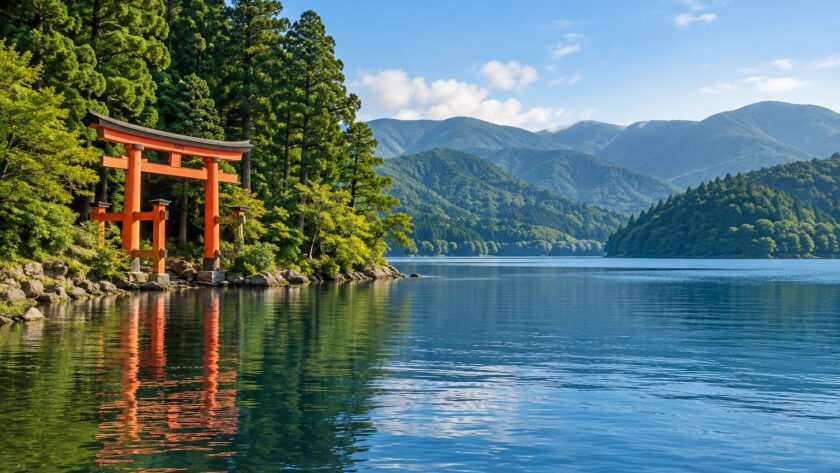
Information checked on October 9, 2026. Consult the linked official websites for current admission arrangements, transport services, and reservations. Featured image: AI-generated scenery inspired by Lake Ashi in Hakone, not an actual photograph or an exact depiction of the location.
Getting Your Bearings in Kanagawa
South of Tokyo, Kanagawa stretches from major urban centers to coastlines and mountainous western districts. Yokohama is its capital, while Kamakura, Enoshima, and Hakone are among its best-known visitor destinations. The Japan National Tourism Organization’s prefecture overview provides a useful introduction to this variety.
Plan around three broad clusters. Yokohama suits waterfront walks, restaurants, and city culture. Kamakura and the Shonan coast combine religious heritage with seaside scenery. Odawara and Hakone work together as a western route, with Odawara providing a convenient gateway before you continue into the hills.
Although these places share a prefecture, they are not one compact sightseeing district. Choose one main area each day. A hotel close to a useful station can save more effort than adding another attraction, particularly when you are traveling with luggage.
When to Visit: Coast and Mountains Need Different Plans
Spring is appealing for garden visits and longer walks, with blossoms followed by fresh greenery. Autumn offers another attractive window for outdoor travel. Flowering and foliage dates vary by location and elevation, so build a trip you will enjoy even if a particular seasonal display arrives early or late.
Hakone’s seasonal conditions deserve separate attention from Yokohama’s. Its official seasonal guide covers flowers and weather, including chilly spring mornings and evenings. Carry a layer when moving from the coast to the hills. In wet conditions, choose footwear suitable for steps and sloping paths, and keep an indoor alternative available.
Summer can favor a coast-focused holiday, but shade, rest breaks, and flexible outdoor plans matter. For winter travel, check mountain transport and local conditions before departure. Regardless of season, treat a view of Mount Fuji as a welcome possibility rather than the single reason for your Hakone trip.
Yokohama: Harbor Walks and a Memorable Evening
Yokohama is an excellent starting point because it offers a full day without complicated transfers. Begin around Minato Mirai, then explore the waterfront toward the Red Brick Warehouse area. The appeal lies in the changing relationship between the buildings and the water: stop for a coffee, browse a few shops, and leave time to look back across the harbor.
Continue toward Osanbashi for a broad waterfront perspective, or head to Yamashita Park for an easier promenade. Nearby Chinatown adds a different atmosphere and plenty of meal choices. Select a restaurant by its menu and the kind of meal you want, rather than trying to sample every busy stall. The official Yokohama attractions guide helps connect these areas.
Stay until evening if possible. Returning to the waterfront after dinner creates a satisfying end to the day without requiring another major attraction. You can shorten the walk with local transport whenever the weather or your energy changes.
A Garden Alternative: Sankeien
For a more contemplative visit, consider Sankeien, a landscaped garden with historic buildings and seasonal planting. Give it a dedicated portion of the day instead of squeezing it into the entire harbor route. Check Sankeien’s official website for access, admission, and building notices; the site offers language translation. Garden visits work best when you have time to sit, notice details, and let the route develop slowly.
Kamakura: Choose a Few Temples and Explore Properly
Kamakura’s appeal comes from the combination of religious sites, wooded surroundings, shopping streets, and proximity to the sea. It once served as Japan’s political center, and its heritage is still central to a visit. Start with the official Kamakura area guide, then choose a manageable group of places rather than collecting temple entrances.
The Great Buddha at Kotoku-in is a strong first choice. The large bronze statue sits outdoors, giving it a different presence from an image seen in a book. Allow time to appreciate the setting and follow the temple’s visitor instructions. Check Kotoku-in’s official information for current visiting arrangements before you set out.
Nearby Hasedera offers another kind of experience, with its temple grounds and gardens. Its official English website provides information for planning a visit. Seasonal flowers can influence which parts of the grounds attract the most visitors; leave spare time rather than scheduling two entrances minutes apart.
For lunch and browsing, return toward central Kamakura and the Komachi-dori area, or stay around Hase if that better suits your route. Finish with a coastal walk if conditions are pleasant. Travelers who enjoy religious art or gardens may find that two carefully chosen sites already make a full and satisfying day.
Enoshima and the Shonan Coast
Enoshima changes the mood from temple neighborhoods to an island outing. Connected to the mainland by a bridge, it offers shrine visits, viewpoints, and places to stop for seafood. The Sea Candle observation lighthouse and Iwaya caves are options to investigate, rather than obligations to fit into one afternoon. The official Enoshima introduction explains the main sights and station choices.
Allow for more walking than the island’s size suggests, including sloping paths and steps. Check access details if anyone in your group needs a route with fewer stairs. The Fujisawa and Enoshima tourism website is a useful planning resource.
You can combine a limited Kamakura visit with Enoshima, but doing both thoroughly usually calls for separate days. If sea views and a relaxed lunch are priorities, reduce the number of temples rather than treating the coast as a hurried final stop. Check beach conditions and local notices before planning activities near the water.
Hakone: Art, Lake Scenery, and Time at an Inn
Hakone rewards an overnight stay because the journey itself takes time. It is a collection of districts connected by mountain transport, not a single village where every attraction is beside the station. The JNTO Hakone guide introduces its hot springs and scenery. Choose accommodation and sightseeing together so the route makes sense.
One worthwhile cultural stop is the Hakone Open-Air Museum, where sculpture is displayed in a landscape setting. Allow enough time to experience the grounds; despite the word museum, much of the visit is outdoors. Carry weather protection and consult its visitor information rather than assuming it is an entirely indoor rainy-day option.
Lake Ashi offers another focus. Around Motohakone and Hakonemachi, you can combine lakeside scenery with historic sites and shrine surroundings. The official district guide helps distinguish these stops. Pick the part of the lake that fits your transport route instead of repeatedly crossing between distant shores.
Many visitors enjoy the mountain railway, cable car, ropeway, and sightseeing cruise as part of a circuit. However, completing every section should not become the purpose of the trip. Check live transport information, follow local access instructions, and keep a simpler alternative for disruption or poor visibility.
Odawara and an Optional Miura Peninsula Detour
Odawara can be more than a transfer point. Its castle grounds offer an accessible introduction to another chapter of the region’s history, and a stop here can break up the journey toward Hakone. Check Odawara Castle’s official website for facilities and current opening information. Keep the visit modest if your accommodation has an early dinner or a specific arrival deadline.
For a separate coastal excursion, consider the Miura Peninsula. Misaki is associated with tuna, making it an appealing destination for travelers who enjoy planning an outing around a meal. The prefecture’s Misaki tuna page introduces the connection. Check your onward local transport before committing to a restaurant reservation, and give the peninsula its own day rather than attaching it to Hakone.
What to Eat and Buy
Let meals reflect where you are. In Yokohama, Chinatown is an opportunity for a proper seated lunch or dinner, as well as smaller snacks. Along the Shonan coast, look for shirasu, the small whitebait often served over rice. The official Fujisawa food guide introduces shirasu bowls and local sweets. Ask what is available that day instead of assuming every preparation will be offered.
A Hakone inn with dinner included can become the centerpiece of an overnight stay. Read the meal plan carefully: a room booking does not automatically include dinner, breakfast, or dietary adjustments. Contact the property before booking if particular ingredients are a concern, and plan your arrival around its stated meal times.
For gifts, favor a purchase connected to an experience: packaged sweets from a town you explored, a small craft item, or something from a museum shop. Check whether food needs refrigeration and whether it can enter your next destination. Reserve some luggage space rather than carrying fragile purchases through a full sightseeing day.
Getting There and Choosing the Right Tickets
From Tokyo and the Airports
Yokohama has rail connections from central Tokyo and access from Haneda and Narita airports. Use the city’s official access guide to compare routes to your actual destination. Yokohama Station and Shin-Yokohama Station are different places; check which one your train uses before choosing a hotel or meeting point.
For Kamakura, JR services provide a straightforward approach from Tokyo or Yokohama, depending on your starting station. The Enoden railway is useful for onward travel toward Hase and Enoshima. Check the operator’s route and timetable, and leave extra time for busy periods rather than building a plan around an immediate connection.
Hakone is commonly approached through Odawara and Hakone-Yumoto. Odakyu’s Romancecar is another option from Shinjuku. Use the official Hakone access guide to compare routes, remembering that reaching the gateway station is only part of the journey to a hillside hotel.
Understand What a Pass Includes
A rechargeable transport IC card is useful on participating services, but its stored balance is not unlimited travel. For a Hakone circuit, compare individual fares with the Hakone Freepass. It covers specified transport within its validity and area; it does not mean every bus or attraction in Hakone is included.
Choose the departure version that matches your journey. The Romancecar requires an additional limited-express charge, and ordinary attraction admission should not be assumed free. Check the current coverage map and terms before buying. If you plan only an inn stay and one nearby visit, a large sightseeing pass may offer less value than it would on a multi-transport route.
Where to Stay and How to Budget Your Time
For this guide’s four-day route, two nights in Yokohama followed by one in Hakone provide a practical starting arrangement. Yokohama keeps the first evening simple and allows a day trip to Kamakura without changing rooms. Travelers who care more about early temple visits could instead spend a night in Kamakura and accept the additional luggage move.
In Hakone, compare Hakone-Yumoto, Gora, and lakeside locations against the places you want to see. The most scenic room may also involve another bus journey. Confirm the final access instructions, luggage arrangements, check-in deadline, and meals directly with the property. Those details can matter more than a small difference in the nightly price.
Build your budget from accommodation, intercity travel, local transport, meals, and admissions separately. A ryokan rate including two meals is not directly comparable with a city hotel’s room-only rate. Decide where you want to spend more, then simplify other choices; waterfront walking and a carefully chosen paid attraction can make an excellent day together.
Make the Route Work for Your Group
Before confirming accommodation, discuss the pace everyone enjoys. A family with young children may prefer one main outing and a dependable lunch break, while travelers interested in art might reserve a longer museum visit. Choose a meeting point when your group splits up, and save the hotel’s address on each person’s phone. A short list of shared priorities is more useful than an ambitious schedule that only one person wants to follow.
For anyone avoiding stairs or long walks, check the exact access route to each entrance rather than relying on the nearest station name. Temple grounds, island paths, and hillside accommodation can involve different terrain within the same outing. Ask the venue about the parts you specifically want to visit. Similarly, check where large luggage can be stored before planning a stop between hotels; available space should never be assumed.
Keep one optional stop clearly marked on each day’s plan. If rain begins, lunch runs late, or someone wants more time at a garden, that is the stop to drop. This small decision made in advance removes pressure from the rest of the day and makes it easier to enjoy the places you actually reach.
A Balanced Four-Day Kanagawa Itinerary
This is a suggested sequence, not a fixed timetable. Check routes for your travel dates and adjust around closures and weather. If you have only one or two days, select the portions that interest you most instead of compressing all four.
Day 1: Yokohama’s Waterfront
Arrive, leave your luggage where permitted, and spend the afternoon around Minato Mirai and the harbor. Continue toward Yamashita Park if you feel like a longer walk. Have dinner in Chinatown or near your hotel, then enjoy the waterfront lights. If gardens are your priority, replace part of the harbor route with Sankeien rather than adding it on top.
Day 2: A Full Kamakura Day
Travel to Kamakura after breakfast, then focus on Kotoku-in and Hasedera around Hase. Take an unhurried lunch before choosing central shopping streets or a beach walk. Return to Yokohama for the evening. If Enoshima matters more to you, choose just one temple and make the island your afternoon focus, accepting a more active day.
Day 3: Odawara and Your Hakone Base
Check out and continue west. Make a short Odawara visit if your luggage and hotel timing allow, then travel into Hakone. Choose one nearby attraction, or simply settle into your accommodation and enjoy the change of pace. An inn dinner is a reason to arrive with time to spare, not an appointment to race toward after sightseeing.
Day 4: One Coherent Hakone Route
Choose a lake-focused outing or a mountain transport circuit according to the weather, service status, and your starting point. Keep your onward train or flight in mind and leave a buffer for returning to Odawara. A fifth day works well for Enoshima, another museum, or a slower second day in Hakone. Do not sacrifice an important departure to complete a sightseeing loop.
Temple, Coastal, and Onsen Etiquette
At temples and shrines, follow photography notices, keep voices low around worshippers, and leave entrances and paths clear. Along the coast, respect residential streets as well as sightseeing areas. Take photos from safe public spaces, and never step onto railway tracks or obstruct crossings for a familiar camera angle.
Before using a hot spring, read the property’s bathing instructions. Rules concerning tattoos, children, and private baths vary by establishment, so confirm anything important in advance. The official Hakone onsen guide is a starting point for exploring options. Choosing a suitable facility ahead of time makes the experience more comfortable for everyone.
Kanagawa works especially well as a contrast to the capital. If you are combining both destinations, use our Tokyo travel guide to organize the city portion, then give Kanagawa its own pace. A harbor evening, a thoughtful temple visit, and time beside the water or in the mountains can make a short regional journey feel remarkably varied.