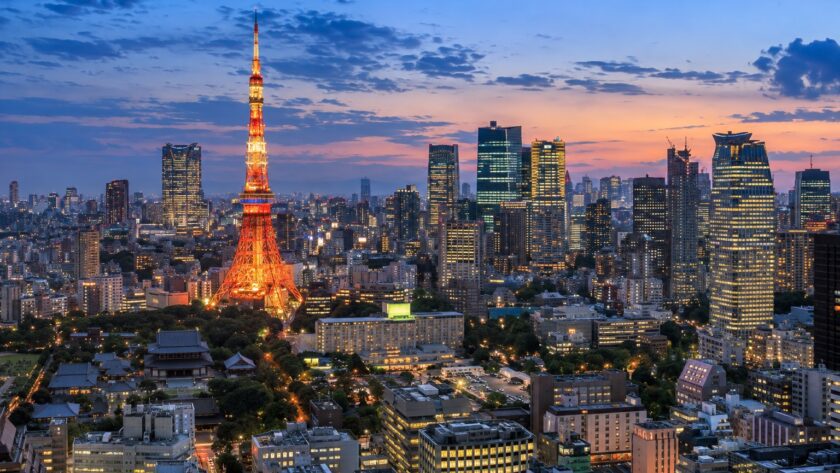
Tokyo rewards curiosity. A morning can begin beneath a temple gate, continue with a bowl of noodles at a small counter, and end above a skyline that seems to stretch beyond the horizon. Yet the most satisfying visits also leave room for ordinary discoveries: a neighborhood bakery, a quiet shopping street, or a garden bench between busy sightseeing stops.
This Tokyo travel guide is designed for a first visit, with practical advice on neighborhoods, food, transport, accommodation, and a manageable three-day itinerary. Think of those three days as an introduction. If your schedule allows, five or more days create space for museums, shopping, and an excursion beyond the central districts without constantly watching the clock.
Information checked on October 9, 2026. Check the linked official websites for current opening arrangements, transport services, and reservations. Featured image: AI-generated illustration of Tokyo’s skyline; it is not an actual photograph.
Understanding Tokyo Before You Arrive
Tokyo is one of Japan’s 47 prefectural-level jurisdictions, officially organized as a metropolis. Its territory extends beyond the familiar central skyline to the western Tama area and the Izu and Ogasawara islands. A city sightseeing trip covers only part of this much larger destination. The official GO TOKYO guide separates these areas to help travelers plan.
For a first visit, divide your map into a few clusters. Eastern Tokyo includes Asakusa and the Sumida River. Ueno lies to the north of the central business districts. Shinjuku, Harajuku, and Shibuya form a useful western sightseeing group, while Tokyo Station, Marunouchi, and Ginza work well together in the center.
Choose one main cluster each day and add a nearby stop only if you have energy. This approach leaves time for meals and exploration, and avoids repeatedly crossing the city. Save your hotel entrance and its closest station exit in your map application before arrival.
When to Visit Tokyo
Spring and autumn are appealing for a walking-focused trip. Spring brings changing blossoms and fresh greenery, but flowering dates vary each year. Book for a season you will enjoy even if your visit misses peak cherry blossom conditions.
Early summer often brings rain, followed by hotter, more humid weather. Plan outdoor sightseeing early or late in the day, with a museum or a relaxed indoor lunch in between. Typhoons can affect transport, particularly from late summer into autumn, so leave flexibility around flights and excursions.
Autumn gradually becomes more comfortable, while winter calls for warm layers and shorter outdoor afternoons. Mountain areas in western Tokyo can feel different from the city center. Use the official weather and geography guide to choose clothing, then check the forecast immediately before your trip.
The Best Places to Explore on a First Visit
Asakusa: Temple Streets and Riverside Views
Asakusa offers a memorable introduction to Tokyo’s traditional side. Walk through Kaminarimon toward Sensoji Temple, with Nakamise’s shops along the approach. The area combines religious life with a lively commercial neighborhood, so give it more attention than a quick photograph at the lantern.
An earlier visit can suit travelers seeking a quieter temple approach, although individual shops may open later. Continue toward the Sumida River for a change of pace. If kitchenware interests you, consider nearby Kappabashi rather than adding another distant landmark. Allow roughly half a day for a relaxed visit with lunch; this is a planning suggestion, not a fixed sightseeing duration. See GO TOKYO’s Asakusa guide for local highlights and access.
Ueno: Art and a Slower Afternoon
Ueno is a good choice when you want a substantial cultural stop. The Tokyo National Museum provides an introduction to Japanese art and archaeology through its collections. Choose a few galleries that interest you instead of trying to inspect every display, and allow time to walk through the surrounding park afterward.
Check the museum’s official visitor information before arranging your itinerary: regular closures, holiday exceptions, special exhibitions, and temporary gallery closures can affect a visit. The museum also lists accessibility information. Avoid placing a museum visit in the final hour before closing, particularly if art is a main reason for your trip.
Meiji Jingu and Harajuku: A Change of Rhythm
Meiji Jingu offers a wooded approach and a quieter setting close to Harajuku’s shopping streets. Start with the shrine, then choose whether to continue toward fashion shops or the architecture and cafes around Omotesando. The pleasure is in the transition between places, rather than a long checklist.
The shrine’s opening hours change by month, so it belongs in the daytime part of your itinerary. Entry to the main shrine grounds is free, while some facilities charge separately. Follow posted photography rules; the shrine asks visitors not to photograph the main prayer area. Its visitor Q&A explains these details.
Shibuya: The Crossing and Contemporary Tokyo
Shibuya’s famous crossing is an introduction to the district, not its entire appeal. Beyond it are fashion stores, music, restaurants, and places to browse contemporary Japanese design. Give yourself an unstructured hour to follow your interests instead of rushing back to the station.
For an elevated view, consider SHIBUYA SKY and check ticket availability before fixing the rest of your day. Alternatively, enjoy the neighborhood at street level and spend your attraction budget elsewhere. The official Shibuya guide outlines the main shopping and cultural areas. Take crossing photographs from a safe position without blocking people trying to get across.
Shinjuku: Gardens, City Views, and Dinner
Shinjuku works well as an afternoon-to-evening destination. Choose Shinjuku Gyoen for gardens or the Tokyo Metropolitan Government Building’s observation facilities for a different perspective on the city. Check opening arrangements for whichever you choose, and remember that Shinjuku Gyoen prohibits alcohol.
Later, explore restaurant streets at your own pace. Before entering a small bar, check the menu and any seating charge. Shinjuku Station has numerous exits, so identify the side you need before leaving the platform area. The official neighborhood guide helps distinguish the district’s garden, entertainment, and skyscraper areas.
Ginza, Marunouchi, and Tsukiji: Food and Urban Details
These central districts suit a day built around walking, browsing, and eating. Ginza offers department stores, galleries, and distinctive architecture. You do not need a luxury shopping budget to enjoy it: choose a few buildings or shops that interest you and make time for their surrounding streets. Consult the Ginza area guide for ideas.
Marunouchi provides another perspective, with broad streets around Tokyo Station’s red-brick facade. The Tokyo Station and Marunouchi guide is useful for planning a walk. For a food-focused morning, visit Tsukiji Outer Market. Check the market’s official calendar and shop information, since businesses keep individual schedules. Keep entrances clear and follow each shop’s instructions about where to eat purchases.
What to Eat and Bring Home
Make room for foods associated with Tokyo as well as your personal Japanese favorites. Edomae-style sushi connects the city with its food traditions; soba makes a satisfying noodle meal; and monjayaki offers a different experience around a hot griddle. Tsukishima is particularly associated with monjayaki restaurants. If the cooking method is unfamiliar, ask the staff for help.
For something less familiar, look for Fukagawa-meshi, a clam-and-rice specialty. Small sweets such as ningyo-yaki also make enjoyable snacks or gifts. The official local food guide introduces these dishes and their backgrounds.
Balance reservations with flexibility. Book a restaurant if it is essential to your trip, then leave other meals open so you can eat near the area you are exploring. Tell restaurants about dietary restrictions clearly before ordering, rather than assuming an unfamiliar dish will suit you.
For souvenirs, choose things you will actually use: stationery, a small ceramic piece, a kitchen tool, or packaged sweets. Check food expiry dates and your destination’s import rules before buying edible gifts. A compact purchase from a memorable neighborhood often means more than another rushed shopping stop.
Getting to Tokyo and Traveling Around
From Haneda or Narita Airport
Plan the airport journey around your accommodation’s actual location. Haneda has both Keikyu railway and Tokyo Monorail connections. Compare the transfers required for your hotel using the airport’s official train and monorail guide. Include baggage collection, station walking, and the final journey from the station when estimating arrival time.
From Narita, JR’s Narita Express serves major destinations including Tokyo, Shibuya, and Shinjuku, while Keisei services offer useful connections toward Nippori and Ueno. Train types have different ticket requirements, so confirm your chosen service rather than boarding solely by destination name. The official Narita rail guide links to operators. For a late arrival, check the last usable connection before departure.
IC Cards, Subway Tickets, and Route Planning
A rechargeable transport IC card such as PASMO simplifies eligible journeys: you use stored value instead of buying a separate paper ticket each time. It is not an unlimited travel pass. Check the operator’s PASMO guidance for current arrangements and how to use the card.
The Tokyo Subway Ticket is a different product, covering Tokyo Metro and Toei Subway services for its stated validity period. It does not cover JR trains, including the Yamanote Line. Compare the pass with your intended journeys instead of assuming every Tokyo train is included.
Check routes shortly before traveling and follow both the line name and destination. Keep a little spare time for large stations and unfamiliar exits. For most central sightseeing, walking and public transport make a practical combination; a rental car would add parking and navigation decisions without helping the itinerary below.
Where to Stay in Tokyo
The best base depends on how you want to spend your evenings and where you travel next. These are planning recommendations rather than hotel rankings:
- Shinjuku: Consider it for dining choices and a trip weighted toward western Tokyo. Check the exact hotel location and station exit.
- Shibuya: A useful option when fashion, contemporary culture, and evenings in the neighborhood are priorities.
- Ueno or Asakusa: Consider these for an eastern Tokyo itinerary built around museums, temple streets, and riverside walks.
- Tokyo Station or nearby Marunouchi: Worth considering when onward rail travel is an important part of your plans.
The official sightseeing overview also discusses accommodation areas. Before booking, compare room dimensions, cancellation terms, luggage storage, and the real walk from the station. A convenient smaller station can be a better fit than a famous interchange followed by a long walk.
A Practical Three-Day Tokyo Itinerary
This suggested route groups nearby attractions and leaves deliberate space for meals. It is not a timed tour or a promise of transport duration. Swap days to match closures, weather, and reservations, and use a live route planner between stops.
Day 1: Asakusa and Ueno
Spend the morning at Sensoji and the surrounding Asakusa streets, then have lunch before moving on. Choose Ueno for an afternoon museum visit, allowing roughly 20–40 minutes for the overall transfer and walking, depending on your exact starting point and destination. This is a planning allowance, not a train timetable.
If you would rather stay outdoors, remain around the Sumida River instead of forcing in a museum. Keep dinner close to your final stop or hotel. On an arrival day, cut this plan in half and protect time for rest.
Day 2: Meiji Jingu, Harajuku, and Shibuya
Start with Meiji Jingu while the grounds are open, then have lunch around Harajuku or Omotesando. Continue toward Shibuya by train or on foot, depending on weather and energy. Allow at least half an hour for an unhurried walk between the broader areas, with extra time for browsing.
Keep the late afternoon and evening in Shibuya. If you reserve an observation deck, let that booking set your pace. Avoid adding Shinjuku simply to complete a list; another cross-city move can turn a pleasant evening into a transport exercise.
Day 3: Central Tokyo, with an Optional Shinjuku Evening
Begin with a food-focused visit to Tsukiji, subject to shop schedules. Continue to Ginza, then explore Marunouchi and Tokyo Station. Leave a generous lunch break and choose a few places to enter rather than walking continuously all day.
If energy remains, travel to Shinjuku for dinner and an evening stroll. Allow roughly 30–45 minutes for the overall transfer and station navigation from central Tokyo, then confirm your actual route. Otherwise, stay in the center. For a garden-focused day, replace the central route with a daytime Shinjuku visit instead.
Beyond the Center: Tama and Tokyo’s Islands
With extra time, explore another side of the metropolis. Kichijoji combines shopping streets with nearby Inokashira Park. It suits a slower day built around a walk, browsing, and a long lunch rather than another major attraction.
Mount Takao, reached via Takaosanguchi Station, offers mountain paths and cable-car access partway up. Choose a route that matches your fitness and check conditions before setting out. Farther into western Tokyo, Okutama provides a setting for a dedicated nature day; give transport and daylight more attention than you would in central districts.
The Izu and Ogasawara islands require separate planning. Access depends on the island, weather, and transport schedules. Treat an island stay as an extension with its own accommodation and return-travel buffer, rather than casually adding it to a packed city itinerary.
Small Habits That Make the Trip Easier
Keep conversations quiet on public transport and avoid phone calls in train carriages. Follow queues, leave space for passengers getting off, and keep luggage close to you. Ask before taking close photographs of people, and follow local signs at shrines, temples, shops, and museums.
Carry a small bag for your rubbish and use the correct disposal facilities. For more local guidance, consult GO TOKYO’s visitor etiquette advice. Save essential addresses offline and carry a payment backup so a flat phone battery does not interrupt your day.
Finally, leave room in your schedule for one unexpected discovery each day. A good Tokyo trip balances a few planned experiences with the freedom to stop somewhere that catches your attention. Choose the neighborhoods that match your interests, travel between them thoughtfully, and let the smaller moments become part of the journey.