Wakayama brings together landscapes that feel remarkably different: the high temple settlement of Koyasan, wooded pilgrimage paths in Kumano, white sand at Shirahama, and a long coast shaped by waves and weather. It is a rewarding extension to an Osaka or Kyoto trip, but it deserves more than a hurried circuit. Distances, mountain roads, and connecting buses matter as much as the sights themselves.
The best approach is to choose the kind of journey you want. Spend a night at a temple, organize several days around a manageable Kumano Kodo walk, or follow the coast through fishing towns and hot springs. This guide explains the main areas and offers routes that leave time to appreciate them, with official links for checking the details before departure.
Plan by region, not by a list of famous sights
Wakayama occupies much of the western and southern Kii Peninsula. Wakayama city makes a useful northern introduction, Koyasan sits inland at elevation, and Kumano’s shrines and walking routes extend across the southern mountains and coast. The Japan National Tourism Organization’s prefecture overview is a helpful first orientation. A journey that looks compact on a national map can involve substantial travel once you enter the peninsula.
For two nights, concentrate on one area. For four or five nights, combine neighboring areas and allow a proper transfer day. Koyasan and Kumano share a spiritual association, but that does not make them effortless next-door destinations. Avoid booking every hotel before testing the transport between them. A particularly attractive room is less useful if reaching it forces you to abandon the afternoon you wanted to enjoy.
Railways, buses, and the last part of the journey
The JR coastal railway connects major towns, with limited express Kuroshio services useful for longer journeys from the Osaka direction. Use JR-West’s official travel information for current services and ticket conditions. Be precise about station names: JR Wakayama and Wakayamashi are different stations, just as a seaside town’s railway station may be some distance from its beach or accommodation.
Kumano’s inland destinations rely heavily on buses. The Tanabe City Kumano Tourism Bureau’s bus information organizes the relevant timetables by route. Check the date, direction, operating days, and exact stop for each connection. Save the timetable before leaving reliable internet access. Build your day around the last practical service, while keeping an earlier departure as your preferred plan rather than your emergency fallback.
A rental car can help with dispersed coastal stops, but it does not solve every itinerary problem. Some walks finish far from their starting point, and mountain driving requires time and concentration. Decide how you will recover the vehicle before committing to a one-way hike. If you prefer public transport, reduce the number of overnight bases and choose accommodation whose access instructions match the bus you intend to use.
Wakayama city: a relaxed introduction
Wakayama Castle provides a strong starting point, with stone walls, elevated views, and grounds that reward an unhurried walk. The official castle guide explains its connection with the Kishu Tokugawa family and the rebuilding of the present keep in 1958. Understanding that history adds more to a visit than treating the tower as an unchanged survival from the sixteenth century.
Pair the castle with lunch rather than trying to rush immediately to a distant mountain destination. Wakayama ramen makes an accessible introduction to local food, and an overnight stay can ease the transition from a long arrival journey. If your main purpose is Kumano, the city is optional; it is better to leave it for another trip than to turn a useful stop into an exhausting detour.
Koyasan: enter a working religious landscape
Koyasan is a center of Shingon Buddhism associated with Kobo Daishi, also known as Kukai. Kongobuji, the Danjo Garan temple area, and Okunoin offer different perspectives on its religious life. Start with Kongobuji’s official English website to understand the main sites and current visitor arrangements. These are places of worship and remembrance, so leave space for quiet observation and follow each area’s photography instructions.
Approaching by Nankai railway commonly involves the cable car from Gokurakubashi to Koyasan Station and then a bus into the settlement. Nankai’s Koyasan Station information makes that final connection clear. Do not treat arrival at the station as arrival at your temple. Confirm the correct bus stop and check current road or service notices, especially when your lodging has a fixed dinner time.
Give Koyasan at least a substantial day, preferably an overnight if temple lodging interests you. Separate its main areas with a meal or a warm drink instead of walking continuously until every building merges into the next. Elevation changes the conditions: pack layers even when the coast feels mild. A calm morning after staying overnight can be more valuable than adding another attraction to the previous afternoon.
How to choose a temple stay
Shukubo accommodation offers the chance to experience the rhythms of a temple stay, but facilities and participation opportunities vary. The official Koyasan Shukubo Association booking website is a useful starting point. Compare room type, shared or private facilities, included meals, check-in deadlines, and cancellation terms. A listing’s religious activities should be read as specific offerings, not as a promise that every temple provides the same program.
Ask about dietary requirements before reserving, particularly when meals are a central part of the stay. Follow the temple’s schedule and guidance for services, bathing, footwear, and quiet hours. Arrive with enough time to settle in rather than making the evening meal your first anxious deadline. If you want a night walk or guided experience, confirm its timing against the accommodation’s own rules.
Kumano Kodo: choose an actual walking section
The Kumano Kodo is a network of pilgrimage routes, not a single trail with one universal starting point. The official Nakahechi route overview describes both consecutive walking days and shorter experiences. Begin by choosing a named section, then examine its elevation, surface, access, and accommodation. A few kilometers of steep, uneven ground can demand more effort than a much longer urban walk.
For a first taste, the tourism bureau’s suggested walks include Hosshinmon-oji to Kumano Hongu Taisha, approximately seven kilometers with an indicative walking time of two to three hours. Add time for rests, photographs, and the shrine visit, and assess whether the terrain suits your group. A shorter itinerary is a legitimate pilgrimage experience; there is no need to choose a demanding crossing to justify coming.
Longer sections require a different commitment. Reserve overnight stops before fixing your walking schedule, arrange luggage services if needed, and know where food and water will come from. Use the official route maps and elevation charts rather than a general navigation app alone. Save an offline copy and carry enough battery capacity for the day. A route line on a screen is not a substitute for assessing conditions.
Trail conditions are part of the itinerary
Check the official Kumano Kodo safety and closure notices shortly before travel and again locally before setting out. At the October 2026 research check, the bureau listed a closure on an Ohechi section between Wabuka and Tako and a detour on the Kohechi route. Those notices do not close the whole network, but they show why a broad claim that every route is open would be misleading.
Plan to finish well before darkness, carry rain protection and suitable footwear, and adjust the route when weather changes. Wet stone steps and exposed coastlines deserve particular care. Tell your accommodation your intended walking plan and ask about current local conditions. If transport disruption or heavy rain makes the day impractical, use the time for a nearby visit or rest rather than forcing the original plan.
Hongu and the surrounding hot springs
Kumano Hongu Taisha is one of Kumano’s three grand shrines. Its present hillside setting and Oyunohara, the former shrine site marked by a large torii, form complementary visits. The official Hongu Taisha guide explains the relocation after the flood of 1889. Allow time for both places, with a meal or a pause between them, rather than treating the torii as a quick roadside photograph.
Nearby Yunomine Onsen offers small inns and a hot-spring setting closely connected with pilgrimage. The official Yunomine information distinguishes its public baths, Tsuboyu, and lodging options. Different baths have different procedures, and some do not permit soap or shampoo. Read the specific instructions rather than applying one bathing routine everywhere. Book meals or settle a food plan in advance because this is a small settlement.
A hot-spring stay works best when it has time of its own. Arriving late, bathing hurriedly, and leaving before breakfast wastes much of its appeal. Consider two nights in the Hongu area if your trip includes a walk and you want flexibility for weather. Confirm bath access, tattoo policies, and any private-use arrangements directly with the property before reserving if those details affect your choice.
Nachisan and Katsuura: waterfall, worship, and the sea
Nachisan combines Kumano Nachi Taisha, Seiganto-ji Temple, and views of Nachi Falls in a dramatic wooded setting. The official Nachisan guide explains access from Kii-Katsuura and Nachi stations. Daimon-zaka offers a historic stone-step approach, but it is still an uphill walk. Choose the starting bus stop according to your mobility and available time, and leave room to enjoy the shrine-temple complex after the climb.
Kii-Katsuura makes a useful coastal base, with accommodation, seafood, and connections to Nachisan. The tourism bureau’s Katsuura guide introduces its fishing-port and hot-spring character. Tuna is a natural food focus here, but ask about the day’s offerings rather than expecting a particular cut or auction experience. Day-use bathing at a hotel should be checked with that property, including its current entry hours.
Traveling from Hongu to Nachisan takes planning. The official connection guide describes journeys via Shingu and the coast, with transfers rather than one simple direct ride. An overnight in Katsuura can make the visit easier than trying to combine a long morning walk, several bus connections, and every Nachisan sight on the same afternoon. Keep the transfer day deliberately lighter.
Shirahama: give the coast a different pace
Shirarahama Beach is a broad curve of pale sand and one of the prefecture’s most recognizable coastal settings. It works as a gentle walking stop even when swimming is not part of your plans. Check seasonal swimming arrangements and the day’s sea conditions before entering the water. Choose accommodation by its actual location and beach access, not simply the presence of Shirahama in its name.
For a more varied coastal day, consider Senjojiki’s rock scenery, Sandanbeki, or the outlook toward Engetsuto. The JNTO Shirahama guide introduces these options alongside the area’s hot springs. Pick two that fit your transport rather than racing through all of them. Respect barriers and stay clear of wave-washed rock edges; a calm-looking photograph cannot tell you whether a coastal viewpoint is safe today.
Kushimoto and Yuasa: two rewarding additions
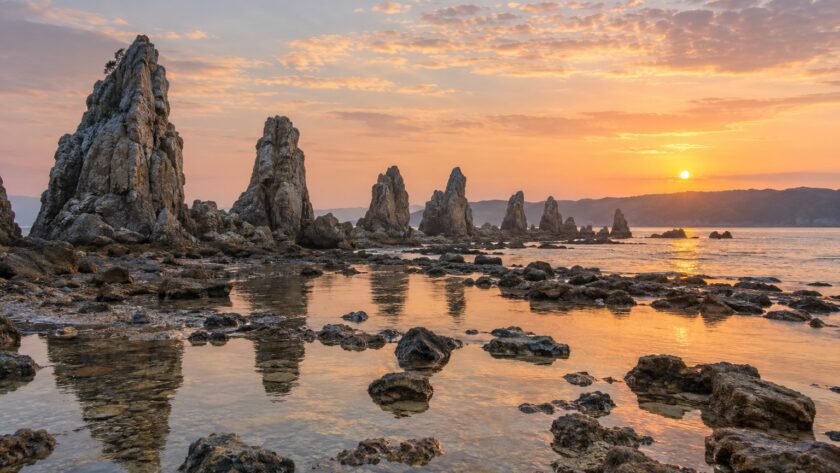
Farther along the southern coast, Hashigui-iwa near Kushimoto presents a striking line of jagged rock formations extending into the sea. It is especially associated with sunrise views, but that does not require everyone to make a predawn journey. Visit when transport, weather, and your overnight location work together. Observe the shore from permitted areas and avoid planning a crossing over rocks based only on the apparent tide.
Yuasa offers a different attraction: a townscape associated with soy-sauce production. The official Yuasa Soy Sauce listing introduces a brewery visit, while current tour arrangements should be confirmed with the operator. Make room to walk the surrounding streets and notice their scale. If buying bottles as gifts, ask about packing and storage so that an enjoyable tasting does not become a leaking souvenir in your luggage.
Choose a route that fits your available days
If your dream trip includes both Koyasan and Kumano, make the connection a separate planning step. Check whether any advertised cross-peninsula bus operates on your dates, requires advance booking, and accepts your intended boarding point. Otherwise, work out a railway and bus alternative before committing to nonrefundable rooms. Sharing a prefecture does not guarantee frequent transport between two places, especially across a mountainous interior.
Luggage deserves the same attention as passengers. A large suitcase is inconvenient on a stone staircase and can complicate rural bus travel. Ask your accommodation or a luggage-service operator about eligible routes, collection deadlines, delivery dates, and what must stay with you. Keep medication, rainwear, a change of essentials, and travel documents in your day bag rather than assuming forwarded luggage will arrive before you do.
For travelers with limited mobility, assess each experience separately. A bus arriving close to a shrine does not necessarily eliminate steps inside the grounds, and a property advertised as a hot-spring hotel may have stairs between rooms and baths. Contact the site or lodging with your specific requirements. A coastal stay with carefully chosen viewpoints may be a better fit than an itinerary built around uneven pilgrimage paths.
For a short spiritual escape, spend the first day traveling to Koyasan and visiting one main area before checking into temple lodging. Use the second morning for another site, then return toward Osaka with time for connections. Add Wakayama city only if your transport and an extra night make it sensible. This compact trip gives Koyasan its own identity instead of treating it as a hurried stop before Kumano.
For a four-night Kumano journey, start with a night in Tanabe, then travel inland for two nights around Hongu. Use one day for a suitable walking section and another for the shrine, Oyunohara, and a relaxed hot-spring stay. Transfer to Katsuura for the fourth night, leaving Nachisan for a well-paced visit before your onward journey. Reverse or extend this outline according to confirmed connections and accommodation availability.
For a coastal alternative, combine Wakayama city or Yuasa with two nights in Shirahama, then continue toward Kushimoto if you have additional time. This suits travelers who prefer viewpoints, food, and bathing to sustained hiking. You do not need to include every sacred site for the trip to feel complete. An extra day by the sea can be more rewarding than a complicated excursion undertaken only for a checklist.
Meals, seasons, and useful final checks
Let meals reflect the area: ramen in Wakayama city, temple cuisine during a shukubo stay, seafood along the coast, and locally made condiments in Yuasa. Rural walking days need more advance thought. The tourism bureau’s food guidance for stays without meals helps identify the planning problem. Check breakfast, packed-lunch, and dinner arrangements explicitly, especially when the next shop is not within a comfortable walk.
Pack for both your activities and your destinations. Mountain mornings, humid walking days, wet paths, and windy shorelines can require different clothing on the same trip. Check the forecast for the actual place you will sleep or walk, and allow a flexible day if a long hike is central to the journey. Seasonal scenery is a bonus, not a reliable appointment that can be guaranteed by a fixed date.
Before finalizing reservations, write down each overnight stop, the transport that reaches it, and the latest arrival accepted by the accommodation. Then test the plan with slower walking, a missed connection, or bad weather. Remove the least important stop if the schedule has no margin. Wakayama’s strongest experiences often come from staying long enough to notice a place’s rhythm, whether that is a temple morning, a forest path, or waves along a quiet shore.
Editorial note: Official information was checked on October 10, 2026. Transport, trail access, opening hours, bathing rules, and booking conditions can change; consult the linked sources before traveling. The featured image is an AI-generated, photorealistic illustration inspired by the Hashigui-iwa coast near Kushimoto, not a documentary photograph of an exact location.