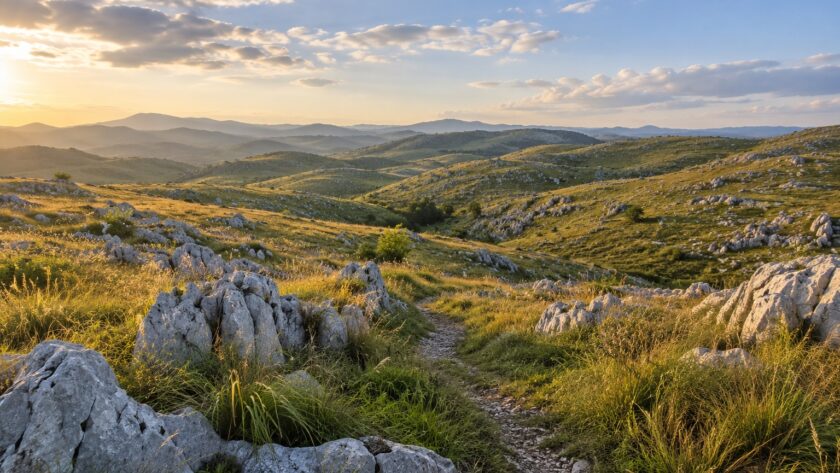
Yamaguchi occupies the western end of Honshu, where journeys can turn north toward historic coastal towns or continue across the strait into Kyushu. Its appeal is unusually varied: a wooden bridge rising in elegant curves, limestone grasslands above enormous caverns, pottery shops in an old castle town, and a working waterfront where lunch comes from the sea. The distances between these experiences deserve as much attention as the attractions themselves.
For a first visit, choose a few connected areas rather than drawing a line through every famous photograph. Four or five days allow a rewarding combination of Yamaguchi city, Akiyoshidai, Hagi, and Shimonoseki. Iwakuni makes a natural eastern stop, particularly when arriving from Hiroshima. The northern coastal viewpoints work best as an optional extension, with transport arranged and current access restrictions checked before departure.
Plan Your Route Before Choosing a Hotel
The useful distinction is between the southern rail corridor and the northern destinations reached by slower local connections. Shin-Yamaguchi is a practical transfer point for central Yamaguchi and Hagi, but it is not the same station as Yamaguchi. Likewise, Iwakuni and Shin-Iwakuni, or Shimonoseki and Shin-Shimonoseki, should not be treated as interchangeable names when booking accommodation or planning the last connection of the day.
The Hagi tourism association’s access guide explains the approach from Shin-Yamaguchi by bus and identifies Higashi-Hagi as the town’s main railway station. Check the actual bus destination and stop nearest your hotel: Hagi Bus Center may suit some stays better than the station. Airport arrivals also require onward planning, particularly if you want a reserved transfer instead of several local connections.
A car is useful for the northern coast and for linking rural stops, but you do not need one for every day. Consider collecting it only for the portion that benefits from it. Compare rental return locations, opening times, and parking arrangements before committing. Travelers staying with public transport can have a full trip by concentrating on towns and the cave area, leaving remote viewpoints for another visit.
For accommodation, Yuda Onsen offers a bathing-focused base for the central area, Hagi rewards an overnight stay, and Shimonoseki suits waterfront exploration and onward travel toward Kyushu. Changing hotels once or twice can save repeated cross-prefecture transfers. However, moving every night creates its own work: packing, storage, check-in deadlines, and finding dinner. Build the route around the experiences you most want to enjoy slowly.
Iwakuni and the Curves of Kintaikyo Bridge
Kintaikyo Bridge crosses the Nishiki River in a distinctive sequence of five wooden spans. Its form is immediately striking, but a visit becomes more interesting when you notice the structure beneath the deck and the relationship between the bridge, river, and wooded surroundings. The present bridge is a reconstruction within a continuing tradition of maintenance and rebuilding, rather than untouched timber surviving from its earliest history.
Allow time to see it from the riverbank as well as crossing it. The curved deck involves steps, so it is not a smooth, level pedestrian crossing. Wear shoes with good grip, especially after rain, and ask locally about suitable viewpoints if steps are difficult. A photograph from the bank can be just as rewarding as walking over the bridge; there is no need to force an uncomfortable route.
The prefecture’s eastern Yamaguchi itinerary introduces the surrounding district and Honke Matsugane, a restored building offering local tourism information. Use the bridge area as the center of a relaxed half day, with room for a meal and nearby streets. If adding the castle or ropeway, check their current operation separately and include the extra walking instead of assuming everything sits directly beside the bus stop.
Yamaguchi City and the Restored Rurikoji Pagoda
Yamaguchi city provides a different rhythm from the dramatic coast. Its temples, gardens, and streets reward a day with a few chosen stops and a long lunch. The best-known landmark is the five-storied pagoda at Rurikoji, set against a wooded backdrop in Kozan Park. The city’s English visitor information provides its location and historical context, although some English restoration notices are older than the latest Japanese updates.
For the current position, the city’s April 2026 completion report confirms that the major restoration has finished and the pagoda can be admired again. This matters if an older guide tells you it is still hidden by scaffolding. The work included renewal of the cypress-bark roofing. View the building respectfully from the grounds, and confirm any special interior-viewing arrangements separately rather than assuming ordinary access includes entry.
A useful city day leaves space between major sights. Pause for coffee, explore a small stretch of the center, or choose another temple according to your interests instead of trying to reproduce a full brochure itinerary. Check walking distances against the weather and your party’s mobility. A place that looks nearby on a regional map can still involve enough walking to make a taxi worthwhile.
Yuda Onsen: Make Time for the Stay
Yuda Onsen is associated with a white-fox legend, reflected in the fox figures around the district. It combines hot-spring accommodation with streets you can explore on foot and footbaths that invite a short pause. A small towel is useful if you want to try a footbath during a walk. Check the posted hours and follow the instructions at each facility.
For an overnight visit, decide whether dinner is part of the experience you want. A ryokan meal plan can shape your arrival time, while a room-only stay gives more flexibility but requires a separate dinner plan. Ask about bath access, private bathing options, and any facility-specific rules before booking. Arriving late after a long coastal drive can leave surprisingly little time to enjoy the accommodation you selected.
Inoue Park offers another easy pause within the district; the city’s park guide explains its connection with statesman Inoue Kaoru. You can combine a modest historical walk with a soak without turning the evening into another demanding sightseeing session. If your main purpose is rest, protect an afternoon at the hotel instead of using every available hour for transfers.
Akiyoshido Cave: Plan the Entrances, Not Just the Ticket
Akiyoshido reveals a different side of the limestone landscape: large underground spaces, stalagmites, and rimstone formations resembling stepped terraces. The visitor route is an encounter with geological time rather than a collection of objects to hurry past. Take a light layer if you tend to feel cold, wear reliable footwear, and keep your attention on the path when stopping to look at formations.
The cave has several entrances, including an elevator connection toward the plateau. That creates useful route options but also makes it important to understand where you will finish. Study the official map before entering and ask which route suits your return bus or parking location. The published visitor guidance suggests allowing at least an hour for the cave round trip; add more for photographs, slower walking, and the approach.
Accessibility is route-specific. Consult the linked wheelchair-access information or speak with staff rather than assuming the elevator makes the entire cave equally accessible. Stay on the established route and follow any temporary restrictions. A cave visit can be attractive in wet weather, but severe conditions may still affect access and transport. Confirm the situation on the day rather than treating an indoor landscape as weatherproof.
Akiyoshidai: Open Grassland Above the Caverns
Above the cave, Akiyoshidai Plateau spreads into rolling grassland punctuated by pale limestone. The rocks originated in an ancient marine environment, while the open grassland people see today also reflects continued local management. The Mine Akiyoshidai Geopark Center Karstar offers a starting point for understanding the landscape. Even a short, deliberate walk can reveal how different this place feels from Japan’s wooded mountain scenery.
Choose your walk after considering wind, visibility, temperature, and the time available. The open ground offers less shelter than a forest path, so carry water and protection from sun or rain. Keep to marked routes and leave the limestone and plants undisturbed. A viewpoint visit is a valid option for anyone who does not want a longer walk; you do not need to cover a large distance to appreciate the scale.
Combining the cave and plateau works well when you plan the connection in advance. Ask about the current local transport and the route between the elevator exit, observation area, and your departure point. Save the return timetable before entering the cave. Leave a margin for lunch and walking back: a regional bus departure is a more important deadline than squeezing in one additional photograph.
Hagi: Read the Town Through Its Streets
Hagi Castle Town preserves streets, earthen walls, and residences associated with the Mori domain. It forms part of the UNESCO-listed Sites of Japan’s Meiji Industrial Revolution, where the story includes the society from which industrial change emerged. Walk through the merchant and former samurai districts with that context in mind. The appeal is in the surviving urban fabric as much as in individual buildings.
Do not arrive expecting a standing castle tower. The city introduction explains that the castle itself no longer survives, while the town and the setting around Mount Shizuki remain central to Hagi’s identity. Choose a few residences or historical interiors to visit, then allow time for the streets between them. Opening days, admission arrangements, and garden access can differ from one property to another.
Hagi’s local transport guide describes walking routes, buses, and bicycle rental. A bicycle can help connect districts, but walking is often more comfortable in the smaller historic lanes. Park only where permitted and keep private entrances clear. When choosing a hotel, compare its location with your arrival stop and the district you want to explore first, especially if you have substantial luggage.
Hagi Pottery: Leave Room for an Encounter with Craft
Hagi ware gives the town another dimension beyond political history. Look closely at the texture, glaze, shape, and weight of a cup rather than treating every piece as the same souvenir. Ask permission before handling work in a gallery and let the maker explain intended use. Buying one object you understand can be more satisfying than collecting several quickly between historical stops.
The tourism association’s craft activity information describes hand-forming, wheel work, and decorating opportunities. Appointments are required for the listed pottery experiences, and finished pieces generally need later firing and delivery. Confirm the language of instruction, total cost, shipping destination, and expected dispatch before reserving. Do not plan to put a freshly made bowl in your suitcase that afternoon.
Set aside a substantial block of time if making pottery is a priority. It changes the pace of the day: you are participating in a process instead of simply looking at a display. Companions who prefer browsing can arrange a nearby alternative and a meeting time. Keep your next transport booking comfortably distant so the workshop does not become another activity completed under pressure.
The Northern Coast: Tsunoshima and a Crucial Shrine Update
Tsunoshima’s long bridge and blue-water setting are among Yamaguchi’s most recognizable views. Shimonoseki’s official area introduction places the island on the Sea of Japan coast. Treat it as a coastal excursion with its own travel time, not a quick addition to a central Shimonoseki walk. Choose designated viewpoints and parking areas, and never stop a vehicle on the road simply to recreate a photograph.
Motonosumi Shrine requires particular care in current planning. The Nagato tourism association’s October 7, 2026 update says the torii gates cannot currently be walked through because of repairs, with work expected to continue until spring 2027 or later. This repair restriction is additional to the published calendar of worship suspensions. Do not interpret a weekday marked open on that calendar as permission to pass through the gates.
The same notice explains that views are possible from outside the restricted route and that the shop and parking remain available during worship suspensions. It also confirms removal of the famous elevated offertory box. The official shrine listing warns that access by ordinary trains and buses is difficult, with no bus from the nearest station. Arrange a car or taxi and confirm conditions before making the detour.
If you prefer a tour, verify the departure date, pickup point, and what the visit actually includes under current restrictions. Coastal scenery also depends on weather: wind and poor visibility can change the experience considerably. Give yourself permission to replace this excursion with more time in Hagi or Yamaguchi city. A route built around an inaccessible photo location is much harder to rescue at the last minute.
Shimonoseki: Seafood and the Kanmon Strait
Shimonoseki faces Kyushu across a busy maritime passage, making it an engaging place to finish a westward trip. Start around Karato, where food, boats, and waterfront walking come together. The city’s official maps distinguish the station area, Karato, and other districts. Use them to judge distances rather than assuming the waterfront attractions all sit immediately outside the main station.
Karato Market’s visitor food stalls are particularly associated with Fridays, weekends, and holidays. Check the market calendar and individual trading arrangements before making a sushi lunch the fixed centerpiece of your day. A wholesale market and a visitor food event are not identical experiences. Carry purchases carefully, use designated eating areas, and keep working aisles clear while deciding what to order.
For a change of perspective, the Kanmon pedestrian tunnel connects Honshu and Kyushu beneath the strait. The city’s area guide describes this unusual walk and the prefectural boundary inside. Remember to plan both approaches and your onward journey, not merely the underground section. A crossing into Moji puts you in Fukuoka Prefecture, so decide whether to return, continue exploring, or finish your Yamaguchi trip there.
Regional Food, Seasons and a Flexible Five-Day Plan
Kawara soba is another distinctive local meal: green-tea noodles served on a heated tile, commonly with beef, egg, and other toppings. Its association with Kawatana Onsen is explained in the Shimonoseki area guide. Ask about ingredients if you have dietary restrictions, since the noodles’ appearance does not reveal the sauce or toppings. Seafood meals can likewise range from a quick market purchase to a reservation-based course.
Spring and autumn often suit walking, but conditions vary between the exposed coast, plateau, and towns. Summer calls for breaks and water, while shorter winter days make rural transfers less forgiving. Pick one weather-sensitive outing and one town-based alternative before arriving. For budget planning, compare the whole journey: a cheaper hotel can become less economical when it adds repeated taxis or long return trips.
Day one: explore Iwakuni if arriving from Hiroshima, then continue to the central area with time for dinner. Day two: visit Yamaguchi city’s temples and settle into Yuda Onsen. Day three: combine Akiyoshido and a manageable plateau walk, returning to your central base. Keep this day flexible if the weather makes exposed walking unappealing.
Day four: transfer to Hagi for its streets and pottery, ideally staying overnight. Day five: continue toward Shimonoseki if the transport works for your schedule, or spend another day in Hagi and travel onward afterward. Add Tsunoshima on a separate driving day. With fewer days, choose either the central Yamaguchi–Akiyoshidai–Hagi cluster or Iwakuni and Shimonoseki; the best itinerary leaves time to experience the places between connections.
Editorial note: Official sources were checked on October 10, 2026. Motonosumi’s torii passage is currently closed for repairs; consult the linked October 2026 notice before travel. Transport, admission and activity arrangements can change. The featured image is an AI-generated illustration inspired by Akiyoshidai, not a documentary photograph of an exact viewpoint.