Toyama brings the sea and the Japanese Alps into the same journey. You can begin with a bowl of seafood beside a busy railway station, spend the next day above the tree line, then slow down among thatched houses or metalworking shops. The distances on a map look modest, but the experiences are remarkably different. Giving each landscape its own time makes this corner of central Japan much more rewarding.
For a first visit, allow three nights if possible. Use Toyama City for urban comforts and mountain departures, or Takaoka for craft, coastal outings and access toward Gokayama. Choose one substantial excursion each day rather than trying to connect every famous sight. This guide explains how to combine the prefecture’s major destinations, what to eat, and which transport details deserve attention before you book.
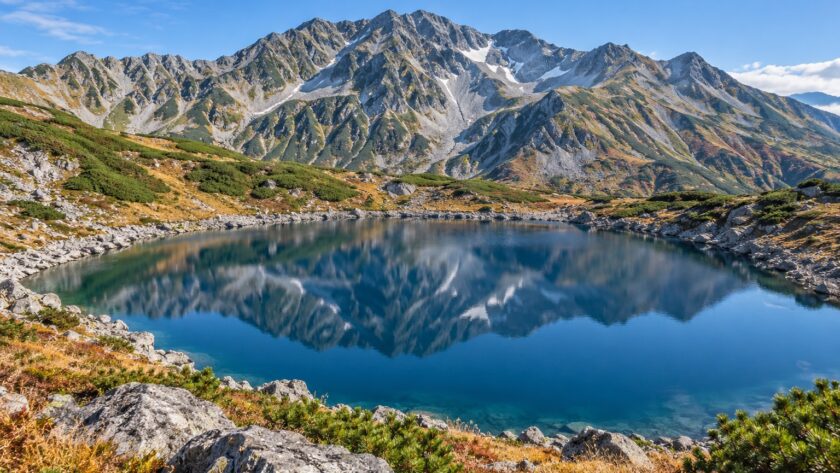
Information checked on October 10, 2026. Services, access restrictions and opening dates can change; consult the linked official sources before travel. The featured image is an AI-generated, photo-style illustration inspired by the alpine scenery around Mikurigaike in Tateyama, not a photograph of an exact real viewpoint.
Understand Toyama’s different travel areas
Think of the prefecture as several day-trip areas connected through the lowland cities. Toyama City gives you museums, trams and waterfront walks. Westward, Takaoka offers temples and metal craft, with the Amaharashi coast and Himi beyond. Southwest lie the villages of Gokayama and the woodcarving town of Inami. Eastward, Unazuki Onsen is the gateway to Kurobe Gorge. The high mountain excursion through Tateyama follows a separate approach.
The distinction between the Tateyama Kurobe Alpine Route and the Kurobe Gorge Railway is especially important. They are different sightseeing journeys with different departure points, tickets and seasonal arrangements. Do not treat the gorge train as a connecting segment of an Alpine Route crossing. If both are priorities, give them separate days and allow another day for the city or western Toyama.
Arrive by rail and choose a useful base
The Hokuriku Shinkansen links Tokyo with Toyama and Shin-Takaoka. From Osaka or Kyoto, the usual rail approach combines the Thunderbird limited express to Tsuruga with the Hokuriku Shinkansen onward. The prefecture’s official access guide shows these connections. Check the actual service’s stopping pattern: a convenient route on paper is only useful if your train stops at the station you need.
Takaoka Station and Shin-Takaoka Station are separate places. Similarly, arriving at Kurobe-Unazukionsen on the Shinkansen does not put you in the hot-spring town. For the latter, the gorge railway’s access instructions show the transfer on foot to Shin-Kurobe, the local train to Unazuki Onsen, and the short walk to the sightseeing railway. Save station names in Japanese as well as English to simplify platform and bus-stop checks.
A hotel near Toyama Station is a practical default if you want several excursions without changing rooms. Staying in Takaoka suits a trip weighted toward temples, coast and Gokayama. An overnight at Unazuki makes sense when bathing and a relaxed dinner matter as much as the train ride. Compare the final local connection with your accommodation’s check-in and dinner deadlines before selecting a late arrival.
Before purchasing a transport pass, write down the journeys you genuinely expect to take. A Shinkansen trip, a local railway, a city tram and a sightseeing service can have different ticket rules. Compare the pass’s coverage with that list rather than assuming one product covers everything carrying the Toyama name. For a short city stay, paying for a few individual rides may be simpler. For rural days, save the return timetable and the accommodation’s contact details before leaving the station, where asking for help is easier than at an unfamiliar roadside stop.
Toyama City: glass, canals and an old port
Begin with the Toyama Glass Art Museum. Its exhibitions provide an indoor introduction to the city’s contemporary creative identity, and its official calendar distinguishes collection displays from temporary shows and closures. Pick the exhibition you actually want to see rather than assuming every floor is included in one ticket. A museum visit works well on arrival day, when you may not want a complicated regional journey.
North of the station, Fugan Canal Kansui Park offers lawns, waterfront promenades and Tenmon Bridge. This is an easy place to leave a gap in your schedule: buy a drink, walk beside the water and let the city become familiar. It is also a useful choice when members of a group want different things, with some resting while others continue exploring.
For another side of the city, head to Iwase, whose surviving shipping buildings recall the Kitamaebune coastal trade. Look closely at the streets and individual shops rather than expecting a single large attraction. The Fugan Suijo Line offers seasonal canal cruises, including connections toward Iwase. Check which route operates on your date, and plan your return separately rather than assuming every departure completes a round trip.
Spend a full day on the Tateyama Kurobe Alpine Route
The Tateyama Kurobe Alpine Route uses a sequence of mountain transport services to cross dramatic alpine terrain. Its announced 2026 operating period is April 15 to November 30, subject to conditions and service notices. Decide first whether you want a return trip from the Toyama side or a through journey toward Nagano. That choice affects luggage, accommodation and the ticket you should purchase.
Murodo is a natural focus for travelers who want mountain scenery without committing to a summit climb. The operator’s landmarks guide describes the walk to Mikurigaike and the seasonal snow-wall attraction. They represent different versions of the landscape: an open alpine lake and spring’s excavated snow corridor should not be expected together in exactly the form shown in promotional photographs. Choose your season around your main interest.
Start early, but also decide how much time you want outside the vehicles. A route with many transfers can become a day of watching departure boards unless you protect time for a walk and lunch. Carry layers, rain protection, water and shoes suited to the conditions. A sunny morning in Toyama City does not tell you what the exposed mountain environment will feel like several hours later.
Use the operator’s planning FAQ for seasonal walking conditions, accommodation and luggage questions. Check live service notices before departure and leave room for queues at busy periods. If visibility deteriorates, shorten the outdoor portion instead of forcing a photographic itinerary. Travelers with limited mobility should confirm the exact transfers and walking surfaces for their chosen stops in advance; access to a terminal does not automatically make every nearby path suitable.
Kurobe Gorge and a night at Unazuki Onsen
The Kurobe Gorge Railway follows the river valley from Unazuki. As checked on October 10, 2026, the operator reports full-line service between Unazuki and Keyakidaira, with restricted sightseeing access at Keyakidaira and a recommended stay of approximately one hour. Nekomata no longer permits boarding or alighting. This current notice supersedes older descriptions of shortened service; recheck it before buying tickets or planning walks.
Choose an outward and return journey together, then arrange lunch around them. The railway experience itself is the point, so a slow return to the hot-spring town can be more satisfying than adding another distant attraction. Dress for moving air and changing temperatures, particularly if choosing an open carriage. Keep bags manageable and leave yourself time to find the correct boarding area without rushing.
Unazuki Onsen sits beside the Kurobe River and offers inns, footbaths and a compact town to explore. Staying overnight turns a transport excursion into a different kind of holiday. Confirm whether your booking includes dinner and breakfast, and explain dietary needs before arrival. If a private bath is important, ask about the individual property’s facilities and reservation arrangements rather than assuming all hot-spring hotels offer the same experience.
Takaoka: temple architecture and working craft
Takaoka rewards attention to materials. At Zuiryuji Temple, the arrangement of gates, halls and connecting spaces makes an excellent starting point for understanding the city’s historic character. Its principal National Treasure buildings invite a slower look than a quick entrance photograph. Plan this as a substantial stop, then leave time for lunch and a walk through another part of town.
The city’s metalworking tradition continues beyond museum displays. Nousaku’s factory tours and casting workshops offer ways to see or try the making process, with advance reservations required. A workshop adds a tangible memory to the trip, but check its duration, language support and location before fitting it between trains. Allow time afterward to examine everyday objects differently: a small cup or bell is more interesting when you understand something about its production.
For a walking afternoon, explore the historic streets of Kanayamachi or Yamachosuji, described in the prefecture’s Takaoka overview. Choose one area to explore thoroughly rather than marching between every landmark. Shops and workshops have individual opening patterns, so avoid building the whole afternoon around an unconfirmed visit. If you intend to buy metalware, ask about care instructions and pack delicate pieces where they will not be crushed.
Amaharashi: make room for the view
The Amaharashi Coast is known for the view across Toyama Bay toward the Tateyama mountains, with the pine-topped Onnaiwa rock in the foreground. The coast is a short walk from Amaharashi Station on the Himi Line. Clear air matters enormously here. Treat a sharp mountain panorama as a welcome possibility, and give yourself another reason to enjoy the coastal outing if clouds hide the peaks.
Check return trains before leaving the station and decide whether the coast is your main stop or part of a longer trip toward Himi. Bring a windproof layer outside the warmest months. Photograph from designated public areas and keep clear of the railway and road while concentrating on the view. If time is limited, a relaxed coastal visit paired with Takaoka is usually easier to enjoy than adding Gokayama to the same day.
Gokayama’s thatched villages and Inami’s woodcarvers
In Gokayama, Ainokura preserves a group of steeply roofed gassho-style houses, some still private homes and others used for visitor facilities or accommodation. Together with Suganuma and Ogimachi in neighboring Gifu, it forms part of a UNESCO World Heritage property. Visit an open interior if possible: the buildings become more meaningful when you consider how people used their space, rather than seeing only the roofs.
Suganuma is smaller, with nine surviving gassho-style houses and museums explaining local history and livelihoods. You can choose either village for a slower visit; seeing both is optional. Stay on public paths, respect household boundaries and follow photography signs. These are inhabited communities. Quiet conversation, careful disposal of rubbish and purchasing something locally are simple ways to be a considerate visitor.
For a bus trip, build the day from the return journey backward. Check the current World Heritage Bus timetable, village stop names and connections before setting out. Do not confuse a bus passing near a settlement with a stop directly at every attraction. Bring a modest amount of cash and food flexibility. In winter, leave extra time for slower walking and disruption rather than using summer travel estimates unchanged.
The bus operator’s current information includes suspended departures and a limited reserved-seat allocation. Older advice describing the service as entirely unreserved is therefore incomplete. Review the reservation conditions and the rules for any sightseeing pass before paying; a pass and a seat booking are not automatically interchangeable. If your trip depends on a particular return, settle that detail first. A comfortable visit to one village with a confirmed plan is preferable to reaching a second village and discovering that your assumed bus does not run.
If woodwork interests you, consider a separate outing to Inami. Yokamachi Dori leads toward Zuisenji Temple through a town associated with woodcarving workshops and detailed architectural carving. It is a good place to look upward as well as into shop windows. Book any hands-on experience before traveling, and confirm your onward connection. On public transport, Inami and both Gokayama villages make an unnecessarily ambitious combination for one short day.
Eat with the season, from seafood to pressed sushi
Toyama’s food gives you another reason to slow down. The prefecture’s official food guide introduces Toyama Bay sushi, white shrimp, spring firefly squid, winter yellowtail and strongly flavored black ramen. Ask what is available that day rather than arriving with a rigid list. A seasonal sushi meal and a simpler noodle lunch make a pleasant contrast, especially during a trip with several early departures.
Masuzushi, pressed trout sushi wrapped with bamboo leaves, is a distinctive choice for a takeaway meal or edible souvenir. The official souvenir guide explains this and other regional products. Check the use-by date and storage directions before taking perishable food on a long journey. For anyone avoiding fish or shellfish, arrange meals ahead and ask specifically about stocks and sauces; a vegetable-looking dish may still contain seafood ingredients.
A flexible three-day itinerary
Day one: arrive in Toyama, leave luggage at your hotel and make the afternoon an introduction to the city. Choose the glass museum and a central walk, or Kansui Park and Iwase if you prefer being outdoors. Reserve a leisurely dinner. Avoid making your first day depend on catching the last regional bus immediately after a long-distance train arrival.
Day two: dedicate the day to the Alpine Route when it is operating and conditions suit your plans. If the gorge railway interests you more, substitute Unazuki and the train journey instead. Returning to the same hotel keeps the day simple; staying in Unazuki changes the emphasis toward bathing and an inn meal. Either version leaves the other mountain excursion for a future day.
Day three: choose a western Toyama theme. Pair Takaoka’s temple and craft with the Amaharashi coast, or spend the day in Gokayama using a carefully checked bus plan. With a fourth day, add the option you omitted or explore Inami. Keep at least one city-based alternative available so poor mountain visibility does not turn an otherwise varied trip into a disappointment.
For families, reduce the number of transfers and agree on a clear stopping point for each outing. A train ride plus lunch and a footbath can be a complete day without adding a long walk. Travelers interested mainly in architecture could reverse the balance, spending two nights around Takaoka and using one day for Toyama City. If this is a stop between Tokyo and the Kansai region, keep the final morning close to your departure station rather than returning from a mountain excursion immediately before an important onward train.
Choose your season and leave some breathing room
Spring suits travelers interested in the Alpine Route’s snow scenery and seasonal seafood; summer favors longer outdoor days, while autumn changes the mountains at different times according to elevation. Winter calls for a different itinerary built around cities, food, hot springs and accessible village visits. The Alpine Route’s published season does not extend through winter, so check transport before choosing accommodation for a snow-focused trip.
Budget around your biggest excursion first, then add local transport, admissions and meals. Mountain transport and a ryokan stay can shape the total more than an extra cafe stop. Keep important tickets and route notes available offline, travel with manageable luggage, and leave a little time unassigned. Toyama’s strongest moments often come between the major sights: a quiet canal, a carefully made object, or a clear glimpse of mountains beyond the bay.