Niigata rewards travelers who follow the connections between landscape and daily life. Snow falls on the mountains, rice grows across plains and terraces, breweries turn grain into sake, and fishing ports face the Sea of Japan. In the same prefecture, you can explore a port city, watch metalworkers at their benches, walk through contemporary art in rural villages, or cross the water to Sado Island. The challenge is choosing a route that gives each experience enough time.
This guide introduces Niigata through several distinct bases: Niigata City for food and urban history, Sado for island culture, Tokamachi for art and agricultural scenery, and Echigo-Yuzawa or Myoko for mountain stays. A first visit works best when you combine two of these rather than collecting every famous sight. Three nights can provide a satisfying introduction; adding Sado or several ski days deserves a longer trip.
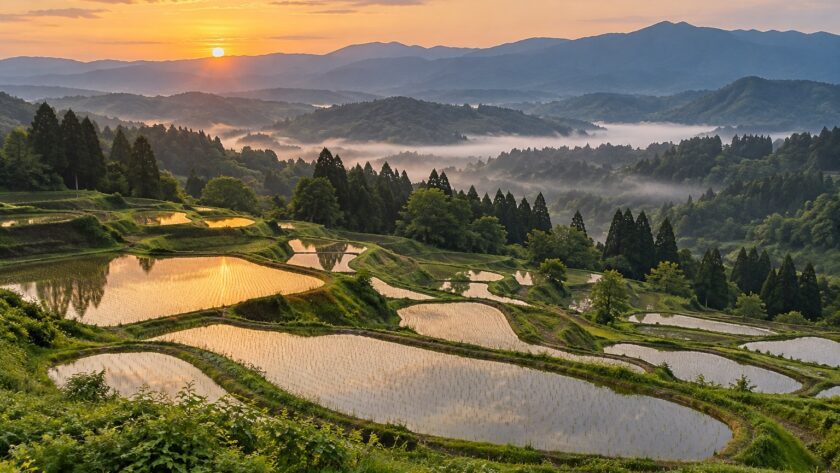
Information checked on October 10, 2026. Confirm current opening dates, transport, reservations and weather before traveling. The featured image is an AI-generated, photo-style illustration inspired by Tokamachi’s rice terraces, not a photograph of an exact real viewpoint.
Choose a region before booking your train
The regional map on Discover Niigata, the official tourism guide, is a useful starting point. Niigata City sits on the coast, while Echigo-Yuzawa is inland near the mountainous approach from Tokyo. Myoko lies in the southwest, and Sado requires a sea crossing. A hotel carrying the prefecture’s name is therefore not automatically convenient for every attraction. Mark your two most important experiences on a map and choose accommodation around those priorities.
According to JNTO’s Niigata transport overview, the Joetsu Shinkansen serves Echigo-Yuzawa and Niigata City, while the Hokuriku Shinkansen provides access toward the Myoko area. These are different corridors. Check your exact arrival station and the onward connection instead of assuming a fast train ends beside your hotel. Local buses, ferry terminals and rural attractions introduce another layer of travel time. For a short visit, fewer changes of base usually mean more hours enjoying the place.
Niigata City: begin with the port and its food
Niigata City makes an approachable first base, especially if you want restaurants and convenient rail connections before heading into the countryside. Begin with a riverside walk and a visit to Minatopia, the Niigata City History Museum. Its exhibitions place the relationship between people and water at the center of the city’s story. The surrounding historic buildings, including the former customs house, help turn an abstract account of maritime trade into something you can see in the streets.
For lunch, consider Pier Bandai, where food shops and restaurants bring regional products together. Walk around before deciding what to eat: a market visit is more enjoyable when you compare the available seafood, prepared dishes and produce rather than join the first queue automatically. Opening hours differ between businesses. If you buy something fresh, ask how to store it and whether it is intended for immediate eating. This is also a useful place to browse gifts before committing to purchases on departure day.
Later, explore Furumachi, whose cultural history reflects Niigata’s prosperity as a port. The official Furumachi geigi introduction explains the district’s traditions of music, dance and hospitality. Travelers interested in a performance should arrange an appropriate experience in advance and confirm language support and price. A neighborhood walk does not guarantee access to a private entertainment setting. Even without a booking, an evening meal here offers a different atmosphere from a stay spent entirely around the station.
Rice, sake and the pleasure of an ordinary meal
Give a bowl of locally grown rice some attention before surrounding it with strong sauces. Niigata’s official food guide introduces seafood, hegi soba, noppe and bamboo-wrapped sasa-dango alongside its drinks. You do not need a luxury dinner to explore these flavors. Try a regional noodle lunch, a rice-centered set meal and a sweet from a neighborhood shop on different days. Asking what is seasonal often produces a more interesting choice than ordering the same familiar dish throughout the trip.
The prefecture’s sake culture guide explains the relationship between brewing, snow country and skilled makers. Ponshukan outlets at Niigata, Nagaoka and Echigo-Yuzawa stations provide a convenient introduction through small tastings and regional shopping. Choose a few contrasting styles and note the names you enjoy rather than rushing through many labels. A brewery visit adds context, but confirm reservations, the language of the tour and whether production will be visible. Plan tasting days around walking or public transport, and keep any driver alcohol-free.
Food preferences are worth discussing before a rural overnight stay. A ryokan dinner may be the main meal available nearby, and a beautiful location does not guarantee several alternative restaurants within walking distance. Ask about dietary needs when booking, including broths and sauces as well as the main ingredients. Confirm dinner check-in deadlines too. Arriving late after an ambitious sightseeing loop can mean missing the meal that made the accommodation appealing in the first place.
Yahiko and Tsubame-Sanjo: shrine woods and working craft
Yahiko Shrine offers a quieter counterpoint to the city, with wooded grounds within walking distance of JR Yahiko Station. Allow time for the approach and the atmosphere under the trees. If you want to add the mountain ropeway, check its operating conditions and the return journey before committing. A shrine visit and a mountain excursion have different walking demands, so travelers with limited mobility should ask about their intended route rather than rely on a general description of the area.
Nearby Tsubame and Sanjo are especially rewarding for people who enjoy useful objects and the processes behind them. The regional factory visit directory lists businesses and explains that access conditions vary. Some experiences require reservations, and production schedules can change. Choose one workshop or factory that matches your interests, then allow time to talk, browse and travel there. A row of addresses on a map should not be mistaken for a single walkable craft village.
One option is SUWADA’s open factory, where visitors can observe stages in the making of nail clippers. Seeing an everyday object take shape can be more memorable than buying a souvenir without knowing its story. Check factory operating days separately from shop or café hours, because an open store does not ensure every production stage is running. Follow the marked viewing route and photography instructions. If you plan to buy tools or kitchenware, consider their weight and how you will pack them for onward travel.
Tokamachi: contemporary art across a lived-in landscape
Tokamachi and the surrounding Echigo-Tsumari area invite a different pace. Here, contemporary art appears among settlements, fields and former community buildings. The Echigo-Tsumari visitor planning page provides suggested routes and official tours. Start with a small cluster of works or a guided excursion, especially without a car. The distance between installations is part of the experience, but it also means that choosing by photographs alone can create an exhausting day of transfers.
The 2026 seasonal program runs from April 25 to November 8, with many facilities closed on Tuesdays and Wednesdays except national holidays; individual artworks can follow different calendars. October and November also bring shorter hours at some venues. Check each intended stop for your actual date. Do not assume that a permanent artwork is accessible every day or that a general ticket includes every activity. Leave space for lunch and for looking at the surrounding village, not just the installation itself.
Kiyotsu Gorge: reserve the visit, not just the photograph
Kiyotsu Gorge and the Tunnel of Light combine a dramatic river landscape with an architectural art experience. The pedestrian tunnel leads to viewpoints, including the reflective final space familiar from photographs. Plan time to see the rock formations along the way rather than treating everything before the last viewpoint as a queue. Follow staff instructions around the shallow water and allow other visitors room to enjoy the view.
At the time of checking, the tourism association listed October 10–12 and October 24–November 3 among the 2026 advance-reservation periods. Recheck the calendar for later visits. Public transport involves a walk from the Kiyotsukyo Iriguchi bus stop, so a bus arrival is not the same as reaching the tunnel entrance. Snow and bad weather can affect access or opening. Arrange the return connection before entering, and avoid scheduling a distant timed activity immediately afterward.
Hoshitoge: appreciate the fields without entering them
The Hoshitoge Rice Terraces show how agriculture follows the folds of the hills. Water-filled paddies can reflect the sky in parts of spring and autumn, while planting, growth and harvest change the scene through the year. Neither mist nor a mirror-like surface is guaranteed. Come for the shape of the landscape and the work it represents, and treat a dramatic sunrise as a possibility rather than a promised attraction.
These are privately cultivated fields. Stay in permitted viewing areas, keep narrow roads clear and never step into paddies or onto fragile banks for a photograph. The tourism association warns that winter snow prevents access to the parking and observation areas because their roads are not cleared. A snowy image online is not evidence that you can drive there. For a dawn visit outside winter, arrange suitable transport and accommodation nearby; a rushed nighttime drive from a distant base undermines the peaceful experience you came for.
Echigo-Yuzawa and Myoko: two different mountain bases
Echigo-Yuzawa is a practical choice for a mountain break connected to Tokyo by the Joetsu Shinkansen. Hot springs, winter sports and station-based food shopping can fit into a stay without constant long-distance travel. Choose accommodation according to your main activity: access to a particular ski area may matter more than being near the town center. Confirm hotel transfers and rental arrangements before arrival, particularly if you are bringing children or substantial luggage.
For a ski trip, compare the slopes, lessons and transport at individual resorts instead of choosing only by the size of a snow photograph. Beginners benefit from an accessible lesson meeting point and suitable practice terrain. Mixed groups should check what non-skiers can do nearby. Opening dates, lift operations and snow conditions vary, so avoid treating a previous winter’s calendar as a guarantee. A second night gives you more flexibility if your first day is affected by weather or travel delays.
Myoko Tourism provides information on another mountain region, including hot springs, ski areas and green-season nature. Myoko works particularly well as a dedicated stay, with time to settle into one village and explore nearby. In warmer months, a modest outing such as Imori Pond is a different undertaking from a high mountain hike. Match the route to your experience, obtain current local advice and prepare for changing weather. Do not add Myoko to a Niigata City day merely because both names appear in the same prefecture.
Sado Island: make the crossing part of a longer stay
Sado is worth considering when you can add at least two nights rather than compress the island into a hurried checklist. Consult Sado Kisen for the Niigata–Ryotsu and Naoetsu–Ogi routes, ship types, reservations and current service information. Choose your port according to the rest of your trip. A ferry terminal is separate from a railway station, and a faster crossing does not remove the need for check-in and onward transport. Compare the full journey, including luggage and any vehicle arrangements.
Once on the island, concentrate on one region each day. Confirm buses or reserve a rental car before arrival, and check where the vehicle must be returned. A coastal road can be enjoyable precisely because you are not racing through it. Keep the final island day relatively simple, with a generous margin before your sailing. If you have an international flight or another inflexible commitment, avoid making it depend on the last possible ferry connection in uncertain weather.
Sado’s mining heritage and Shukunegi’s maritime streets
The Sado Island Gold Mines entered UNESCO’s World Heritage List in 2024. The inscription covers multiple component areas associated with different forms of unmechanized mining, rather than a single attraction building. Read the historical interpretation before choosing which places to visit. A good visit asks how extraction, labor and settlement shaped the island, alongside looking at tunnels and industrial remains. Check the access arrangements for your selected site, because walking surfaces and underground conditions differ.
In southern Sado, Shukunegi reflects the island’s shipping and shipbuilding history. Closely grouped wooden houses surround narrow lanes near a small inlet, and some historic interiors open to visitors. Walk slowly and respect signs identifying private property. The village remains a residential place, so avoid blocking doors or photographing people without permission. Combining a neighborhood walk with one open house can reveal more than quickly circling the streets for a familiar camera angle.
Choose your island accommodation with the next morning in mind. A stay around one part of Sado may be atmospheric but inconvenient for an early departure from another port. Discuss dinner arrangements and arrival time with your host. For travelers without a car, a convenient bus connection can be more valuable than a remote room with a sea view. Save the address and contact details offline, and make sure you understand the return route before heading out for the evening.
When comparing hot-spring accommodation, check whether the room price includes meals, whether baths are shared or private, and what arrival window the property expects. Tell the host about access needs before reserving an older building. If a private bath is important to your group, confirm its booking system rather than assuming it is included. These practical details often matter more than the number of facilities advertised.
A flexible five-day first visit
For a mainland introduction, spend day one in Niigata City: settle in, explore the waterfront and choose a regional dinner. On day two, pick either Yahiko or a carefully planned Tsubame-Sanjo craft visit. Attempt both only if the connections and reservations genuinely fit. Travel toward Tokamachi for days three and four, using one day for a small art itinerary and another for Kiyotsu Gorge or a countryside excursion. Finish with an overnight stay in Echigo-Yuzawa before returning toward Tokyo on day five.
If Sado is your priority, simplify that plan. Begin with a night in Niigata City, spend the next two or three nights on the island, then return for a final mainland night. Leave Tokamachi and the mountain resorts for another visit. In winter, a city-and-ski combination is more coherent than trying to include snowbound terrace viewpoints. These are route frameworks rather than promises about daily transport: check your chosen dates and reserve the experiences that matter most before filling the gaps.
Seasonal timing and the details that improve the trip
Spring, summer, autumn and winter offer very different Niigata journeys. Rice fields change with cultivation, mountain access follows snow conditions, and coastal weather can disrupt ferries. Autumn can suit food and art travel, but shorter daylight rewards an earlier start. For winter stays, prioritize footwear, transfers and accommodation location over a long list of outdoor stops. Ask your host which nearby options work in the current conditions; local advice can be more useful than a saved itinerary written months earlier.
Before setting out each day, confirm your first reservation and last useful connection. Carry enough cash for smaller businesses, charge your phone and leave room in your schedule for a long lunch or an unexpected shop. The best Niigata trip lets its themes connect naturally: a landscape explains a meal, a workshop changes how you see a household object, and a port walk gives context to an island crossing.