Steam rising between wooden buildings, a bowl of glossy udon, and mountains appearing above a station platform: Gunma offers a different pace from Tokyo without requiring a journey across Japan. Its best-known attractions are hot springs, but the prefecture also tells a story of silk production, handmade good-luck charms, river adventures, and fragile highland wetlands. The pleasure comes from combining these experiences thoughtfully, with enough time to enjoy the inn you have chosen.
For a first visit, build around one hot spring town and the cultural corridor near Takasaki. Add another mountain area when you have more days. Kusatsu, Ikaho, Shima, and Minakami are distinct destinations with different transport connections; moving between them is not the same as riding a subway between neighborhoods. This guide helps you choose a route, understand what makes each place special, and plan a trip that leaves room for both discovery and rest.
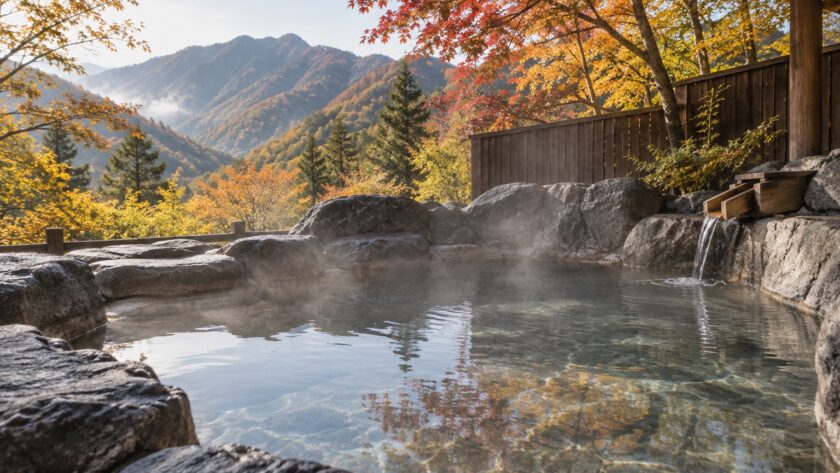
Information checked October 10, 2026. Confirm current opening days, transport, trail conditions, and facility rules before traveling. The featured image is an AI-generated, photo-style illustration inspired by Gunma’s mountain hot springs, not a photograph of a particular bath or accommodation.
How much time should you allow?
A single overnight stay works well for a focused onsen escape. For a broader introduction, allow four days and three nights, combining Takasaki and Tomioka with two nights in Kusatsu. That arrangement gives you industrial history, local food, and a full day without changing hotels. Travelers who prefer a compact hillside resort with a temple-and-noodle excursion can choose Ikaho instead of Kusatsu.
With five or six days, add Minakami for outdoor activities or Shima for another style of hot spring stay. Oze is better treated as a dedicated hiking extension. On a map, the mountain areas may look close together; on public transport, their routes often lead back toward separate railway gateways. Choose the character of your trip first, then check the actual connections before booking a string of nonrefundable rooms.
Kusatsu: a town shaped by hot water
The center of Kusatsu Onsen is the Yubatake, an exposed hot spring field whose steam and wooden channels make the source of the town’s identity visible. Instead of hurrying past it once, return at different times. Daylight reveals the structures and flowing water; evening lighting changes the atmosphere around the surrounding streets. Observe from the designated paths and remember that the spring infrastructure is not a public bathing pool.
Kusatsu suits travelers who want to make bathing and wandering the main activities. Gozanoyu, Otakinoyu, and Sainokawara Open-Air Bath provide different settings, while many inns have their own baths. Pick one public facility that appeals to you and enjoy your accommodation rather than treating every bath as something to collect. A leisurely lunch, a shop or two, and another walk through town can fill the spaces between bathing comfortably.
Yumomi and the walk toward Sainokawara
At Netsunoyu, beside Yubatake, a yumomi performance demonstrates the traditional stirring of hot spring water with broad wooden paddles. The movement is associated with cooling water without adding cold water, and the performance includes folk song. The prefecture’s Kusatsu itinerary explains its background. Check the current performance schedule before arranging lunch around a show; admission to a demonstration is a different experience from taking a bath.
For a change of scene, follow the shopping streets toward Sainokawara Park, where steaming water and an outdoor bath continue the town’s geothermal theme. Choose footwear that remains comfortable on slopes and damp surfaces. If you are staying two nights, this walk fits naturally into the day between arrival and departure. It is also a useful reason to leave the busy center for a while without committing to a mountain excursion.
Ikaho: stone steps and small discoveries
Ikaho is organized around a long stone staircase lined with inns, small shops, and places to eat. Its two named spring types are Kogane no Yu, the iron-rich “golden” water, and Shirogane no Yu, the “silver” water. Ask your chosen property which water its baths use if that distinction interests you. The setting is especially appealing when you want a town to explore on foot between meals.
The staircase has 365 steps and leads to Ikaho-jinja Shrine. Take the ascent as a series of short explorations, stopping for a snack or a view rather than racing to the top. The steps also make accommodation location important: ask how to reach the entrance with luggage and whether a shuttle is available. Anyone who needs step-free access should confirm a usable route to each planned attraction in advance.
Mizusawa: make lunch part of the sightseeing
A visit to Mizusawa Kannon Temple pairs naturally with the noodle restaurants nearby. The temple grounds include a striking gate and a two-story hexagonal pagoda. Spend time looking at the buildings and watching how the space is used by worshippers before continuing to lunch. Follow the site’s guidance around religious objects and rituals, and ask before taking photographs where permission is unclear.
Mizusawa udon is known for a firm, smooth texture, often enjoyed chilled with dipping sauce. Maitake mushroom tempura is a familiar accompaniment. Rather than expecting identical bowls everywhere, compare menus and choose the preparation that suits your appetite. Arrive with time for a proper lunch: some restaurants finish service early or sell out. If you avoid fish, ask about the dipping sauce and broth as well as the noodles themselves.
Shima: a quieter riverside stay
Shima Onsen offers a quieter arrangement of inns, river scenery, and streets suited to unhurried exploration. It is a good choice when the accommodation itself is a major reason for traveling. Look closely at room descriptions, bath access, and meal arrangements: a traditional building, a private bath, and a riverside outlook are different features and will not necessarily come together in the cheapest room category.
The nearby Lake Okushima is associated with the vivid blue color often called “Shima Blue.” This reservoir lies beyond the central town, so plan the onward journey rather than assuming it is beside the bus stop. Light, weather, and season affect how the water looks. Allow time simply to appreciate the surroundings, and confirm access conditions before promising yourself a particular photograph or an easy circuit around the lake.
Minakami: choose your kind of adventure
The mountain area of Minakami is a strong choice for travelers who want an active day followed by an onsen evening. The Tone River supports rafting, while other outings include canyoning, hiking, and winter sports. Choose an operator and a specific activity before selecting accommodation, because meeting points are spread across the area. A property marketed as being in Minakami may still require a substantial transfer to your tour.
For river activities, check minimum ages, swimming requirements, instruction language, clothing, and what happens if conditions prevent the trip. The character of a rafting outing varies with the season and water level; photographs of spring rapids do not describe every summer departure. Reserve the activity that matches your group’s abilities. Keep a less demanding alternative available, particularly when outdoor adventure is the main reason for a short stay.
Tanigawa scenery without assuming a summit climb
Tanigawadake Joch offers ropeway access to Tenjindaira and a separate lift toward a higher observation area. Its official site distinguishes sightseeing facilities and shorter walks from the route toward the mountain summit. That distinction matters: buying a ropeway ticket does not turn a mountain ascent into an effortless extension of a café visit. Decide whether you want panoramic views or a prepared hiking day before setting off.
Check the operator’s daily service information and seasonal calendar, including maintenance and weather suspensions. Cloud can hide the panorama even when transport operates. If you intend to walk beyond the developed sightseeing area, get current route advice and allow time for the descent. Carry layers suited to mountain conditions, and do not rely on the final possible downhill service as your only return plan. The official access guide explains the bus approach from Jomo-Kogen and Minakami.
Oze: give the wetlands their own day
The elevated boardwalks of Oze National Park lead into a landscape of marshes, ponds, and mountains. Seasonal plants and autumn grasses provide different reasons to visit, but this is a walking destination rather than a roadside viewpoint. Select a particular trailhead and route. Ozegahara Marsh and Ozenuma Pond should not be treated as interchangeable names for a single quick stop.
Build the day backward from the return transport, including the climb or walk back to your trailhead. The Oze access guide describes the approach through Oze Tokura toward Hatomachitoge; services and road access change seasonally. Obtain current trail and shuttle information locally. Stay on the boardwalks, carry out your rubbish, and bring food, water, and rain protection. An overnight nearby can make an early start much easier than traveling from a distant hot spring town.
Tomioka Silk Mill: understand how modern Japan was made
Established in 1872, Tomioka Silk Mill is a major industrial heritage attraction and part of a UNESCO World Heritage property. Its brick and timber buildings reflect Japanese construction skills working with French technical expertise. The visit adds a valuable counterpoint to Gunma’s natural scenery: instead of looking only at mountains and baths, you encounter the machinery, buildings, and organization behind the development of modern silk production.
Approach the mill as a place to learn, allowing time for interpretation as well as photographs of the exterior. A guide or the available explanatory materials can help connect a large building to the work once performed inside it. Check the official mill website for current visiting arrangements. Leave space afterward to walk through Tomioka itself, including the area between the mill and Joshu-Tomioka Station, rather than returning immediately to the platform.
Takasaki and its daruma craft
Takasaki is a practical transport base with a recognizable craft identity. Takasaki daruma are rounded good-luck figures whose faces incorporate cranes and turtles as symbols of longevity. Their unpainted eyes are traditionally completed in stages in connection with a wish or goal. Look for differences in expression and brushwork when choosing one; a small handmade object can carry more meaning than a large collection of generic souvenirs.
Shorinzan Darumaji Temple provides a cultural setting for understanding the figures. Treat a temple visit and souvenir shopping as complementary experiences rather than assuming they are the same activity. If you want to paint a daruma yourself, confirm a workshop’s availability and booking requirements before you arrive. Takasaki also makes a useful place to spend the night before an onward journey when mountain bus connections would otherwise create an early, complicated departure.
What else to eat in Gunma
The prefecture’s local food guide introduces another distinctive noodle style: Kiryu’s himokawa udon, notable for broad, thin ribbons. It makes a good culinary focus for travelers extending into eastern Gunma. Avoid assuming that every noodle specialty is available in every onsen town; sometimes the best food plan is simply to eat what the area you are visiting does especially well.
Other approachable tastes include sweet bean-filled onsen manju and skewered konnyaku served with savory seasoning. In Minakami, dam curry arranges rice to resemble a barrier holding back the sauce. The prefecture’s regional cuisine overview connects these dishes with their places. Share a snack when you have a ryokan dinner ahead, and check ingredient information for sauces and fillings rather than judging a dish only by its appearance.
Enjoying a first onsen visit
Use the official bathing etiquette guide to prepare. Wash and rinse before entering a communal bath, keep towels and hair out of the water, and leave phones and cameras outside bathing and changing areas. Most communal baths separate bathers by gender and are used without swimwear, but individual facilities may have different arrangements. Follow the instructions at the bath you actually visit.
Ask about tattoo policies before booking, and consider a reservable private bath if shared bathing does not suit you. Check whether towels are included for day use and whether soap or washing facilities are provided. Keep the experience comfortable: there is no obligation to try the hottest bath or remain in it for a long time. A first visit can be brief, followed by a quiet rest and a drink of water.
Plan transport around the right gateway
For Kusatsu, the official route guide describes rail travel to Naganohara-Kusatsuguchi followed by a bus, as well as highway bus options from Tokyo. Takasaki is a useful interchange if you combine the hot spring town with southern Gunma. Reserve seats when required, then check the bus connection rather than considering the train arrival your final destination.
Ikaho is commonly reached by bus from Shibukawa, as explained in the Ikaho access guide. Shima uses a different gateway: Nakanojo, followed by a bus to the resort. The Shima route guide details that approach. Minakami has both its conventional railway station and the shinkansen gateway at Jomo-Kogen. Make sure a pickup reservation names the correct station.
A rental car can help with scattered destinations, but winter roads and seasonal closures require appropriate preparation. For a train-and-bus trip, choose fewer bases and check both the outbound and return timetables. Do not assume a rail pass includes every local bus. Compare the full cost of your chosen journeys, and build in a margin before a prepaid dinner, a reserved train, or a flight.
Choose the season to match the experience
There is no single best month for every Gunma trip. A bathing holiday can work when a highland walking route cannot, and a ski holiday needs a different base from a silk heritage visit. For an autumn trip, check foliage reports close to departure and expect busy weekends at popular viewpoints. For spring, distinguish the arrival of warmer weather in the cities from snow conditions higher in the mountains. A calendar date alone does not establish that a trail is ready.
When choosing a ryokan, compare the whole stay rather than the room rate alone. An included dinner, breakfast, station pickup, and private bath can substantially change both the budget and the schedule. Confirm the latest dinner check-in time and any dietary arrangements directly with the property. If your main interest is a long outdoor activity, consider whether a fixed early dinner will force you to rush. Book the accommodation around the experience you want to have.
A four-day route for a first visit
Day one: arrive early in Takasaki, leave your luggage, and travel to Tomioka for the silk mill and a walk through town. Return to Takasaki for the night. If you cannot arrive early enough, enjoy a daruma-focused afternoon instead and add another day for Tomioka. A late arrival should not turn an interesting heritage visit into a race against closing time.
Day two: travel to Kusatsu with the afternoon available for Yubatake, a short town walk, and your first bath. Prioritize the inn’s dinner if it is included. Day three: remain in Kusatsu, fitting a yumomi performance and Sainokawara visit around a leisurely lunch. Having a full day without luggage or a checkout deadline is the chief advantage of spending two nights here.
Day four: enjoy breakfast and a final walk, then depart with a generous connection margin. Choose Ikaho instead of Kusatsu if stone steps and Mizusawa noodles appeal more, or add Minakami for an outdoor extension. This route deliberately omits some excellent places: Shima and Oze deserve their own time. The most memorable Gunma trip leaves enough room to enjoy the place where you sleep.