Dotonbori rewards a little planning. Arrive hungry without a plan and you can spend most of the evening comparing queues beneath enormous restaurant signs. Arrive with every minute booked and you may miss the pleasure of watching the canal change from afternoon gray to reflected color. The most satisfying first visit leaves room for both: one deliberate meal, one small snack, a walk beside the water, and a detour into the neighborhood behind the billboards.
This guide is designed for travelers who want more than a photograph with the Glico runner. It explains how the district fits together, which food experiences suit different appetites, and how to build a realistic evening around your available time. Two hours can cover the essentials; four or five allow a seated dinner and a slower exploration. For the wider city and possible day trips, start with our Osaka travel guide.
Understand the neighborhood before choosing your route
Dotonbori is part of Minami, Osaka’s southern downtown entertainment area. The name refers both to the canal and to the famous commercial street along its southern side. They are closely connected, but they provide different experiences. Street level offers restaurant entrances, shop signs and food queues. The lower riverside promenade gives you water, bridges and a better sense of the buildings as a continuous illuminated landscape.
Use Ebisubashi Bridge as your mental anchor. Shinsaibashi’s shopping streets extend north; Ebisubashisuji leads south toward Namba. Dotonbori’s busy restaurant street runs east from the bridge area, while Hozenji and its narrow lanes sit a short walk to the south. The local shopping association’s area map and walking courses help connect these names before you arrive. Save a map with your chosen restaurant marked as well as the station.
Do not treat every place labeled Namba as the same departure point. A meeting instruction such as “Namba Station” can put friends at different railway complexes. Agree on a specific operator, gate or visible landmark. For an evening walk, a hotel lobby or restaurant entrance often makes a more workable rendezvous than the busiest part of Ebisubashi. Once everyone is together, put the navigation away periodically: repeatedly stopping in the middle of the pedestrian flow makes this compact district harder to enjoy.
Why Dotonbori looks like a stage
The canal predates the modern spectacle. The Ebisubashisuji shopping association’s historical account dates its completion to 1615 and connects the bridge area with theater visitors and routes toward the Ebisu shrine. Entertainment, commerce and eating became closely intertwined here. Thinking of Dotonbori as a theater neighborhood explains more than treating it simply as a collection of oversized advertisements.
The modern street still rewards that theatrical way of looking. Restaurant facades announce themselves through movement, scale, lighting and instantly recognizable food shapes. Pause to compare a giant food model with a modest doorway nearby. Both are trying to communicate before you read a menu. The visual competition is part of the attraction, but a striking facade does not tell you whether a restaurant matches your budget, dietary needs or available time.
One important update concerns Osaka Shochikuza. Older guides describe it as a place to catch a performance during a Dotonbori visit, but Shochiku’s official theater page states that it has been closed since May 27, 2026. Treat it as part of the area’s entertainment history, not an operating attraction to build your evening around. If live performance is a priority, research a currently operating venue and its actual calendar separately.
Choose your arrival time around daylight and dinner
For a first visit, aim to arrive before sunset and stay into the evening. This lets you orient yourself while there is still daylight, visit Hozenji without rushing, and return to the canal as the signs brighten. Sunset changes substantially with the season, so use the day’s actual time rather than copying a fixed “six o’clock” itinerary. In summer, an early dinner may come before your nighttime photographs.
Daytime suits travelers who mainly want lunch, shopping and an easier introduction to the street layout. Evening emphasizes illuminated signs and reflections. Neither guarantees quiet conditions: weekends, holidays, events and popular restaurant queues can change the experience. If crowds drain your energy, visit earlier, choose your meal in advance, and keep the bridge stop brief. A quieter moment is a welcome bonus rather than something any schedule can promise.
Allocate time according to your main interest. Photography benefits from lingering through changing light. Food deserves a proper seated stop instead of four hurried queues. Families may prefer an early meal followed by a short canal walk. Travelers arriving after a long train journey should resist adding a cruise, shopping and multiple restaurants just because everything appears close together. The walking distances are modest; waiting, finding entrances and deciding what to order consume the evening.
The Glico sign: see it, understand it, photograph it
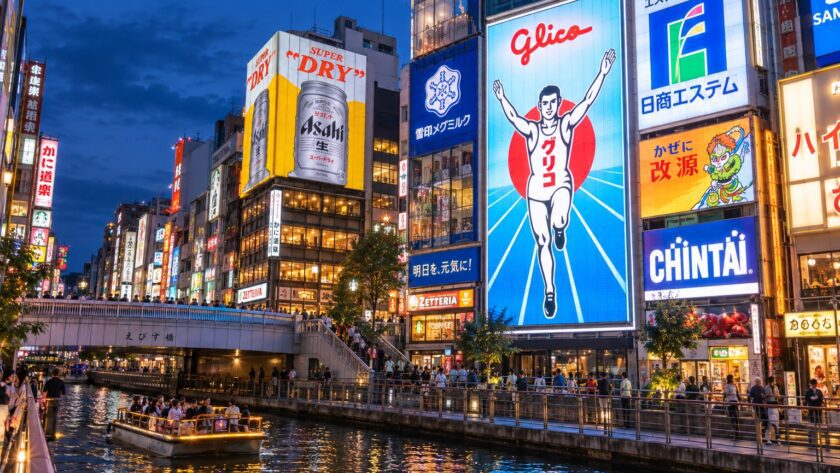
The runner above the canal is an advertisement that has become a neighborhood landmark. According to Glico’s own history and visitor information, the first sign appeared in 1935, and the current sixth version dates from 2014. Its triumphant pose remains recognizable even as the display technology changes. Glico currently gives the illumination period as after sunset until midnight, while noting that operating hours may be shortened. Check that page before making a late visit specifically for the lights.
Ebisubashi offers the familiar view, but your best photograph may come from simply waiting for a small opening rather than searching for a supposedly secret spot. Frame the sign first, then decide whether you want a portrait, a wider streetscape or a reflection. Move away from the bridge’s main pedestrian stream before reviewing your pictures. A quick photograph followed by a riverside walk is more pleasant than occupying one position indefinitely.
For phone photography, clean the lens, turn off the flash and tap the brightest sign to control exposure. Reducing exposure slightly can preserve the lettering while keeping the canal visible. Take several handheld frames; moving people and boats can blur during long night-mode exposures. Blue hour often balances the sky and illuminated buildings well. These are photography suggestions, not a promise of a particular view: weather, crowds and temporary works can change what is possible.
Eat with a plan: one snack and one main meal
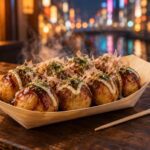
Dotonbori’s famous foods overlap in richness, so variety takes more thought than ordering everything with a recognizable name. Takoyaki combines an octopus-filled batter with toppings that vary by vendor. The outside can look manageable while the center remains extremely hot. Start with a modest portion, let it cool, and use the seller’s designated eating area when available. This is a good shared snack before dinner, provided your group still has room for a full meal.
Okonomiyaki works better as the centerpiece of dinner. Osaka-style versions typically mix cabbage into batter before cooking on a griddle; fillings and finishing sauces create substantial differences. Ask whether staff cook it for you rather than assuming every table requires a do-it-yourself performance. A hot plate can keep food warm long after serving, so leave space around it and keep children’s hands clear.
Kushikatsu offers a different rhythm: breaded, fried skewers ordered individually or in sets. Look at the contents of a set before adding several more items. Follow the restaurant’s current sauce instructions; service arrangements vary, and an old travel anecdote about communal dipping may not describe the table in front of you. The local association’s introduction to Osaka flour-based foods is useful background, but your appetite should determine how many stops you make.
Three restaurant approaches worth considering
For a straightforward okonomiyaki dinner, Chibo Dotonbori Building offers a useful planning starting point. Its official page lists an English menu, nonsmoking seating and an online reservation link. At the time of checking, the published hours were 11 a.m. to 11 p.m., with the usual last order at 10 p.m. Confirm the exact branch when booking: similar names in the same neighborhood can refer to different floors or restaurants. Choose this approach when sitting down and understanding the menu matter more than improvising every stop.
For a meal centered on broth rather than fried food, consider Dotonbori Imai’s main restaurant. Its official menu lists kitsune udon, with sweet seasoned fried tofu, at ¥930 when checked. The restaurant lists Wednesday closures, except public holidays, plus the fourth Tuesday outside December. Those details matter if you make it your planned dinner. A bowl of noodles also provides a useful contrast after a takoyaki snack.
For skewers, use Daruma’s official Minami branch listings to compare its Dotonbori, Hozenji and nearby locations. Reservation conditions are branch-specific; do not assume a dinner slot is available because another branch accepts bookings. These examples are practical options with operator information, not a ranking or a claim that one restaurant is universally best. Pick one main meal and keep another suitable address as your fallback.
Read the menu before committing to the queue
A queue tells you that people are waiting, not why. Before joining, check whether it is for takeaway, a ticket machine, dine-in seating or a particular product. Look at the displayed menu and ask for an approximate wait when staff can help. If you have only two hours, decide in advance how much of that time you are willing to spend in line. Leaving a queue to protect the rest of your evening is a reasonable choice.
Traveling companions should compare appetites before ordering. One person may want crab, another noodles, and another a quick snack. A reserved seated meal can be the shared anchor, with individual treats afterward. Avoid turning every food purchase into a full tasting session if it delays someone else’s dinner. If you want a special seafood course, choose the restaurant and price range beforehand rather than making that decision beneath the most photogenic sign.
Dietary requirements deserve the same advance attention. A dish that looks vegetable-based can contain seafood stock, fish toppings, egg or meat-derived ingredients. Removing a visible topping does not establish how the batter or broth was made. Contact the restaurant with your specific requirements and ask about preparation as well as ingredients. English menus help with ordering, but they do not automatically confirm suitability. For strict requirements, make a verified restaurant the fixed point of the route.
Hozenji and the lanes behind the spectacle
South of the main restaurant street, Hozenji changes the scale of the visit. The famous moss-covered Fudo figure and surrounding lanes invite a closer, slower kind of attention than the canal billboards. Osaka’s official tourism guide explains the alley’s connection with temple visitors and food stalls, and the tradition of pouring water associated with the moss-covered figure. This is a living place of worship within a busy entertainment district.
Pause before approaching so that worshippers can finish. Follow the temple’s posted guidance rather than copying an elaborate ritual from a video. If you are unsure what to do, observing quietly is entirely sufficient. Keep food packed away, speak softly and avoid photographing people at prayer without permission. The visit does not need a performance or a souvenir purchase to be meaningful.
Hozenji Yokocho is often described as a hidden lane, but it is well known and can be busy. Its small scale makes consideration especially important: do not block doorways to photograph lanterns, and remember that attractive entrances belong to working restaurants. Some places are appropriate for an unplanned drink; others suit a longer meal or reservation. Read menus and charges before entering. A short respectful detour here adds depth without turning the neighborhood into a hunt for secret locations.
Walk the canal or take the Tombori River Cruise?
Walking gives you the most flexibility. You can change pace, cross a bridge, compare the street-level view with the waterside promenade, and leave whenever you are ready for dinner. It also makes sense if photographs are your priority, since you choose where to pause. Do not assume that every staircase has an equivalent accessible entrance beside it; check your route before descending if steps are a problem.
The Tombori River Cruise operator currently advertises an approximately 20-minute trip at ¥2,000, with same-day ticket sales and limited web booking availability. Osaka’s water-city tourism information identifies Tazaemonbashi Pier and gives the adult fare as ¥2,000. Check the operator’s current departure arrangements, availability and operating notices. Other cruises have different durations and booking rules, so match the product name carefully.
A boat is worthwhile when seeing the bridges from below is part of the attraction. It is less compelling if buying tickets and waiting would displace your main meal or temple visit. Twenty minutes on the water is not twenty minutes total: allow for locating the ticket counter and boarding. Check access arrangements directly if you use a wheelchair or have difficulty with steps. Keep a walking version of your evening ready in case weather or operating conditions change.
Small preparations that make the evening easier
Before leaving your hotel, save three things offline: your restaurant address in Japanese, a screenshot of the surrounding streets, and your return station route. A translated restaurant name alone can be less useful than its full address when asking for directions. Bring a charged phone and leave large luggage at your accommodation if possible. Narrow restaurant entrances, queues and canal steps become awkward when you are also managing a suitcase.
For families, choose a specific meeting point in case you become separated and show children what it looks like before the busiest section. Plan a toilet break around your seated meal rather than assuming the next food counter has facilities. Buy hot snacks only when you have found an appropriate place to stop and eat. Trying to carry drinks, take photographs and supervise small children at the same time makes an otherwise short walk unnecessarily demanding.
When ordering, decide whether you are sharing before you ask for a table, and follow the establishment’s minimum-order policy if it has one. Keep a little cash available alongside your usual payment method. If a restaurant cannot accommodate your group, use your backup rather than negotiating at a crowded entrance. A flexible plan should still respect the staff’s time and the diners already waiting.
A two-hour first visit
Start at the Namba station area with your return route already saved. Use roughly the first twenty minutes to walk toward Hozenji, orient yourself and make a respectful visit. Continue toward Dotonbori’s restaurant street, allowing another twenty minutes to notice the facades and choose one snack. These are planning allowances, not measured walking times; a crowded street or unfamiliar station exit can use up the spare minutes quickly.
Spend the middle portion around Ebisubashi and the canal. Take your Glico photograph, then move along the promenade rather than staying on the bridge. If the lights are your priority, shift the entire route to suit sunset. Use the remaining time for a simple meal with a manageable wait, or eat before starting and devote the final stretch to the streets around the canal.
This short version works best without a cruise or a famous restaurant queue. If a sit-down dinner is essential, reverse the priorities: reserve it first, then use whatever time remains for Hozenji and the bridge. Two hours is enough for an introduction, but it cannot reliably contain every classic experience. Leave with a clear impression of the area rather than a rushed collection of partially completed stops.
A slower half-day from afternoon into night
With four or five hours, approach through the shopping streets north of Ebisubashi, then cross the bridge while there is daylight. Take a first look at the canal before entering the restaurant street. Continue to Hozenji and the surrounding lanes, keeping the temple visit separate from your food stop. This gives the afternoon a natural progression from shopping to history and then dinner.
Make a seated meal the center of the plan. An earlier reservation can reduce the tension between restaurant waiting time and your desired photography light, although the best order depends on the season. After dinner, return to the canal and decide between a cruise and a longer walk. Check tickets earlier if the boat matters to you, and avoid a departure that leaves only a narrow margin around your reservation.
Finish with a small dessert or drink if you still want one. Do not add a second full dinner just to complete a food checklist. Couples can allow more photography time, families can shorten the waterfront portion, and solo travelers can choose a counter meal and keep the route flexible. The half-day version is valuable because it allows choices to change without sacrificing the main experience.
Budget, rain, accessibility and the journey home
For planning, set aside roughly ¥3,000–¥5,000 per adult for a casual meal, a snack and a drink; treat this as an editorial allowance, not a restaurant quotation. Add the current cruise fare separately. Seafood courses, multiple alcoholic drinks and shopping can increase spending considerably. Walking around the public streets does not require an attraction ticket, so a memorable visit need not include a paid activity. Check displayed prices and any seating or service charges before ordering.
Rain changes the route more than the destination. Covered shopping arcades can provide useful shelter, but bridges, the canal promenade and connections between streets are exposed. Plan an indoor meal and shorten the waterfront walk if conditions worsen. With a stroller or mobility aid, prioritize space and a known step-free station route. Ask restaurants about their actual entrance and seating floor. Compact geography does not guarantee effortless access.
For rail navigation, consult Osaka Metro’s Namba station guide, including its maps and barrier-free information. Namba connects the Midosuji, Sennichimae and Yotsubashi lines with other railway services, but the relevant gates are spread out. Save the operator and line you need for your hotel, not just the station name. Check the last useful connection for your date before dinner; a lively street is no indication that your train is still running.
Finally, keep one decision simple: what would make tonight worthwhile? It might be a carefully chosen okonomiyaki dinner, a blue-hour photograph, or the contrast between the canal and Hozenji’s small lanes. Build around that answer and allow the rest to unfold. Dotonbori is easier to appreciate when its abundance gives you options rather than obligations.
Editorial note: Official information was checked on October 11, 2026. Restaurant menus, prices, opening arrangements, sign illumination and cruise operations can change; use the linked operators for your travel date. The featured image is a photo-style AI-generated illustration inspired by Dotonbori and its Glico sign, not a documentary photograph or an exact architectural record.