Sendai rewards travelers who give the city two full days before moving farther into Tohoku. Its appeal lies in the relationship between places: a wooded mausoleum, a museum that explains a powerful family, a hilltop castle site overlooking a modern city, and an evening meal that could belong nowhere else. Those connections make a visit more memorable than a sequence of photographs.
This guide builds a car-free stay around Date Masamune’s legacy, local food, and the everyday pleasure of walking through central Sendai. The core itinerary covers two days in the city. Matsushima is an optional third day, not an extra excursion squeezed between museums. For a wider regional journey, use our Miyagi travel guide alongside this more detailed city plan.
Choose a Base That Fits Your Evenings
Start by comparing hotels around Sendai Station with those near Ichibancho, Hirose-dori, and Kokubuncho. The station area is the practical first choice if you arrive with large luggage, plan the Matsushima extension, or have an early onward train. Check which side of the station your hotel uses and how you reach its entrance.
The Ichibancho side of the center suits travelers who want shopping streets, cafés, and evening walks to shape their stay. Kokubuncho is useful when dinners and nightlife are priorities. A location near restaurants can be convenient, but room position matters if you are sensitive to noise. Ask about that rather than treating an entire neighborhood as uniformly quiet or lively.
For a short trip, changing hotels usually adds more work than value. Choose one base, leave your main bags there when possible, and carry a smaller day bag on the historical circuit. Confirm luggage storage with the property; an early arrival does not automatically mean early room access.
Compare the complete journey from platform to reception. Pedestrian decks, crossings, and the wrong exit can turn a seemingly nearby address into an awkward walk. Travelers using wheelchairs or strollers should locate an accessible route in advance rather than assuming the nearest staircase has an adjacent elevator.
Arrival: Keep Your First Transfer Simple
Sendai Station is the natural orientation point whether you arrive by Shinkansen or from the airport. Save your hotel name and address in Japanese before traveling, and allow time to identify your exit. A station meal and an easy neighborhood walk make a more forgiving arrival plan than a tightly timed museum booking.
For flights, the Sendai Airport Access Line provides the rail connection to the city. The operator’s current Sendai–airport fare table, revised in March 2026, lists ¥680 for an adult paper ticket and ¥672 with an IC card. Check the departure board for the actual service rather than planning around a remembered journey time.
On the way home, calculate backward from your airline’s check-in requirements. Add the trip from your hotel to the platform, luggage collection, and a margin for disruption. The airport ride is only one part of the departure. If your last sightseeing stop is across the city, include the return to your bags before choosing a train.
Loople Sendai, the Subway, and the Right Ticket
The Loople Sendai sightseeing bus starts at the west-exit bus terminal’s stop 16. It runs in one direction: you cannot simply board a reverse service to return to the previous attraction. That makes the order of your stops important. Check the timetable before leaving each site, especially late in the afternoon.
The current adult fares are ¥300 per ride, ¥700 for the Loople-only day pass, and ¥1,000 for the combined Loople and subway day pass. The combined ticket covers both subway lines. The Loople-only pass does not cover ordinary city buses, and neither ticket should be treated as a JR pass for Matsushima. Some older attraction pages still show earlier fares.
Three separate Loople rides cost ¥900, so the ¥700 pass can make sense on a bus-heavy day. The combined ticket adds value only if you will use the subway enough to justify it. On a central walking day, individual fares may be simpler. Build the route first, then choose the ticket.
Use the subway when you want a more direct return to the center. For example, the city museum’s access instructions place it about eight minutes on foot from International Center Station’s South Exit 1 on the Tozai Line. This offers a useful alternative when you finish at the museum rather than continuing around the sightseeing loop.
Day One: Understand Date Masamune Through Three Places
Use the first day for Zuihoden, Sendai City Museum, and the site of Sendai Castle, in that order. This follows the relevant sequence on the operator’s historical sightseeing route. Allow most of the day, including lunch and waiting for buses. You do not need to add every other stop on the loop.
Think of the three visits as different questions. Zuihoden asks how a ruler was commemorated. The museum asks what objects and documents reveal about his family and domain. The castle site asks why power was situated on this particular landscape. Keeping those questions in mind makes even a first encounter with Japanese history easier to follow.
Start early enough to avoid pushing the museum toward its final admission time. The suggested durations below are planning allowances, not guaranteed connection times. If you enjoy reading exhibitions in detail, give the museum longer and shorten the final viewpoint stop.
Zuihoden: More Than an Ornate Building
Zuihoden is Date Masamune’s mausoleum, within a wooded complex that also commemorates other members of the Date family. Its strong colors, gilded details, and decorative carvings make a striking impression, but looking slowly is more rewarding than photographing the entrance and turning back.
The present mausoleum is a reconstruction of the original destroyed during World War II. That distinction matters: the place combines a seventeenth-century burial site with later restoration and archaeological work. Look for the Date family crests and compare the main mausoleum with the surrounding memorial spaces. Follow any photography restrictions around interiors and exhibits.
Plan roughly an hour, with extra time if your group walks slowly. The official visitor information warns of a steep approach with about 80 steps before reception and additional steps within the grounds. This is not a straightforward wheelchair outing. Check directly with the site if access is a deciding factor for your group.
Standard adult admission is currently ¥570, with a listed Loople day-pass discount to ¥460. Last entry is normally 4:30 p.m. from February through November and 4 p.m. in December and January. Consult the site’s calendar around New Year. Present a qualifying pass before paying rather than expecting a retrospective discount.
Sendai City Museum: Give the Story Some Depth
Continue to the museum area and allow around 75–90 minutes for a focused visit. Sendai City Museum provides the historical context that a monument alone cannot. Choose a few objects or themes to understand well rather than trying to absorb every label in every gallery.
The city’s official visitor guide highlights Date family material, including Masamune’s armor, but notes that replicas are displayed for much of the time. Do not promise yourself a particular original object without checking the exhibition schedule. An image in a brochure is not confirmation that the object will be on view on your date.
According to the museum’s current visitor page, regular adult admission is ¥460; special exhibitions have separate pricing. Hours are 9 a.m.–4:45 p.m., with entry ending at 4:15 p.m. Monday and post-holiday closure rules have exceptions, and the museum closes from December 28 through January 4. Check the actual calendar, not just the weekday.
If the museum is closed on your first day, exchange the two city days or move the museum to the other morning. Do not replace this context automatically with another quick photo stop. Have lunch before continuing uphill, and decide how much energy remains for the castle site.
Sendai Castle Site: Arrive with the Right Expectations
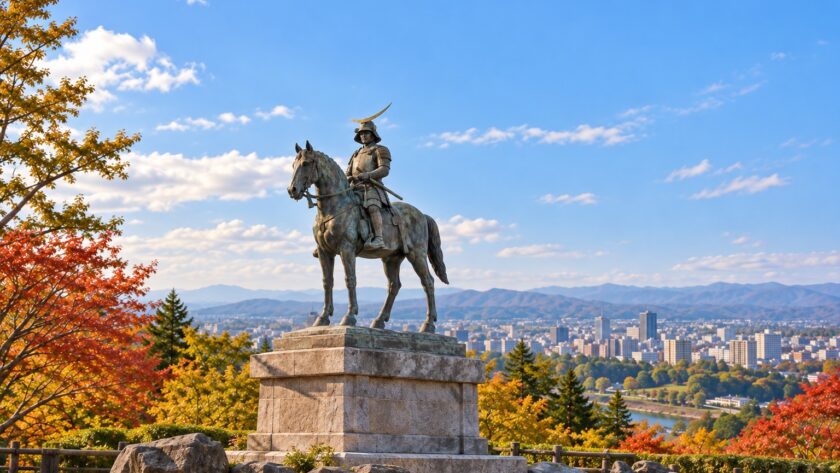
The site of Sendai Castle, also called Aoba Castle, is a place to understand the city’s setting and see the equestrian statue of Date Masamune. Expect a castle site with stonework and views, rather than an intact castle keep waiting to be climbed. The distinction prevents a common mismatch between the name and the experience.
Allow about 45–60 minutes for the main outdoor area, longer if you choose a paid exhibition or stop for refreshments. Look from the monument toward the modern city and consider how the elevated position changes your sense of Sendai. The statue is a commemorative image of the lord, not a surviving object from his lifetime.
Do not assume the walk from a nearby subway station is flat simply because the distance looks short. Using the sightseeing bus for the uphill approach can preserve energy for the grounds. Before lingering, check your onward bus options and how you would return if you leave later than planned.
Afterward, continue on the loop toward the center or use a suitable subway connection. Keep dinner reasonably close to your hotel. The day’s reward is having connected three aspects of the city’s history, not having visited the largest possible number of attractions.
Day Two: A Shrine, Tree-Lined Streets, and Modern Sendai
Make Osaki Hachimangu the morning’s main visit if historic architecture interests you. Built under Masamune’s patronage and completed in 1607, its main building is a National Treasure. The official introduction explains the black lacquer, gold decoration, and carved animals. It also describes the steep stepped approach, which deserves the same consideration as Zuihoden.
The shrine adds a different dimension to the previous day: this is an active place of worship, so give people praying space and follow instructions around ceremonies. A quieter visit can be more meaningful than trying to capture every decorative detail. If steps are unsuitable, make the city-center portion your main plan instead.
Choose transport specifically for the shrine journey. A sightseeing loop is not always the fastest way to reach a later stop from the station. Compare the current local bus route or a taxi with the full Loople journey before buying another day pass. Once at the shrine, the onward loop toward the Mediatheque and central streets can fit the afternoon well.
Return for lunch, then walk along Jozenji-dori Avenue. Its zelkova trees help explain Sendai’s “City of Trees” identity. Nearby Sendai Mediatheque, designed by architect Toyo Ito, offers a contemporary counterpart to the historical buildings. Check which exhibitions or public areas are open rather than assuming every floor operates the same hours.
Continue through the Ichibancho shopping streets at your own pace. Reserve part of the afternoon for one café, a small food purchase, or a shop that interests you. This is useful breathing room between the formal historical circuit and another evening meal. You can shorten the walk in rain without losing the day’s central purpose.
What to Eat: Build Four Different Meals and Breaks
Start with gyutan if you eat beef. The official Sendai food guide describes the classic grilled beef-tongue set with barley rice, oxtail soup, pickles, and a spicy miso accompaniment. Ordering a set helps you experience the meal as a combination rather than judging the meat in isolation.
Read the portion and cut before choosing a price. A premium set may differ in thickness or quantity, and rice or drinks may be charged separately. If the menu offers different seasonings, one straightforward version is enough for a first visit. There is no need to turn every meal into a restaurant comparison exercise.
Try zunda during an afternoon break. This sweet green-soybean paste appears in mochi and other desserts, including shakes. Choose according to appetite: a drink and a full dessert immediately before dinner can be more than you intended. Soy is central to zunda, while additional ingredients vary by product.
Sasa-kamaboko, a bamboo-leaf-shaped fish cake, works as a smaller snack or souvenir. Some venues offer a grilling experience, but check the particular shop’s arrangements rather than assuming it is available everywhere. Before buying a gift box, ask about refrigeration and shelf life. A product that travels easily to your hotel may not suit a long international flight.
Make your other main meal seafood, or choose a restaurant whose menu suits your companions. Ask what is seasonal and compare a fixed set with individual orders. Travelers who do not eat raw fish can look for cooked dishes. If you are saving seafood for Matsushima, use your second Sendai dinner for something different.
For dietary restrictions, confirm broths, sauces, and garnishes as well as the headline ingredient. Bring a clear Japanese explanation when necessary. Restaurant listings can help you shortlist places, but only the restaurant can confirm what it can prepare that day. Keep a realistic alternative near your accommodation so a long queue does not decide the evening for you.
Optional Day Three: Matsushima, with the Logistics Explained
Matsushima deserves its own daylight outing. From Sendai, look for a suitable JR Senseki Line service to Matsushima-Kaigan. Do not confuse that station with Matsushima on the Tohoku Main Line. Zuiganji’s access guidance gives about ten minutes on foot from Matsushima-Kaigan, compared with about 25 minutes from Matsushima Station. Choose the station deliberately before boarding.
Begin with Zuiganji Temple if history is the priority. Masamune’s rebuilding project, completed in 1609, connects the excursion to what you have learned in Sendai. Current adult admission is ¥1,000 and includes the temple museum. The decorated rooms and architectural details deserve more attention than a hurried circuit before lunch.
Winter hours are particularly important. In December and January, Zuiganji’s published last admission is 3 p.m., with closure at 3:30 p.m.; other months have later schedules. Put the temple earlier in the day rather than discovering that a long lunch has consumed your visiting window.
Then leave room for the waterfront and a seafood lunch. Pick one additional temple, garden, or shoreline walk only if time and energy allow. Eating beside the bay is a reason to slow down, not a reason to book the shortest possible return connection.
For a cruise, distinguish a round trip returning to Matsushima from a route ending elsewhere. One operator’s Niomaru sightseeing course takes about 50 minutes and currently costs ¥1,500 per adult. Its upper-level option costs extra, and the 4 p.m. departure does not run in winter. Those details apply to that product, not every boat on the bay.
Check the operator’s current sailing information before buying and again on the day, because conditions can change. A boat ticket is not a weather guarantee. If sailing is unsuitable, keep the temple, lunch, and a sheltered break as the core outing. Decide on your return train before beginning the last activity, especially if you still need to collect luggage in Sendai.
Seasons, Rain, and a More Comfortable Pace
Spring greenery and autumn color give the historical grounds and Jozenji-dori different moods, but exact conditions vary. Choose dates for the experience you want and check current seasonal reports close to travel. A photograph from another year is inspiration, not a reliable forecast.
The Sendai Tanabata Festival is held August 6–8, rather than the July date many visitors associate with Tanabata. If the festival is your reason for coming, check that year’s event information and arrange accommodation early. Give the decorations and associated street activity their own time instead of adding them to a full museum day.
Summer walking calls for water, breaks, and flexibility during heat or heavy rain. In winter, prepare for cold and potentially slippery paths, especially on stepped approaches. Comfortable shoes with suitable grip matter more than keeping an ambitious sightseeing sequence unchanged. Move outdoor visits into the better part of the forecast.
On a wet day, prioritize an open museum, a longer lunch, and covered shopping stretches. The entire city is not connected under cover, and the trip from a bus stop to a hillside attraction still counts as outdoor walking. If the museum is closed too, exchange days rather than pushing ahead with a plan whose main reasons have disappeared.
A Budget You Can Actually Use
For the first day’s core visits, the ¥700 Loople pass, ¥570 standard Zuihoden admission, and ¥460 regular museum admission total ¥1,730 for one adult. Using Zuihoden’s listed pass discount reduces that example to ¥1,620, before any other eligible reductions. Food, extra transport, special exhibitions, and optional castle-site facilities are additional.
For Matsushima, the quoted temple admission and standard cruise together add ¥2,500 before rail travel and meals. You can omit the cruise if weather or budget makes the land-based visit preferable. Treat these as transparent examples built from specific choices, not a promise that every traveler will spend the same amount.
Keep hotel costs separate and compare rooms on your actual dates. A festival weekend, room size, breakfast inclusion, and cancellation terms can change what represents good value. For meals, inspect current menus and decide where you want a special dinner and where a simpler lunch will do.
Carry some cash, keep room for an unexpected transport change, and resist buying a broader pass solely because it lists many destinations. A pass is useful when it fits the journey you intend to make; it should not dictate a busier holiday.
If You Only Have One Day
Choose the part of Sendai that matters most to you. For a history-led visit, keep Zuihoden and the museum, then decide whether the castle viewpoint fits your remaining time. For a gentler city introduction, choose one historical site, lunch, and the Jozenji-dori–Ichibancho walk. Both are coherent visits without a rushed coastal excursion.
If seeing Masamune’s equestrian statue is your main reason for coming, give the castle site priority during daylight and shape the rest around it. Someone fascinated by objects and historical interpretation may prefer a longer museum visit instead. This decision is especially valuable when traveling with companions whose interests or walking speeds differ. Agree on the essential stop before leaving the hotel, and let the other activities remain optional.
Before You Leave Sendai
Use your final hour for something close to your departure point: collecting bags, buying a properly packed food gift, or sitting down with a drink. Avoid placing a distant attraction between your luggage and a reserved train. Save the more ambitious extensions for a longer trip through Miyagi.
Two days are enough to connect Masamune’s commemorative sites with the city people inhabit today. Add Matsushima when you have another full day, and let the coastline extend the story. The result is a visit with historical depth, varied meals, and enough space to notice Sendai between its famous landmarks.
Practical information checked on October 11, 2026, using the official sources linked above. Recheck fares, exhibitions, access, opening calendars, and transport operations for your travel dates. Featured image: AI-generated, photo-style illustration inspired by the Date Masamune equestrian monument at Sendai Castle. It is not a documentary photograph; details of the monument and surrounding landscape may differ from the actual site.